Last updated October 15, 2026
How to Hire a ADU Contractor in San Jose: A Step-by-Step Guide
Santa Clara County’s Contractors State License Board office processed over 2,300 complaints against contractors in 2024, and unlicensed contracting remains the single most common ADU fraud category in San Jose. That’s not a scare tactic, it’s public data. Yet most hiring guides spend two paragraphs on license checks and ten pages on “questions to ask” that any smooth-talking bidder can rehearse. This guide takes the opposite approach. You’ll learn how to verify a contractor through public databases before the first phone call, how a written price differs legally from a loose estimate, how to confirm the actual humans who’ll show up at your door, and which contract clauses actually protect you. If you’re hiring an ADU contractor in San Jose, this is the proof-first method, and you can find more guides & resources on our blog.
Quick Answer
To hire an ADU contractor in San Jose, verify the license number on the CSLB website, pull the company’s San Jose permit history through the city’s online permit portal, and require a written fixed price before any work begins. Then confirm the crew’s identity standards in writing and get your contract to specify payment schedule, change-order rules, and a workmanship warranty. In our experience, the contractors who pass all three public-record checks are the same ones who deliver a clean build.
Table of Contents
- Step 1: Verify the License Before the First Call
- Step 2: Check San Jose Permit History and Court Records
- Step 3: Demand a Written Price, Not a Vague Estimate
- Step 4: Verify the Actual Crew Who Shows Up
- Step 5: Contract Clauses That Protect San Jose Homeowners
- Step 6: The Interview Question That Separates ADU Specialists From General Remodelers
- What a San Jose ADU Actually Costs in 2026
- Common Mistakes to Avoid
- When to Call a Professional
- Frequently Asked Questions
- The Bottom Line
Step 1: Verify the License Before the First Call
Before you dial a single number, open the California Contractors State License Board website. Type in the license number every serious contractor prints on their card, truck, and website. If they don’t have one, the conversation is over. In San Jose, an unlicensed contractor working on a project over $500 commits a misdemeanor, and you as the homeowner lose most legal recourse if the work goes sideways. The CSLB database tells you whether the license is active, whether the classification covers residential building (a B license is what you want for most ADU work), and whether the contractor carries the required $25,000 surety bond. It also lists workers’ comp coverage, which matters more than most homeowners realize. If a worker gets hurt on your San Jose property and the contractor lacks workers’ comp, your homeowner’s insurance becomes the target.
Here’s the sequence we recommend:
- Go to CSLB’s license checker and enter the number. Confirm the status reads “Active” and the classification is B (General Building Contractor) or a relevant specialty license.
- Look at the “Business Information” tab. The entity name should match who you’re actually writing checks to. Mismatched names are a red flag.
- Check the “Workers’ Compensation” field. It should say “This license has workers’ compensation insurance” for any crew doing physical work on your property.
- Scroll to the “Actions” tab. This shows complaints, citations, and disciplinary actions. Every established contractor gets a complaint occasionally. You’re looking for patterns, not perfection.
We tell San Jose homeowners the same thing we’d tell a friend: ten minutes on the CSLB site saves more headache than a hundred online reviews. The database doesn’t care about marketing copy.
Step 2: Check San Jose Permit History and Court Records
The CSLB tells you if a license exists. It doesn’t tell you if the contractor actually builds ADUs in San Jose. For that, you need the city’s permit database. The San Jose Department of Planning, Building, and Code Enforcement runs an online permit portal where you can search by contractor name and pull their permit history. You’re looking for evidence that this contractor has pulled ADU-specific permits in San Jose recently. A contractor with 12 kitchen remodels and zero ADU permits is not an ADU specialist, no matter what their website says.
Why permit history matters in San Jose specifically: the city’s ADU ordinance has changed several times in the last decade, and it diverges from state law in at least three significant ways, which is why we published a guide to ADU permits, codes & inspections in CA. Setback requirements vary by zone. Owner-occupancy rules were suspended at the state level but San Jose’s historical enforcement patterns differ by neighborhood. A contractor who learned ADU rules in Fremont or Morgan Hill will make costly mistakes on a San Jose lot. Permit history proves they’ve navigated the actual San Jose plan check process, which has its own quirks around lot coverage and heritage trees, particularly in the Willow Glen and Rose Garden districts.
The third check is Santa Clara County Superior Court records. You’re looking for liens, breach-of-contract suits, and construction-defect litigation. Search by the contractor’s name and the entity on the license. A single lawsuit doesn’t disqualify anyone. A pattern of unpaid subcontractor complaints does. In construction, subcontractors who don’t get paid file mechanics liens on the homeowner’s property, not just the contractor’s office. You don’t want to discover your contractor’s payment problems through a lien notice taped to your own door.
Step 3: Demand a Written Price, Not a Vague Estimate
An estimate and a written price are different documents, and the difference is enforceable in court. An estimate is a guess, often couched in ranges and allowances that can expand by 30% or more by the time the final invoice lands. A written price, signed by the contractor, creates a binding scope. It says what gets built, what it costs, and what happens if the actual conditions don’t match the drawings. In San Jose’s competitive ADU market, where contractors submit bids ranging $180,000 to over $400,000 for the same 650-square-foot plan, the vagueness of your estimate is the thing that makes price-shopping impossible.
Here’s what a useful written price includes:
- A line-item breakdown: site work, foundation, framing, roofing, electrical rough-in, plumbing rough-in, insulation, drywall, finishes, fixtures. Not just a single lump number.
- Allowances identified and capped: lighting, flooring, appliances. If an allowance is open-ended, it’s not a price, it’s a suggestion.
- Exclusions stated plainly: utilities, landscaping, fence repair. The contractor should tell you what’s not included without being asked.
- A change-order clause: any change above a stated dollar amount requires a written change order signed by both parties before work proceeds.
- A payment schedule tied to completion milestones, not calendar dates. You should never pay 50% before a single tool is lifted.
In our work as ADU builders in San Jose, we issue a written price before any work starts, on every project, no exceptions. That’s not a marketing line. It’s a standard we write into the contract because it protects both sides. When the price is in writing, scope creep is a conversation, not a bill.
Step 4: Verify the Actual Crew Who Shows Up
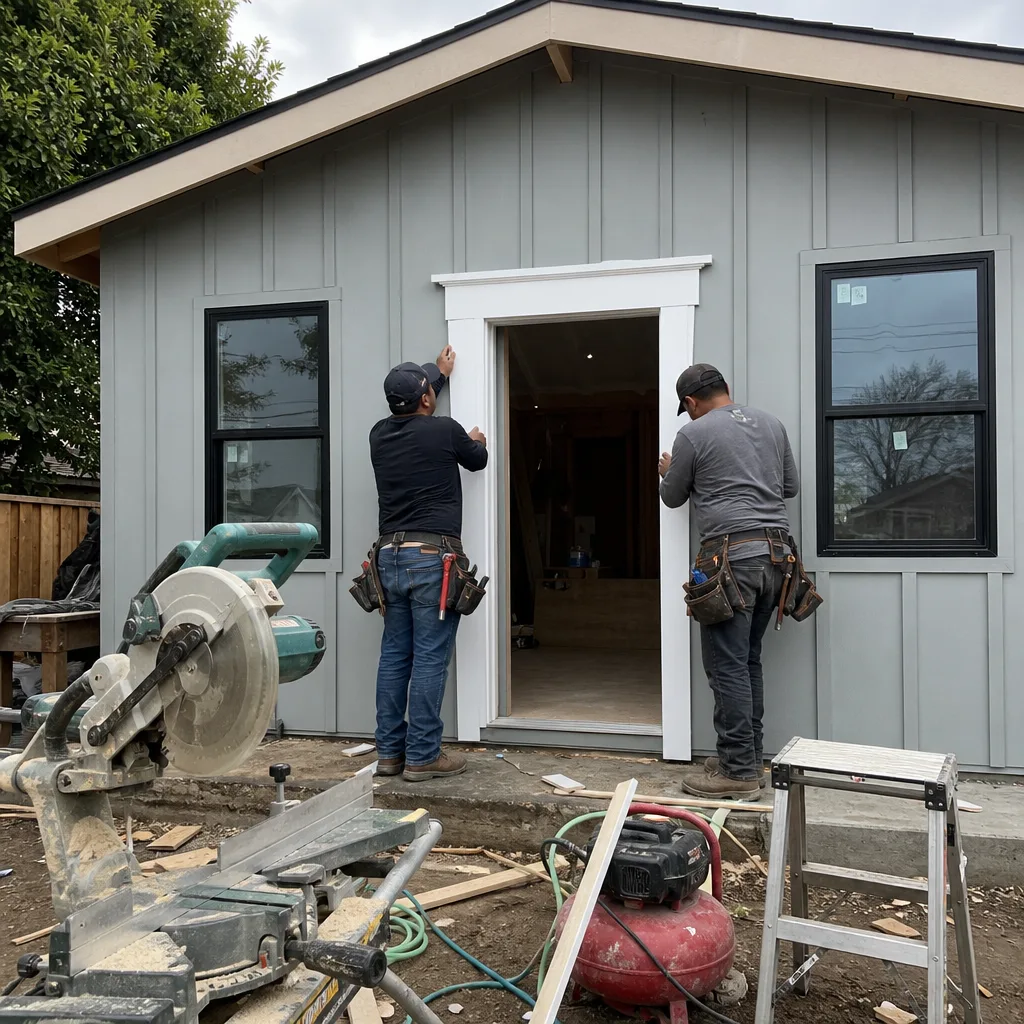
You hired a company. But a company doesn’t swing a hammer. People do. And the people who show up to build your San Jose ADU are often not the same people who sat in your living room with a portfolio and a handshake. General contractors routinely subcontract framing, electrical, plumbing, and finishes to crews the homeowner never vets. This is where the largest gap exists between what homeowners think they bought and what actually arrives.
Ask your contractor, in writing: Who will be on my property, and how do you verify them? A serious answer includes background checks and some form of identity verification. A vague answer means you’re inviting strangers onto your property for three to six months. That timeline matters. An ADU build is not a one-day service call. You will share your driveway, your bathroom (if you allow it), and your daily routine with these people for the better part of a year.
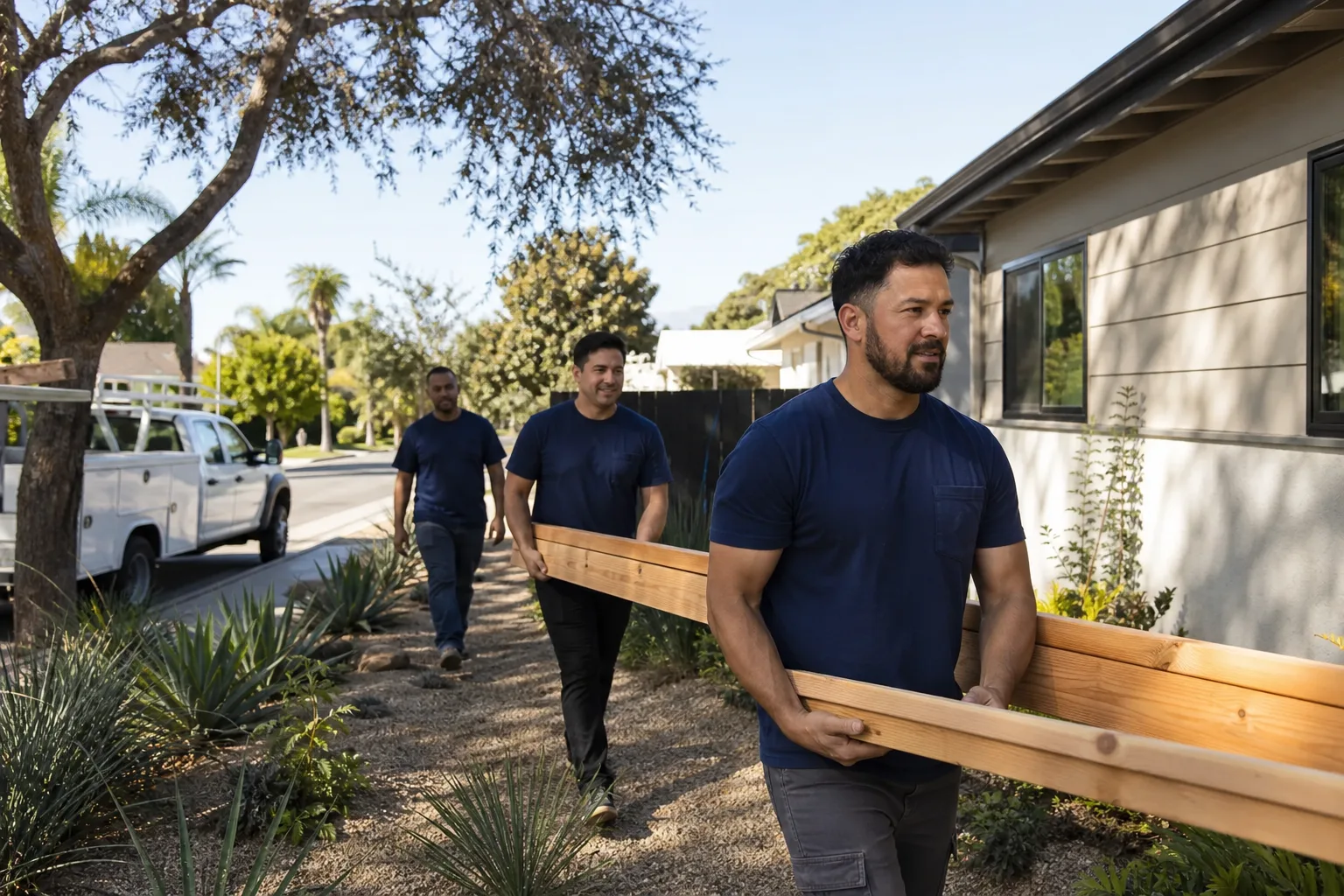
We operate our home addition work in San Jose under what we call the Threshold Standard. Every field technician is background-checked and identity-verified. Before any visit, the homeowner gets the technician’s name and photo. The person arrives in a clean, marked uniform and shows a photo ID badge at the door, every time. The name we send is the name on the badge is the name on the face. You shouldn’t settle for less.
If your contractor can’t tell you who’s coming, assume the answer is “whoever’s available.” That’s not a crew standard. That’s a roulette wheel.
Step 5: Contract Clauses That Protect San Jose Homeowners
Most San Jose homeowners sign whatever contract the contractor prints on a template, usually three to six pages of fine print that protects the contractor’s schedule and payment flow, not the homeowner’s build. Here’s what a legitimate ADU contract must contain, and what most people sign without noticing is missing.
Five clauses you should require:
- Scope of work with drawings attached. The contract should reference specific plan sheets. “Two-bedroom ADU, 650 square feet” is not a scope. Page 4 of the approved permit set is a scope.
- Payment schedule by milestone. Typical structure: 10% at contract signing, 20% after foundation, 20% after framing inspection, 20% after rough-in inspections, 20% after drywall, 10% after final inspection and punch list. Never pay more than what’s physically complete.
- Change-order procedure. Written, signed by both parties, with price adjustment stated before the change is made. Oral change orders are how budgets inflate by 25% without anyone noticing.
- Warranty terms. California requires a one-year warranty on workmanship. The contract should say so explicitly. Better: a written guarantee like the 365-Day Done Right Promise, which states plainly that if the work isn’t right within a full year, it gets made right. Not “we’ll discuss it.” Made right.
- Dispute resolution and lien protection. The contract should state that the contractor warrants clear title and will defend against any mechanics liens filed by subcontractors for work the homeowner already paid for. You’d be surprised how many contracts skip this and how many San Jose homeowners find out the hard way.
What most people sign without noticing: a clause that says the contractor can substitute materials of “equal quality” without homeowner approval. A clause that says delays due to weather or permits don’t extend the completion date but do extend payment. A clause that says disputes go to the contractor’s preferred arbitrator. Read the fine print. Or better, have someone else read it.
Step 6: The Interview Question That Separates ADU Specialists From General Remodelers
After you’ve verified licenses, pulled permits, and read the contract, there’s one question that cuts through the rest of the interview. Sit down with your shortlist and ask this: “Can you give me the permit numbers for your last five ADU projects in San Jose?” A specialist can produce them. A general remodeler will blink, then pivot to a story about a “similar project” in another city or a garage conversion they did “a few years back.”
Then take those permit numbers and look them up yourself in the San Jose permit portal. Verify the address, the scope, and the final inspection status. Anyone can claim ADU experience. A permit number is a public, falsifiable claim. The contractors with genuine San Jose ADU track records have no problem sharing them because the records verify the story.
This question also reveals how the contractor handles ADU-specific code. San Jose’s ADU ordinance has changed four times in the last eight years. Setbacks, height limits, parking requirements, and utility connection fees differ from state defaults. A contractor who pulls a San Jose ADU permit quarterly has internalized those local rules. One who does one ADU a year is learning on your dime.
What a San Jose ADU Actually Costs in 2026
Here’s the realistic range for San Jose as of early 2026. These numbers come from actual project costs we’ve seen across neighborhoods, from Almaden Valley to Evergreen to the West Side.
- Detached ADU, 400-500 square feet: $160,000 to $240,000 before site work. Compact studio or one-bedroom. Simple roof. Standard finishes.
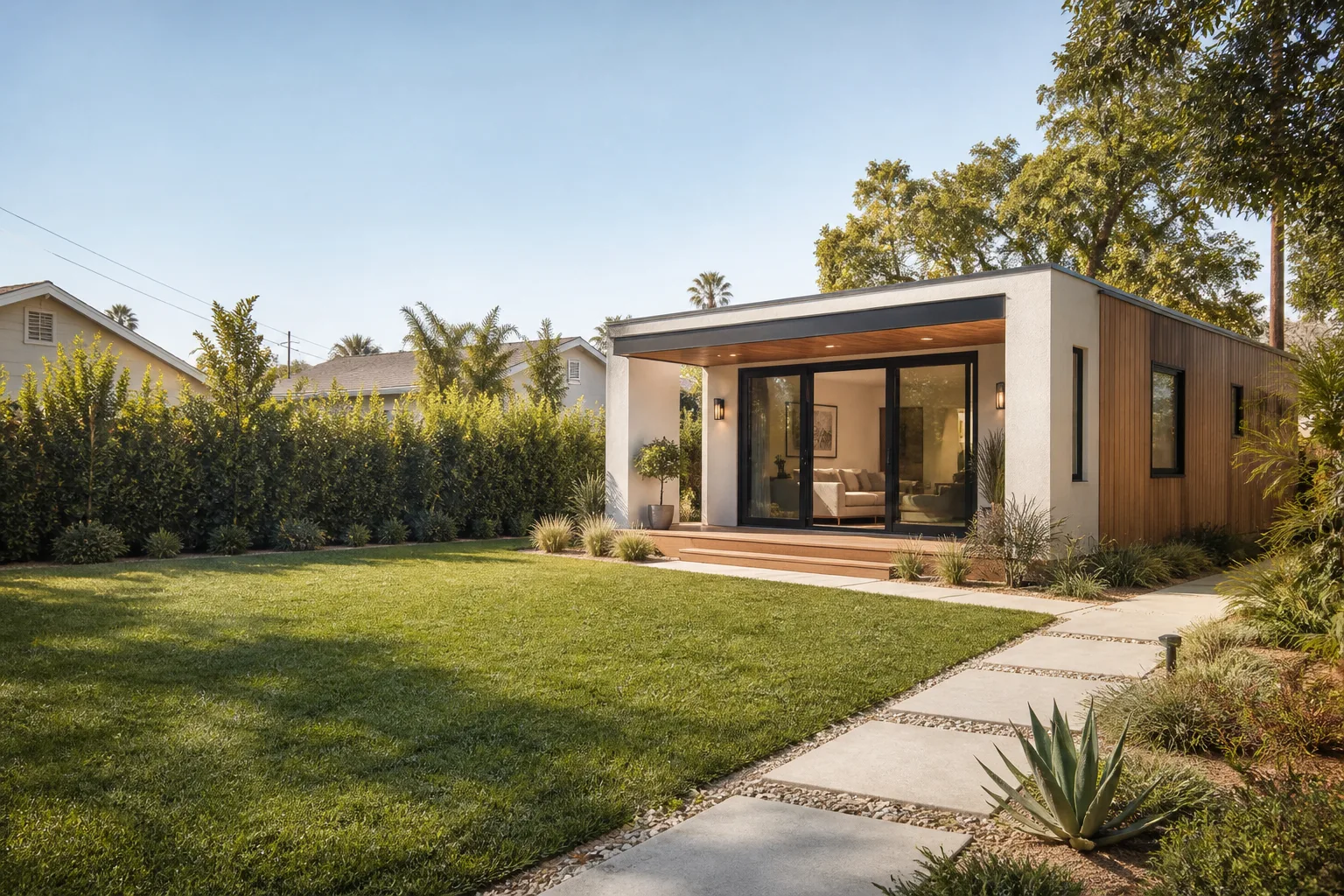
- Detached ADU, 600-800 square feet: $220,000 to $380,000 before site work. Two-bedroom or large one-bedroom. Includes kitchen and full bath.
- Garage conversion, 400-500 square feet: $120,000 to $190,000. Existing structure helps, but San Jose requires bringing the garage up to current code: foundation, electrical, insulation.
- Prefab ADU (Dvele or Mighty Buildings), 600-800 square feet: $250,000 to $420,000 delivered and set, not including San Jose foundation and utility work. Prefab changes your timeline, not necessarily your total.
- Room addition, 250-400 square feet: $90,000 to $160,000. Simpler, but San Jose’s inclusionary zoning and lot coverage rules still apply.
Site work is the number most homeowners miss. San Jose lots frequently need foundation upgrades, drainage correction, or utility trenching that adds $20,000 to $60,000 before the first wall goes up. Tree protection costs, particularly for heritage oaks in the Rose Garden and Willow Glen areas, run extra, so check our Seasonal ADU Care for San Jose: Year-Round Homeowner’s Guide for maintenance planning. An honest written price includes realistic allowances for these conditions. A lowball bid excludes them and then “discovers” them mid-project.
We’ve found that working with recognized prefab lines like Dvele and Mighty Buildings helps some San Jose homeowners lock in finish quality from the start, since the modules are factory-built to a spec. But prefab still requires a San Jose foundation, utility hookup, and final inspection. The site general contractor still matters.
Common Mistakes to Avoid
- Hiring the lowest bid without reading the exclusions. A $160,000 bid that excludes site work, utilities, and permits is not cheaper than a $220,000 bid that includes them. It’s a trap with a friendly face.
- Paying too much upfront. California law limits the down payment to 10% or $1,000, whichever is less, for home improvement contracts. If your contractor asks for 30% to “secure materials,” walk away. The law protects you, but only if you know it.
- Skipping the permit history check. An unpermitted ADU in San Jose is a costly discovery at sale time. You can’t legally sell a house with an unpermitted dwelling without disclosing it, and lenders frequently reject financing. Pull the permits.
- Signing a contract without a completion date. A contract that says “time is of the essence” but includes no date is not enforceable on schedule. San Jose homeowners routinely wait 9-14 months for a completed ADU. Your contract should say when work starts and when it finishes.
- Trusting the crew vetting question to a verbal answer. “Yeah, we background check everyone” is not verification. Get it in writing. Get names. Get photos. If they can’t do that, they’re not checking.
- Ignoring the warranty terms. California’s implied one-year warranty covers workmanship. A written warranty like the 365-Day Done Right Promise covers it in language you can hold up in a dispute. If the contractor hedges on what the warranty covers, that’s your answer about how they handle callbacks.
When to Call a Professional
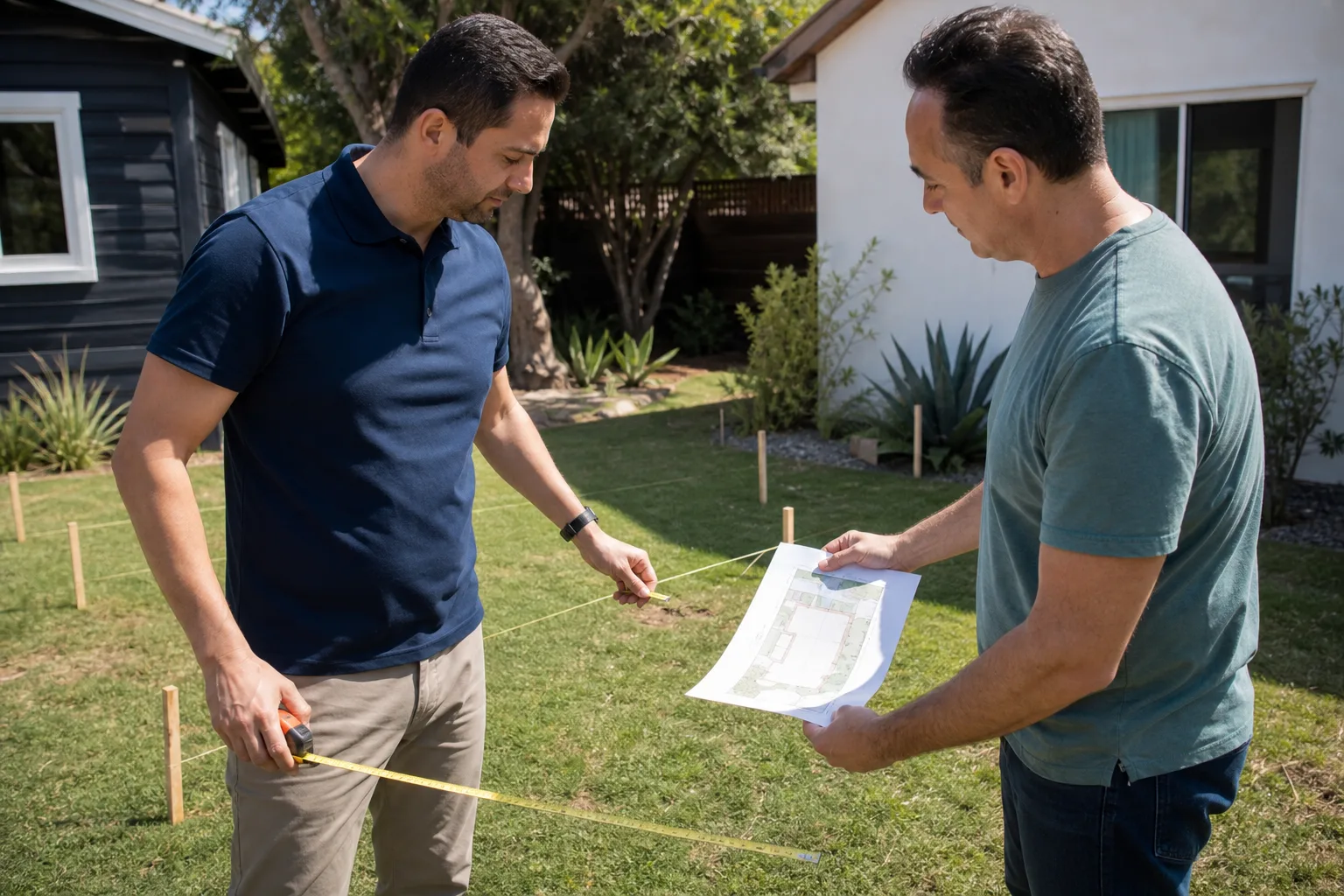
If you’re reading this guide because you have a specific San Jose lot in mind and want to know if an ADU fits, call a professional before you buy the plans. A site visit reveals things a Zillow listing can’t: the setback from the side property line that’s four feet too tight, the sewer lateral running exactly where the foundation needs to go, the heritage tree ordinance triggered by a 60-year-old oak. San Jose’s specific rules create enough edge cases that a builder who’s done 50 local ADUs spots problems in minutes that would cost a general remodeler weeks to untangle. Sutton ADU San Jose offers free estimates in San Jose, call (669) 444-4530 to schedule yours. We’ll walk the lot, review your property lines, and give you a written answer about what’s buildable.
Frequently Asked Questions
Plan on 9 to 14 months from permit submission to final inspection for a detached ADU in San Jose. The plan check phase alone typically runs 2 to 4 months depending on the city’s current backlog, and construction runs another 5 to 8 months. Prefab ADUs can trim on-site time by several weeks, but San Jose’s permitting timeline is the same regardless of construction method. Call (669) 444-4530 for a realistic timeline based on your specific lot.
Yes, every ADU in San Jose requires a building permit, including garage conversions. Converting an unpermitted structure into living space without permits creates a serious problem at resale and can trigger code enforcement action. The permit process for a conversion is simpler than for a detached ADU because the structure already exists, but San Jose still requires foundation, electrical, insulation, and habitability upgrades to current code.
Most detached ADUs in the 400 to 800 square foot range cost $160,000 to $380,000 before site work in San Jose. Garage conversions typically run $120,000 to $190,000. Site conditions like drainage, foundation upgrades, and utility trenching add $20,000 to $60,000 on many San Jose lots. Call (669) 444-4530 for a written price on your specific property. Estimates are free.
No. California law requires a contractor’s license for any home improvement project over $500, and all ADU work exceeds that threshold. An unlicensed contractor exposes you to liability if a worker is injured, voids most insurance coverage, and leaves you with limited recourse if the work fails. Always verify the license through the CSLB database before signing any contract.
An estimate is a non-binding prediction that can change as conditions are discovered. A written contract price is a signed commitment to deliver a defined scope for a set amount. In San Jose’s ADU market, contractors who only provide estimates routinely finish 20-30% above the initial number. A written price with line items, exclusions, and a change-order clause is the only document that protects your budget.
In our experience, the flat, older lots in the Cambrian, Willow Glen, and West San Jose areas tend to have the fewest grading issues for ADU construction. The hillside lots in Evergreen and Almaden Valley more frequently require retaining walls and drainage work, which add to site costs. Every lot is different. Call (669) 444-4530 and we’ll walk your property before you commit to any plans.
The Bottom Line
Hiring an ADU contractor in San Jose is a verification process, not a trust exercise. Check the CSLB license. Pull the San Jose permit history. Search the county court records. Demand a written price with line items and a change-order clause. Require the crew’s identity standards in writing. Ask for the last five ADU permit numbers and verify them yourself. Every legitimate contractor in San Jose can pass these checks without breaking a sweat. Every contractor who can’t is telling you something important before you’ve spent a dollar. At Sutton ADU San Jose, we’ve built our entire hiring standard on the idea that trust should be provable, not promised. For our room addition work in San Jose and full ADU builds, we verify the crew, lock the price, and stand behind the work for a year. Call (669) 444-4530 when you’re ready to see proof.
Written by Miles Hartwell, Owner at Sutton ADU San Jose, serving San Jose since 2006.