Last updated October 15, 2026
ADU Cost Breakdown: The San Jose Homeowner’s Reference for 2026
Every ADU cost guide for San Jose quotes the same range: $300 to $600 per square foot. That’s a spread so wide it’s the equivalent of saying a car costs between $15,000 and $120,000. The number isn’t wrong. But it’s not useful until you understand which variables push you toward the low end or the high end. In this guide, we’ll walk you through a real San Jose ADU budget line by line, so you can read a contractor’s quote intelligently instead of just comparing bottom-line numbers. For a deeper dive into the full process, see our The Complete Guide to ADU in San Jose. You’ll learn where the money actually goes, which costs are fixed by the city and which are negotiable, and how to spot the five things lowball bids leave out.
Quick Answer
A detached ADU in San Jose in 2026 typically costs $180,000 to $320,000 for a 600 to 1,000 square foot unit, including permits and standard finishes. Garage conversions run lower, usually $85,000 to $150,000, while attached additions land between $150,000 and $280,000. The per-square-foot range narrows considerably once you account for the fixed costs that every project carries regardless of size: permits, fees, utility connections, and design.
Table of Contents
- The Real Line-Item Budget: Where Every Dollar Goes
- San Jose Cost Drivers That Flat Guides Ignore
- Detached, Attached, Garage Conversion, or JADU: Honest Cost Differences
- How to Read a Contractor’s Quote for What’s Missing
- Locked Written Price vs. Cost-Plus: Why the Contract Type Matters More Than the Starting Number
- Permits and Fees: The Fixed Costs You Cannot Avoid
- Prefab and Modular Options: When They Save Money and When They Don’t
- Common Mistakes to Avoid
- When to Call a Professional
- Frequently Asked Questions
- The Bottom Line
The Real Line-Item Budget: Where Every Dollar Goes
Most ADU quotes in San Jose bundle costs into three or four broad categories: design, construction, and “other.” That’s where the confusion starts. A useful quote breaks the project into eight distinct categories. Here’s what each one actually costs in this market in 2026, based on permit history and project data from across Santa Clara County.
1. Site Preparation ($8,000 to $25,000)
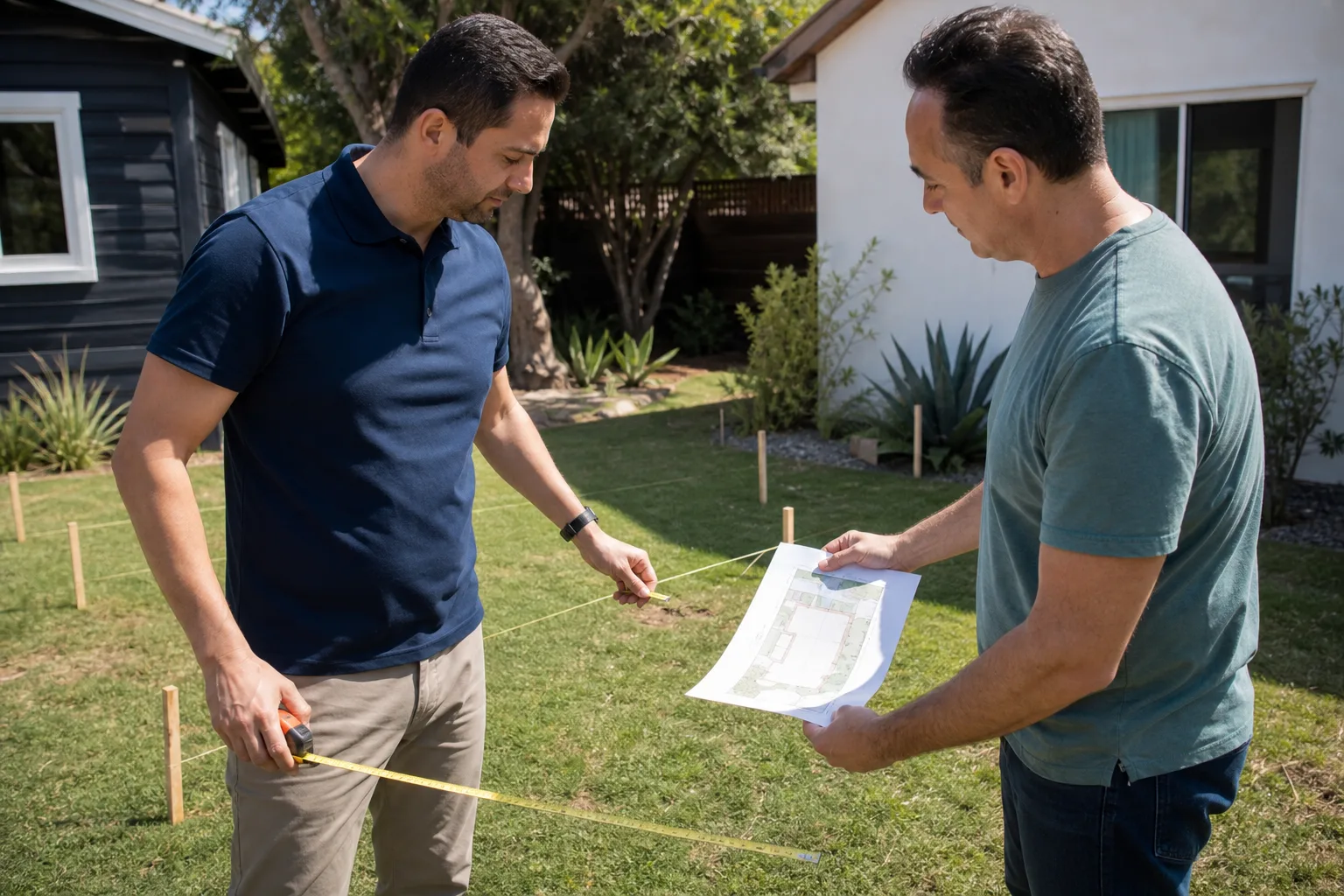
Before anything gets built, the site has to be ready. This includes demolition of any existing structure, tree removal if required, grading, and soil preparation. In San Jose, we regularly see site prep costs spike on lots with mature trees or poor drainage. A flat lot in Willow Glen might need minimal grading, while a hillside lot in the East Foothills can add $15,000 or more to this line item alone. Site prep also covers temporary fencing and erosion control, which San Jose code requires for most projects.
2. Permits and Fees ($15,000 to $35,000)
San Jose charges plan check fees, building permit fees, and impact fees. The school district impact fee for a new ADU currently runs about $4.87 per square foot, though that number adjusts periodically. Utility connection fees from San Jose Water and PG&E add another few thousand. We break this down in detail later in this guide. For now, know this: permits and fees are non-negotiable, and anyone quoting you under $10,000 for this category is either uninformed or planning to surprise you later.
3. Foundation ($15,000 to $40,000)
A detached ADU needs its own foundation. In San Jose’s seismic zone, that means a reinforced slab or raised foundation with proper anchoring. Soil type matters. Expansive clay soils in some South San Jose neighborhoods require deeper footings. If you’re building a two-story ADU or one over a garage, the foundation cost climbs further. For garage conversions, this line item drops significantly since the slab already exists, though you may need seismic retrofitting.
4. Framing ($25,000 to $60,000)
Lumber prices have stabilized since the volatility of 2021 and 2022, but framing remains one of the largest single costs. A 750 square foot detached ADU will use roughly $18,000 to $30,000 in lumber alone. Labor adds another $10,000 to $25,000 depending on complexity. Vaulted ceilings, dormers, and custom roof lines all push framing costs up. A simple rectangular footprint with a standard roof is the cheapest frame to build.
5. MEP Rough-In ($20,000 to $45,000)
MEP stands for mechanical, electrical, and plumbing. This is the hidden skeleton of your ADU. Plumbing rough-in includes running water lines, drain lines, and vent stacks from the main house or street connection. Electrical rough-in covers wiring, panel work, and lighting boxes. Mechanical covers HVAC ducting or mini-split installation. In San Jose, a panel upgrade from 100 amps to 200 amps adds $3,500 to $6,000 if your existing service can’t handle the ADU load. PG&E service upgrades are covered in the cost drivers section.
6. Insulation and Drywall ($10,000 to $20,000)
San Jose’s climate zone requires R-13 wall insulation and R-30 ceiling insulation at minimum. If you want a quieter, more efficient ADU, upgrading to R-21 walls adds a few hundred dollars. Drywall installation for a 750 square foot unit runs $6,000 to $10,000 including taping, mudding, and texture. This category also includes sound insulation between the ADU and the main house for attached or garage conversion projects, which we recommend and which adds $1,500 to $3,500 depending on the wall assembly.
7. Finishes ($30,000 to $80,000)
This is the category with the widest range because it is entirely driven by your choices. Flooring, cabinets, countertops, tile, paint, doors, trim, and fixtures. A basic but durable finish package – laminate flooring, stock cabinets, quartz countertops, mid-range faucets – runs $30,000 to $45,000 for a 600 to 800 square foot unit. Custom cabinetry, hardwood floors, and designer tile can double that. The single most expensive finish item is usually the kitchen, followed by the bathroom.
8. Utility Connections ($5,000 to $20,000)
Connecting the ADU to existing utilities sounds simple. It often isn’t. Sewer connections require trenching from the ADU to the main line, which can mean cutting through a driveway or patio. Water line connections follow a similar path. Electrical service requires running conduit from the main panel, which may be on the opposite side of the house. If trenching runs long or hits unexpected obstacles, this line item grows. We’ve seen utility connections cost $20,000 on challenging lots in the Rose Garden neighborhood where mature landscaping and hardscaping complicated the trench path.
San Jose Cost Drivers That Flat Guides Ignore
National ADU cost guides cannot account for the specific ways San Jose makes construction more expensive. These are the three biggest factors, and each one can add five figures to your project. Before you build, review ADU Warning Signs: A San Jose Homeowner’s Reference Guide to avoid common pitfalls.
School District Impact Fees
San Jose sits within multiple school districts, and most of them charge impact fees on new residential square footage. For a new detached ADU, expect to pay between $3 and $5 per square foot in school fees. A 750 square foot ADU carries roughly $2,500 to $3,750 in school district fees. This is a fixed cost you cannot negotiate. Some homeowners try to classify the ADU as something other than new residential space to avoid the fee. That classification does not survive a permit review, and attempting it only delays your approval.
PG&E Panel and Service Upgrade Requirements
Your existing electrical panel determines whether you can add an ADU without touching the service. A 100-amp panel serving a house with an electric dryer, electric range, and air conditioning already has limited headroom. Adding a 60-amp ADU subpanel typically pushes you over. The fix is a service upgrade to 200 amps, which requires PG&E to disconnect power at the street, a licensed electrician to install the new panel, and a city inspection before reconnection. The whole process adds $4,000 to $8,000 and can take two to six weeks of scheduling time. If your service is underground, the cost rises. If PG&E determines the transformer serving your block needs upgrading, you could be waiting months, though PG&E does not charge you for transformer work.
Hillside Lot Surcharges
San Jose contains significant hillside terrain, particularly in the East Foothills, Almaden Valley, and parts of Evergreen. Hillside lots trigger additional engineering requirements: soils reports, retaining wall plans, drainage studies, and sometimes geotechnical borings. A soils report alone runs $3,000 to $6,000. If your slope exceeds a certain grade, San Jose requires a retaining wall or a specialized foundation system that can add $20,000 to $50,000. Flat-lot guides never mention this because most of the country builds on flat land. San Jose is not most of the country.
Detached, Attached, Garage Conversion, or JADU: Honest Cost Differences
The type of ADU you build changes the total project cost more than any other single decision. Here are honest figures based on permit history in San Jose, not marketing ranges.
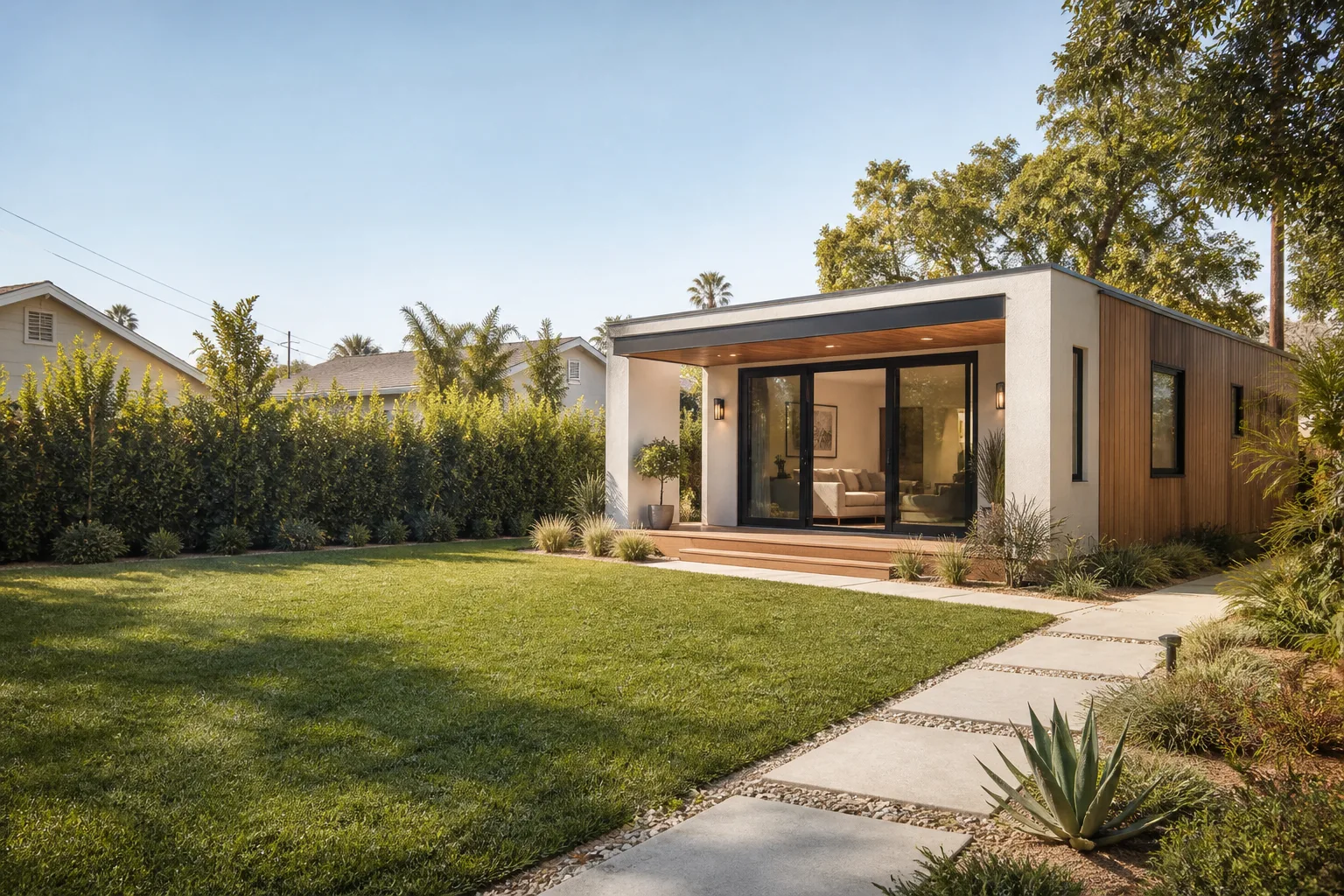
- Detached ADU ($180,000 to $320,000): The most expensive option per square foot because it requires a new foundation, new utility runs, and full site work. It is also the most valuable addition to your property because it creates truly independent living space with no shared walls. A detached unit also avoids triggering certain fire-safety requirements that apply to attached structures. Most detached ADUs in San Jose range from 600 to 1,000 square feet.
- Attached Addition ($150,000 to $280,000): Building onto the existing house saves on foundation and some utility runs, but adds structural complexity. The tie-in point where new framing meets old framing requires engineering. You may need to upgrade the existing house’s systems to handle the added load. Attached additions also share a wall, which means fire-rated separation and sound insulation requirements. The cost per square foot is often only 10 to 15 percent less than a detached unit.
- Garage Conversion ($85,000 to $150,000): The least expensive path to an ADU because the shell already exists. The foundation is poured, the roof is on, and the walls are framed. You’re paying for insulation, drywall, MEP installation, finishes, and bringing the structure up to current code. San Jose requires garage conversions to meet residential building standards, which means upgrading electrical, adding insulation, and sometimes reinforcing the slab. You also lose the garage, which means either accepting street parking or building a carport. Many homeowners with EV charging setups need to relocate equipment.
- JADU ($50,000 to $120,000): A Junior Accessory Dwelling Unit converts existing interior space, typically a bedroom or portion of the house, into a small independent unit with its own entrance and kitchenette. JADUs have a 500 square foot maximum. You cannot add square footage. You’re converting existing conditioned space. Costs stay low because there’s no foundation, no framing, and minimal exterior work. The tradeoff is that you lose interior living space in the main house.
How to Read a Contractor’s Quote for What’s Missing
Lowball bids are common in San Jose’s ADU market because the demand creates competition, and the cheapest number often wins the job on paper. Then the change orders start. Here are the five line items most commonly omitted from initial quotes, which reappear as “unforeseen conditions” or “owner requests” after work begins.
- Permit fees and city charges: Some contractors quote only labor and materials, leaving permits out entirely. The quote looks thousands of dollars cheaper. You then receive a bill for $20,000 in city fees after signing. Ask explicitly: “Does this price include all permits, plan check fees, and impact fees?” Get the answer in writing.
- Utility connection work: Trenching, sewer tie-ins, and water line extensions often appear as “by owner” or are simply absent from the quote. This is a five-figure line item on many projects. A complete quote specifies exactly where the utility runs go and what they cost.
- Site preparation beyond grading: Demolition, tree removal, fence relocation, and erosion control sometimes live in a separate “site work” category that the initial quote excludes. If your lot has any existing structures, trees, or significant slope, ask for site prep as a line item.
- Finish allowances: Some quotes include a $10,000 “finish allowance” for a kitchen and bathroom that will realistically cost $25,000 to $40,000. The allowance is a placeholder, not a real number. Ask for the allowance to be broken into actual selections with actual prices.
- Change order clauses: Read the contract language about what triggers a change order. Some contracts allow change orders for anything the contractor “could not have reasonably anticipated.” That language is broad enough to cover almost anything. A locked written price should specify exactly which conditions constitute a legitimate change order, and which do not.
This is where working with experienced ADU builders in San Jose changes the equation. A builder who has completed dozens of projects in the area knows what to include in the initial quote because they have seen the same surprises before. They build those costs into the number you see up front instead of surprising you with them later.
Locked Written Price vs. Cost-Plus: Why the Contract Type Matters More Than the Starting Number
Two contractors can quote the same project. One quotes $220,000 as a locked written price. The other quotes $190,000 as a “cost-plus” contract. Most homeowners pick the $190,000 and feel smart. Then the invoices start arriving and the gap closes, flips, and ends up $40,000 in the wrong direction.
A locked written price means the contractor has committed to the number. If materials run over, the contractor eats it. If labor takes longer, the contractor eats it. The financial risk sits with the builder, not with you. This creates a direct incentive for the contractor to plan carefully, price accurately, and execute efficiently.
A cost-plus contract means you pay for all actual costs plus a percentage markup, typically 10 to 20 percent. Every additional dollar of materials or labor increases the contractor’s profit. The incentive structure rewards delays and overages. A “not to exceed” contract sounds protective but usually contains enough exclusions to function as a cost-plus contract in practice.
This is our standard practice at Sutton ADU San Jose: every homeowner receives a written price before any work begins. No surprise invoices. No scope creep passed silently to the bill. The price we quote is the price you pay, unless you change the scope by asking for something different than what we priced. That is the difference a locked price makes, and it matters more than any starting number.
Permits and Fees: The Fixed Costs You Cannot Avoid
San Jose’s permit process for ADUs is bureaucratic but predictable. Here is what you will pay, in what order, and roughly how long each step takes. For full details on codes and inspections, read ADU Permits, Codes & Inspections in CA: What You Need to Know.
Plan check fees: When you submit your plans, San Jose charges a plan review fee. For a standard ADU, expect $2,000 to $5,000 depending on project complexity. This fee is due at submission and is not refundable if the plans are rejected, which is why working with a designer or builder who knows San Jose’s ADU ordinance saves money.
Building permit fees: Once plans are approved, the city issues the building permit. The fee is calculated based on project valuation and square footage. For a typical detached ADU, the building permit runs $8,000 to $15,000.
Impact fees: San Jose charges school district impact fees and, for some projects, park and traffic impact fees. The school fee is the largest. Some fees are assessed per square foot, others as a flat amount. Your contractor should include these in the quote, not bill them separately later.
Inspection fees: San Jose requires inspections at specific points during construction: foundation, framing, MEP rough-in, insulation, and final. The inspection fees are typically bundled into the building permit, but some trade-specific inspections carry separate charges.
Total budget for permits and fees: $15,000 to $35,000 on a detached ADU. Anyone building an ADU in San Jose should treat this as a fixed cost. It does not vary much by finish level or contractor choice. If a quote shows a suspiciously low permit line, ask to see the actual fee schedule the contractor used.
Prefab and Modular Options: When They Save Money and When They Don’t
Prefab ADU companies have grown significantly in the Bay Area, and several operate directly in San Jose. The pitch is appealing: a factory-built unit arrives on a truck and gets craned onto your foundation in a day. The savings come from controlled factory conditions, bulk material purchasing, and reduced on-site labor time.
In our experience, prefab options from companies like Plant Prefab or Boxabl can save 10 to 20 percent on framing and finish labor compared to traditional stick-built construction. A Tuff Shed conversion is a different animal entirely: the structure is a permitted shed that gets finished out as living space, which can work for small ADUs but requires careful attention to insulation, electrical, and plumbing upgrades to meet residential code.
The savings are real, but they are not universal. Prefab requires the same site work, the same foundation, the same permits, and the same utility connections as stick-built. Those fixed costs represent 30 to 40 percent of the total project budget. If a prefab unit saves you $20,000 on framing and finishes on a $250,000 project, the all-in savings is 8 percent. Worth pursuing, but not transformative. The other consideration is customization: prefab floor plans are fixed, so if your lot’s setback requirements (the required gap between your new structure and the property line) or your desired layout doesn’t match the factory options, you may end up paying for a custom modification anyway. We work with leading prefab brands including Abodu, Dvele, Mighty Buildings, and Plant Prefab to help homeowners evaluate which approach fits their lot and budget. A James Hardie exterior system, for example, works well on both stick-built and prefab units and carries a durable finish that handles San Jose’s dry summers and wet winters well.
Common Mistakes to Avoid
- Comparing quotes on bottom-line numbers alone: A $190,000 quote with five missing line items is not cheaper than a $220,000 quote that includes everything. Read the line items, not just the total. Ask each contractor to confirm that permits, utilities, site prep, and finishes are all included.
- Underestimating the panel upgrade requirement: Many homeowners in San Jose discover mid-project that their 100-amp panel cannot support an ADU. The upgrade adds cost and weeks of schedule delay. Have an electrician evaluate your panel before you sign a contract.
- Skipping the soils report on a suspect lot: If your lot has slope, fill soil, or a history of drainage issues, pay for the soils report before finalizing your budget. A $5,000 report can prevent a $30,000 foundation surprise.
- Choosing finishes too late: Finish selections affect the framing and MEP phases. Tile choices affect bathroom waterproofing details. Appliance choices affect electrical and gas rough-in. Select your finishes before rough-in begins to avoid change orders.
- Assuming the garage conversion is always the cheapest option: On a very old garage with a weak slab, no insulation, and outdated framing, the cost to bring the structure to code can approach the cost of a new detached unit on a fresh foundation. Get a structural assessment before committing to the conversion path.
- Ignoring the contract type: As covered above, cost-plus contracts change the entire financial structure of the project. If a contractor will not commit to a written price, ask why. The answer tells you how confident they are in their own estimate.
- Not verifying who will actually be on the job site: Some companies subcontract the entire build to crews they have never met. Before signing, ask who will be doing the work. A reputable builder names their people. At Sutton ADU San Jose, every technician is background-checked and identity-verified under the Threshold Verified standard, and their name and photo are sent to you before they arrive. It is a simple question: who is coming to my property?
When to Call a Professional
An ADU project is not a DIY undertaking. The permit process alone requires plans stamped by a licensed architect or engineer in California, and San Jose’s plan check reviewers expect professional documentation. Beyond the paperwork, the construction involves foundation work, electrical systems, plumbing, and structural framing, all of which carry safety risks and code requirements that a trained professional understands. If you are considering an ADU and want to know what your specific lot and budget can support, the next step is a site evaluation. Browse our more guides & resources for additional ADU planning help. Sutton ADU San Jose offers free estimates for homeowners in San Jose and will walk you through the line items specific to your property. Call (669) 444-4530 to schedule yours.
Frequently Asked Questions
A detached ADU in San Jose typically costs $180,000 to $320,000 all-in for a 600 to 1,000 square foot unit, including permits, site work, construction, and standard finishes. Garage conversions run $85,000 to $150,000. Attached additions land between $150,000 and $280,000. Your specific number depends on lot conditions, finish choices, and contract type. Call (669) 444-4530 for a free estimate on your property.
A JADU (Junior Accessory Dwelling Unit) is the cheapest option at $50,000 to $120,000 because it converts existing interior space rather than adding new square footage. A garage conversion is the next cheapest at $85,000 to $150,000. Both have tradeoffs: a JADU reduces your main house living space, and a garage conversion eliminates covered parking. Call (669) 444-4530 to discuss which option fits your property.
Plan for 12 to 18 months from initial design to final inspection for a detached ADU in San Jose. The timeline breaks down roughly as: 2 to 4 months for design and plan preparation, 3 to 6 months for city plan check and permit approval, 5 to 8 months for construction, and 1 to 2 months for final inspections and closeout. Garage conversions and attached additions can finish in 9 to 14 months. Prefab units can shorten construction time but not the permitting timeline.
Yes. Every ADU project in San Jose, including garage conversions, requires building permits, plan check approval, and inspections. Unpermitted garage conversions create liability issues when you sell the property and can trigger code enforcement. The permit process for a garage conversion is often faster than for a detached ADU because the city reviews a simpler scope of work.
Yes. When you add an ADU, the county reassesses your property. Under California law, only the new square footage value is added to your existing assessment, not the entire property. A $250,000 ADU on a home currently assessed at $600,000 would result in a new assessed value around $850,000, not a full reassessment at current market value. Your property tax increase is roughly 1.1 to 1.25 percent of the added value annually.
It depends entirely on your contract. A locked written price should not change unless you request a scope change. A cost-plus contract will fluctuate with actual material and labor costs. At Sutton ADU San Jose, we deliver a written price before any work begins. The number we quote is the number you pay, unless you ask for something different than what we priced. Call (669) 444-4530 to see a sample contract structure.
The Bottom Line
An ADU in San Jose is a six-figure investment, but the cost is knowable before you commit. The key is understanding the eight cost categories, the San Jose-specific drivers that flat guides miss, and the difference between a locked written price and a cost-plus contract. Read your contractor’s quote line by line. Ask about permits, panel upgrades, site prep, and utility connections. Verify who is actually doing the work. If you want a straight answer on what your property can support, our team at Sutton ADU San Jose provides free estimates for homeowners throughout the city. We also handle larger home additions in San Jose if an ADU turns out to be the wrong fit. Call (669) 444-4530 and we will walk through the numbers together.
Written by Miles Hartwell, Owner at Sutton ADU San Jose, serving San Jose since 2006.