Cover Site Prep & Utilities: The San Jose Owner’s Guide
Cover-compatible site prep and utility rough-in work in San Jose typically runs $12,000 – $38,000 depending on trenching distance, soil conditions, and whether your panel needs an upgrade. We stock the common Cover-spec utility components on our trucks and can usually begin site work within five to seven business days of your written approval. Most San Jose owners discover site prep or utilities are failing when the city flags a setback encroachment, a trench settles after winter rains, or the main panel trips repeatedly once the Cover unit draws full load.
If you’re reading this, you probably already have a Cover unit on order or on your lot, and something in the ground or at the panel isn’t cooperating. That’s exactly what we fix. Miles Hartwell has walked dozens of San Jose lots where a Cover pad was poured in June and the utility trench heaved by February. We’ll tell you straight what’s salvageable and what needs to be redone.
Which Cover Models This Applies To
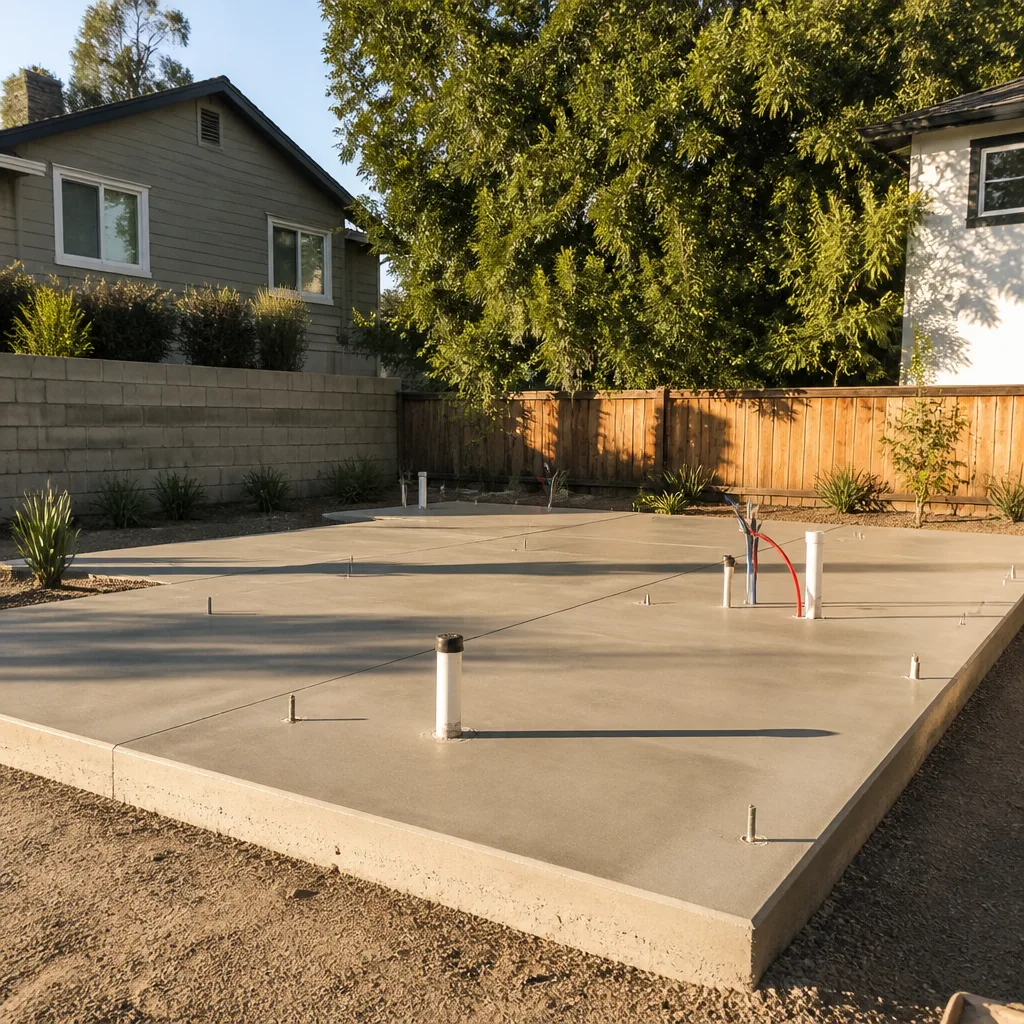
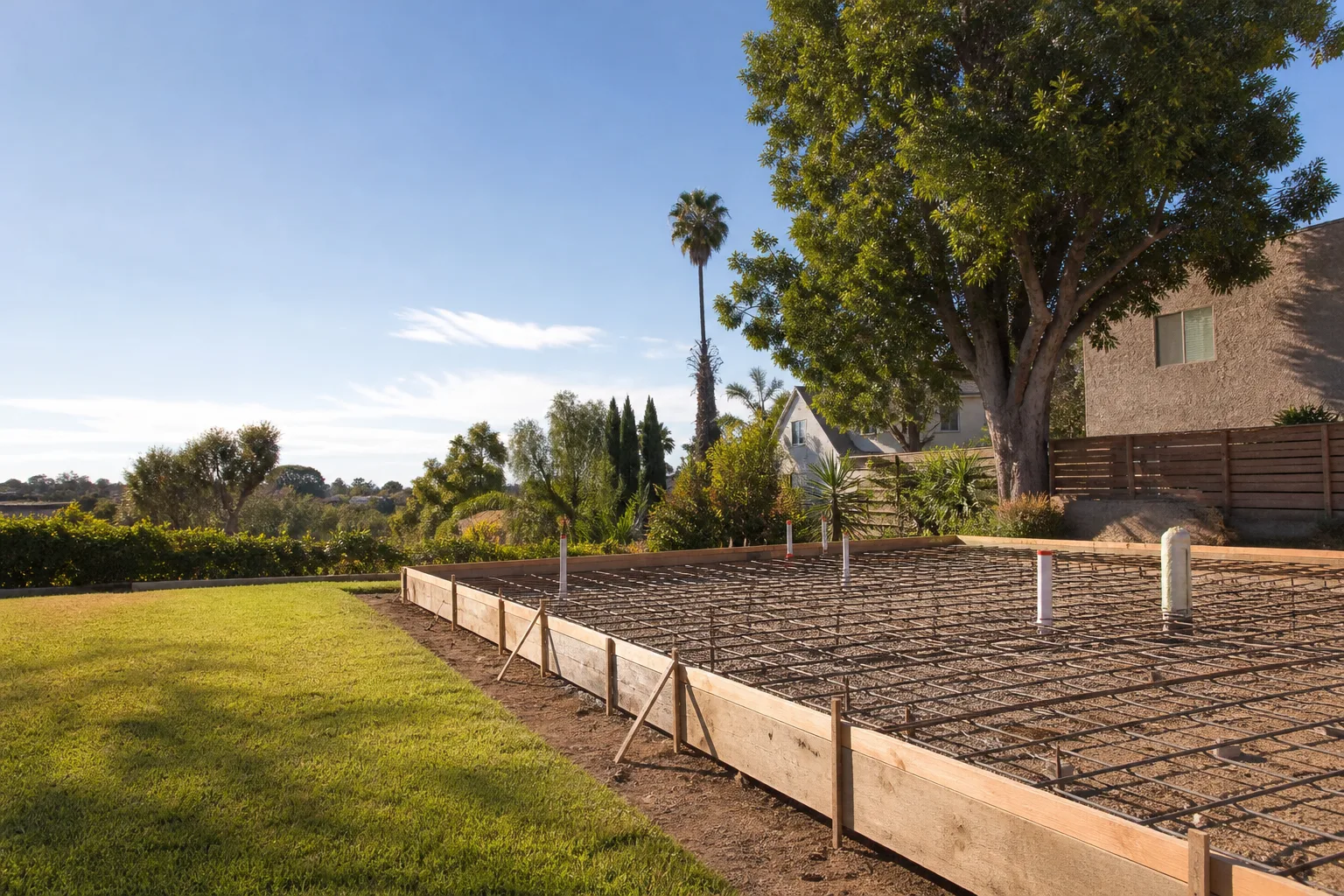
Cover builds its units as a complete prefab system, which means the site prep and utilities side has to match Cover’s exact rough-in specifications, not a generic ADU pad. The standard Cover unit expects a level pad with engineered hold-down points, a 200-amp-capable service feed (even when the unit itself draws less), and sewer and water stubs placed within a tight tolerance window, usually within 2 inches of Cover’s shop drawings. If your stubs are off by more than that, the factory connection kit won’t line up, and you’re either re-trenching or paying a plumber to build an offset manifold that the inspector will want to see anyway.
Cover’s larger two-bedroom models also require a second cleanout within 10 feet of the unit and a dedicated exterior disconnect, which is not something every San Jose electrician remembers until the inspector asks where it is. We work from Cover’s current shop drawings, not from memory, because their stub locations have shifted between model years. On the parts side, we use OEM Cover connection kits when they’re available and quality aftermarket equivalents for trench conduit, panel components, and cleanouts where the spec allows. If you’re unsure whether you have a Series 1 or Series 2 Cover unit, check the data plate inside the utility closet door; the Series 2 is the one with the raised electrical chase along the back wall.
Signs Your Cover Site Prep & Utilities Is Failing
- Main breaker trips when the unit’s heat pump and dryer run together. This usually means the feeder wire is undersized for the continuous load, or the panel bus is maxed. We see this most often when a homeowner reused a garage subpanel for the ADU feed against Cover’s spec.
- Settling or ponding around the pad perimeter. San Jose’s clay-heavy soils in areas like Willow Glen and Cambrian expand and contract hard through wet winters and dry summers. If the pad edge sinks more than a half inch, your utility stubs are now out of plane with Cover’s connection points.
- Sewer line gurgles or drains slow after rain. A trench that wasn’t compacted in lifts will settle, and a settled trench puts a belly in the sewer line. Water sits in the belly, solids catch on it, and suddenly your Cover unit’s bathroom is the slowest drain on the property.
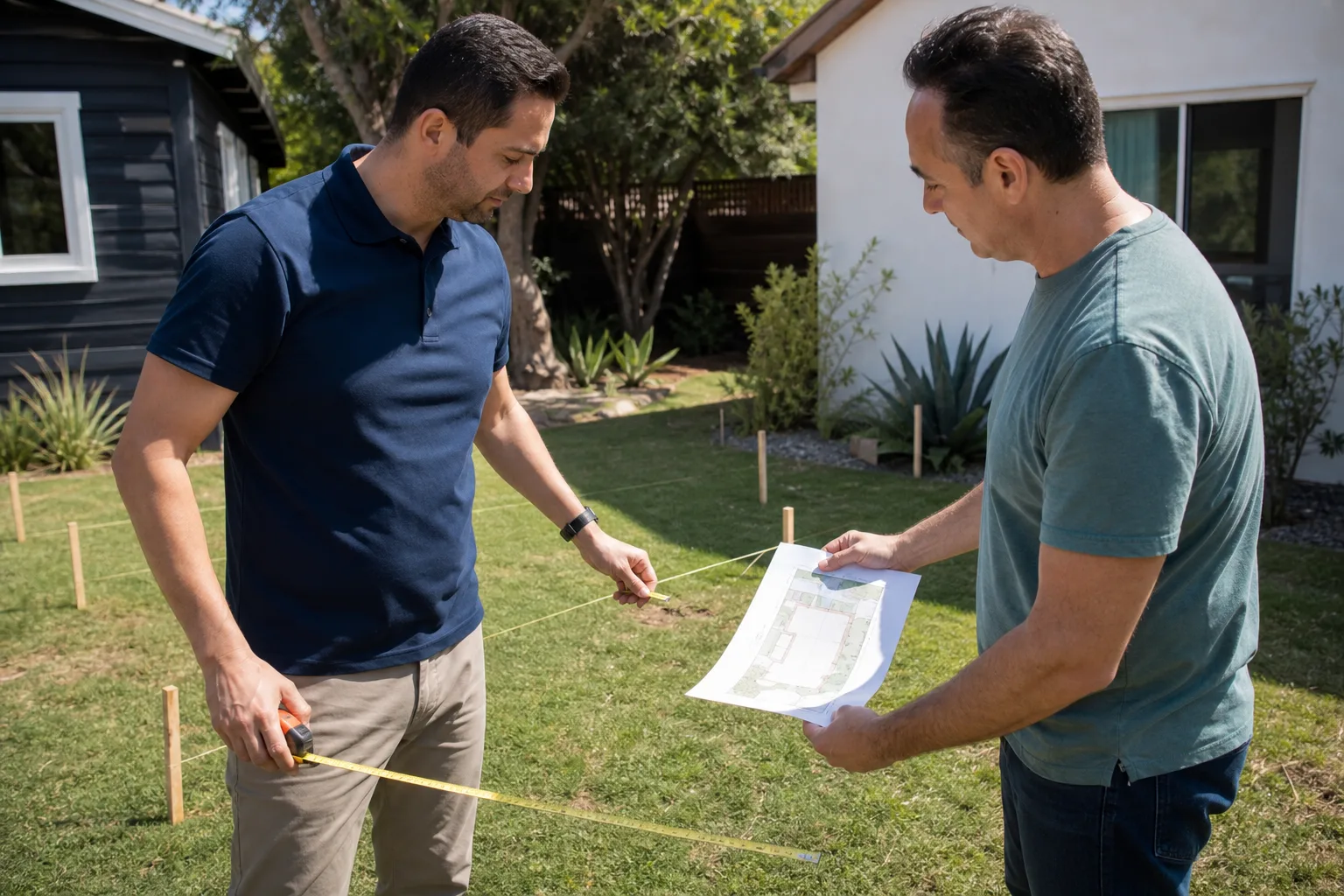
- City inspector flags a setback or clearance issue at rough-in. Cover units have specific fire-separation and equipment-clearance requirements. If the pad went in before the final site survey, you may be correcting it now with the inspector watching.
- No power to the exterior disconnect, but the house has power. This points to a failed underground splice or a cut feeder, often from a landscaper’s shovel or a tree root that grew into the conduit joint. It’s a straightforward fix, but it has to be located and dug up to repair properly.
Replacement Cost & What’s Included
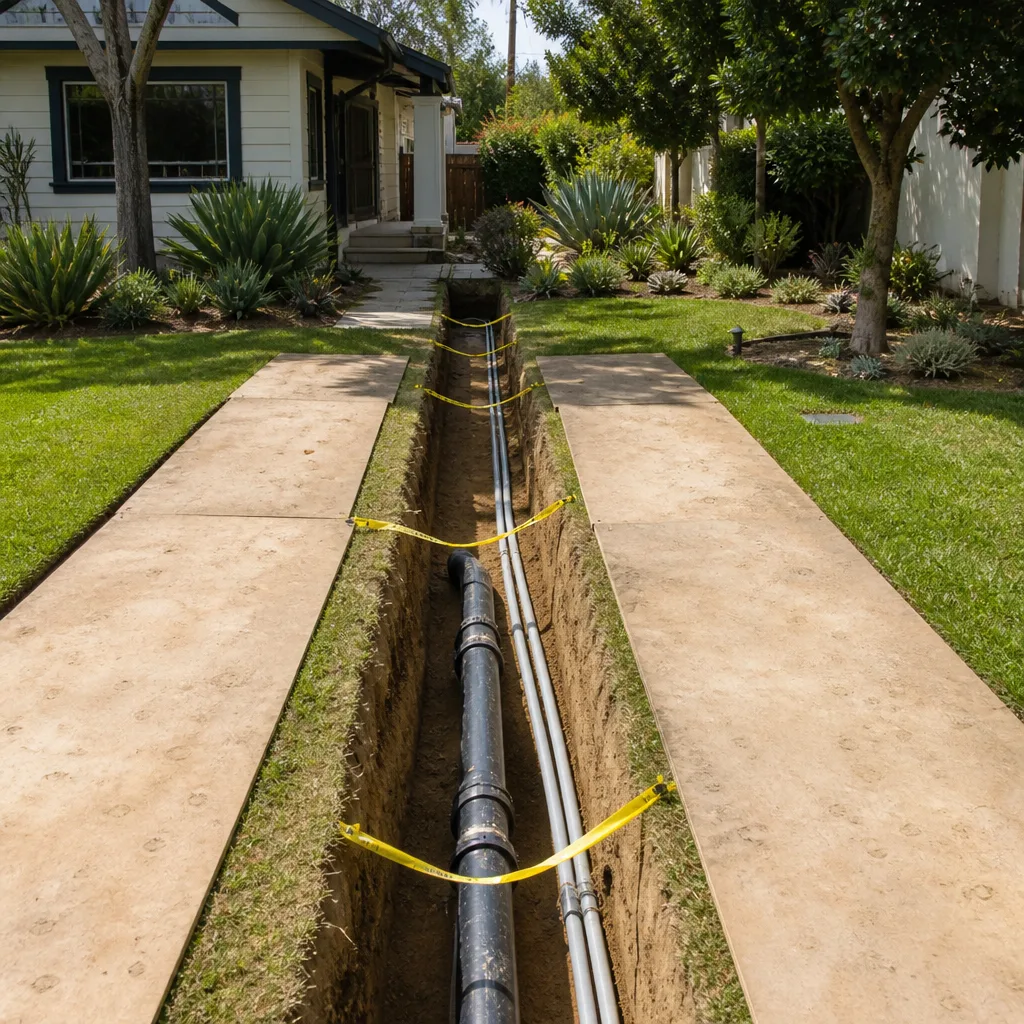
For a typical San Jose Cover site, here’s what you’re looking at before any quotes come in:
- Utility trenching and conduit replacement (water, sewer, power, data): $8,000 – $18,000 depending on run length, soil, and whether we’re trenching through landscaping or under hardscape.
- 200-amp panel upgrade and feeder to the Cover disconnect: $4,500 – $9,500. If your existing service is 100-amp and buried, add for the utility company’s service lateral work.
- Pad correction and re-leveling (up to 2 inches of settle): $2,500 – $6,000. Full pad replacement starts at $9,000.
- Cover OEM connection kit and final utility tie-in: $1,200 – $3,200, including the second cleanout where Cover calls for it.
The range depends on what’s already in the ground and what the inspector will accept. We give you a written price before any work starts, and that price doesn’t move unless you change the scope. Every site prep and utility job we complete carries our 365-Day Done Right Promise: if a trench settles, a splice fails, or a stub is out of tolerance within a year of completion, we come back and fix it with no haggling and no second invoice.
DIY or Call Us?
You can check a few things yourself. Walk the pad perimeter after a rain and look for standing water or a visible gap under the pad edge. Flip the Cover disconnect and verify it holds. Look at the trench line for a sunken stripe. That’s all worth doing and it costs you nothing.
What you should not do is dig. San Jose has underground utilities everywhere, a call to 811 is non-negotiable, and even then, hand-digging around a live 200-amp feeder or a pressurized water line is not a homeowner job. We’ve repaired enough shovel-through-the-conduit damage to say that with confidence. The sewer side is less dramatic, but a wrong slope on a re-laid line means you’re doing it twice, and the inspector will check. If you suspect a utility failure, call (669) 444-4530 and we’ll do a site walkthrough, tell you what’s actually wrong, and give you a written number.
FAQs
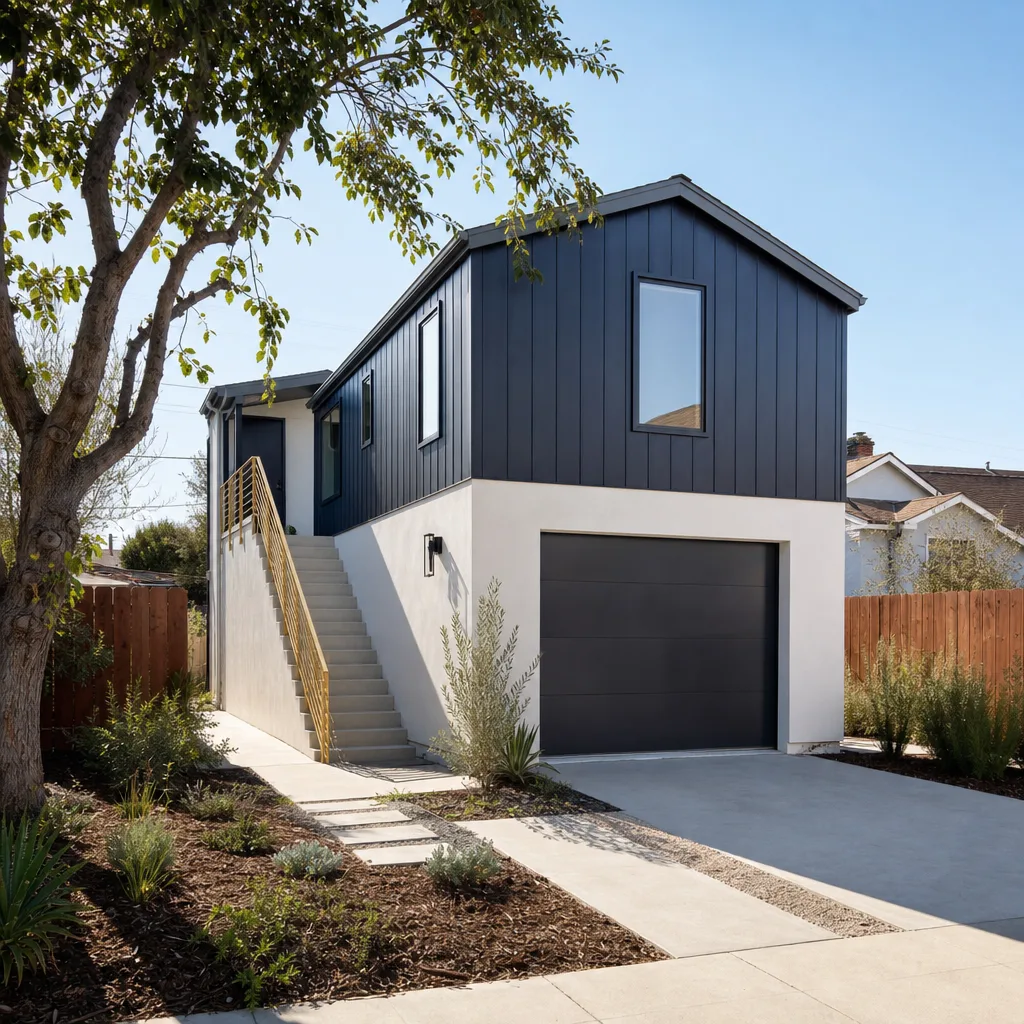
A properly compacted trench and spec-correct pad should last 20 to 30 years in San Jose’s climate before you’re looking at anything beyond normal panel wear. The biggest local threats are clay soil movement in winter and tree roots finding conduit joints. Call (669) 444-4530 if you’re seeing uneven settlement; early correction is a fraction of a full utility redo.
Most utility issues are repairable: a failed splice, a settled section of trench, or one wrong-size feeder can be corrected without redoing the entire site. Full replacement is only needed when the pad itself has cracked or the trench failed across most of the run. We’ll tell you which one you have after a walkthrough, not after we start digging.
A single utility repair, like a power or water line fix, is usually a two to three day job including inspection. A full utility re-trench and rough-in runs one to two weeks depending on permit timing and weather. We’ll give you a schedule at the same time as your written price.
We stock the Cover-spec conduit, panels, disconnects, cleanouts, and connection components on our service trucks for the most common Cover models, and we source OEM Cover kits directly when the shop drawings call for them. If you’re looking at a failed utility rough-in, call (669) 444-4530 and we’ll confirm we have what your unit needs before we schedule the walkthrough.
If your Cover site prep or utilities are showing any of the signs above, call Sutton ADU San Jose at (669) 444-4530 for a free site walkthrough and a written price. We’ll tell you what’s wrong, what it’ll take to fix, and what it costs before you commit to anything. That’s how we’ve done it since 2006, and it’s the only way Miles Hartwell knows how to run a job.
Written by Miles Hartwell, Owner, Sutton ADU San Jose at Sutton ADU San Jose, serving San Jose and nearby areas.