Abodu Site Prep & Utilities: The San Jose Owner’s Guide
Site prep and utility work for an Abodu unit in San Jose typically runs $45,000 to $95,000 installed, depending on how far your gas, water, sewer, and electrical lines need to travel and what’s hiding in your soil. We stock and install the full utility package for Abodu builds: trenching, foundation pads, sewer laterals, water service, gas lines, and the electrical service and subpanel that feed the unit. Most owners call us when they’re staring at a permit correction, a failed inspection, or a site that’s been roughed in by one crew and needs another to actually make it pass.
Here’s the thing about Abodu site prep that nobody tells you until you’re in it: the unit itself is a manufactured product with tight specs, but the ground under it is entirely yours. Santa Clara County soil conditions, setback rules, and utility easements vary block to block. What works on a flat lot in Willow Glen will not necessarily work on a sloped lot in the Berryessa foothills. The site work is where Abodu hands the project to you and your contractor, and it’s where most cost overruns and permit delays actually happen. Miles Hartwell has spent years fixing site work that was bid too low, trenched too shallow, or installed by crews who didn’t know what a San Jose inspector is going to flag before they even open the trench.
Key takeaways:
- Abodu handles the unit. Site prep and utilities are on you, and they have to meet both Abodu’s specs and City of San Jose code.
- Most Abodu site packages in San Jose fall between $45,000 and $95,000, with sewer and electrical work driving the big swings.
- We’re an independent contractor, not affiliated with Abodu. We install the site work that makes an Abodu unit legal, safe, and connected.
- Every quote is a written, line-item price before we move one shovel of dirt. No allowances, no “we’ll see when we open it up” clauses.
Which Abodu Models This Applies To
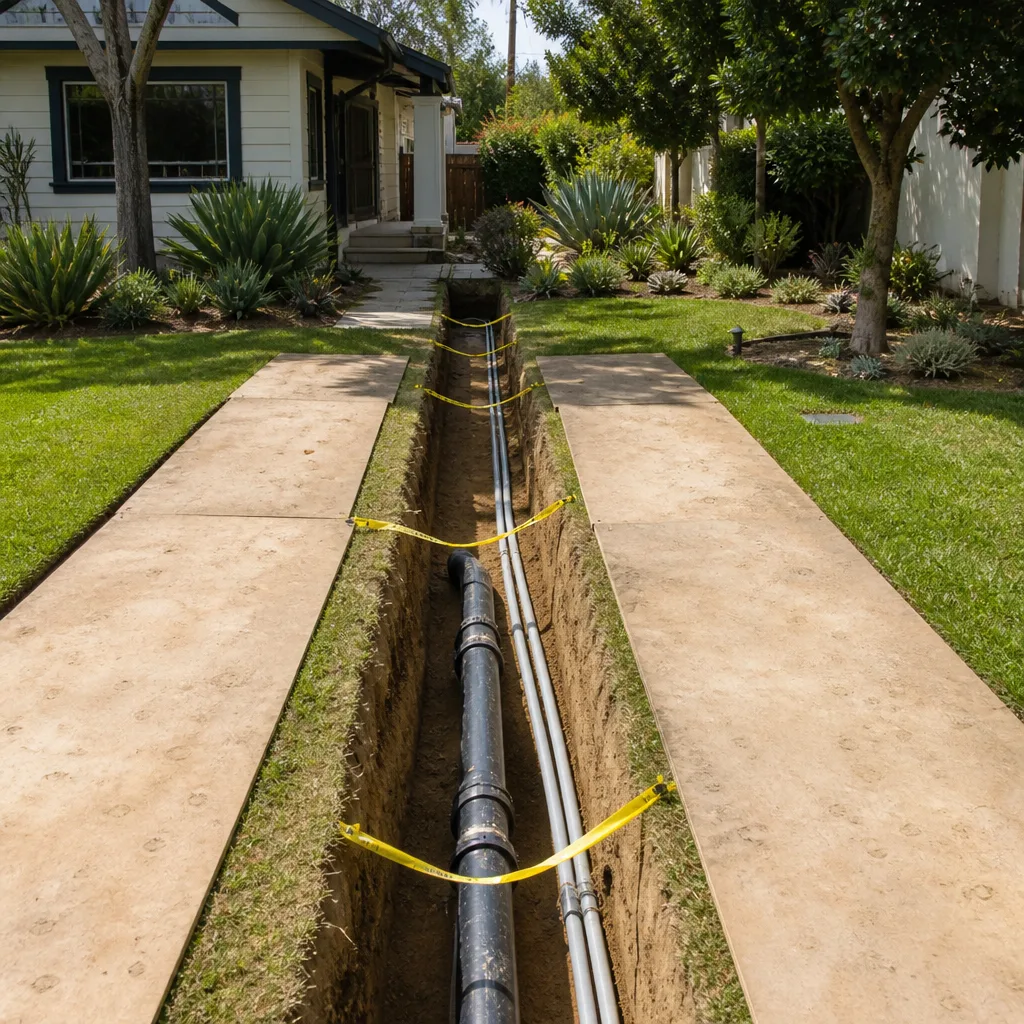
Abodu makes three primary models: the Studio (starting around 300 square feet), the One (a one-bedroom, roughly 500 square feet), and the Two (a two-bedroom, roughly 600 to 700 square feet). Site prep and utility requirements scale with the unit’s electrical load, plumbing fixture count, and gas demand. A Studio typically needs a 100-amp subpanel and a single sewer connection. A Two with a full kitchen, laundry, and two bathrooms can push you toward 200-amp service planning and a larger gas line for the water heater and range.
The compatibility gotcha we see most often in San Jose: Abodu’s utility connection points are factory-set, and they don’t move. If the sewer stub-out on your unit is 24 inches off the rear wall and your existing sewer lateral is 30 feet away on the wrong side of the property, you’re trenching. We’ve also seen owners buy a unit before checking whether their existing electrical panel has the headroom for a subpanel feed. A 100-amp main panel from a 1960s San Jose ranch house will not safely serve a new ADU, and that’s a $6,000 to $10,000 panel upgrade before the ADU wiring even starts.
OEM versus aftermarket doesn’t really apply the same way it does for mechanical parts. The “parts” here are engineered systems: Schedule 40 ABS or cast iron sewer, Type K copper or PEX water lines, rigid or CSST gas pipe, and an electrical feed sized to the unit’s load calculation. The Abodu spec sheet tells us what the unit needs. What we install is dictated by City of San Jose code, PG&E requirements, and the condition of what’s already buried in your yard.
Signs Your Abodu Site Prep & Utilities Is Failing
- Sewer smells near the unit or in the yard. This usually means a belly in the lateral, a cracked pipe from trench settlement, or a connection that wasn’t bedded properly. San Jose’s clay soil expands and contracts with moisture, and pipes bedded in native clay without proper sand or gravel will shift.
- Water pressure drops when two fixtures run at once. An undersized water service or a long run of small-diameter pipe will starve the unit. We see this when someone taps a 1/2-inch irrigation line for domestic supply instead of running a dedicated service from the meter.
- Breakers trip when the unit’s heat and appliances run together. This points to an undersized electrical feed or a subpanel that was never load-calculated for the actual unit. Abodu units draw what they draw, and the wiring has to match.
- Standing water near the foundation pad after rain. San Jose sees concentrated winter rain, and if site grading and drainage were shortchanged, water pools against the pad and works its way into the structure over time. This is a site prep failure, and it doesn’t fix itself.
- Gas appliances won’t light or the gas line hisses faintly. A gas line that’s too small for the BTU load or a joint that was never pressure-tested will show up as weak flame, delayed ignition, or worse. Gas work on an ADU is a licensed, permitted job, full stop.
Replacement Cost & What’s Included
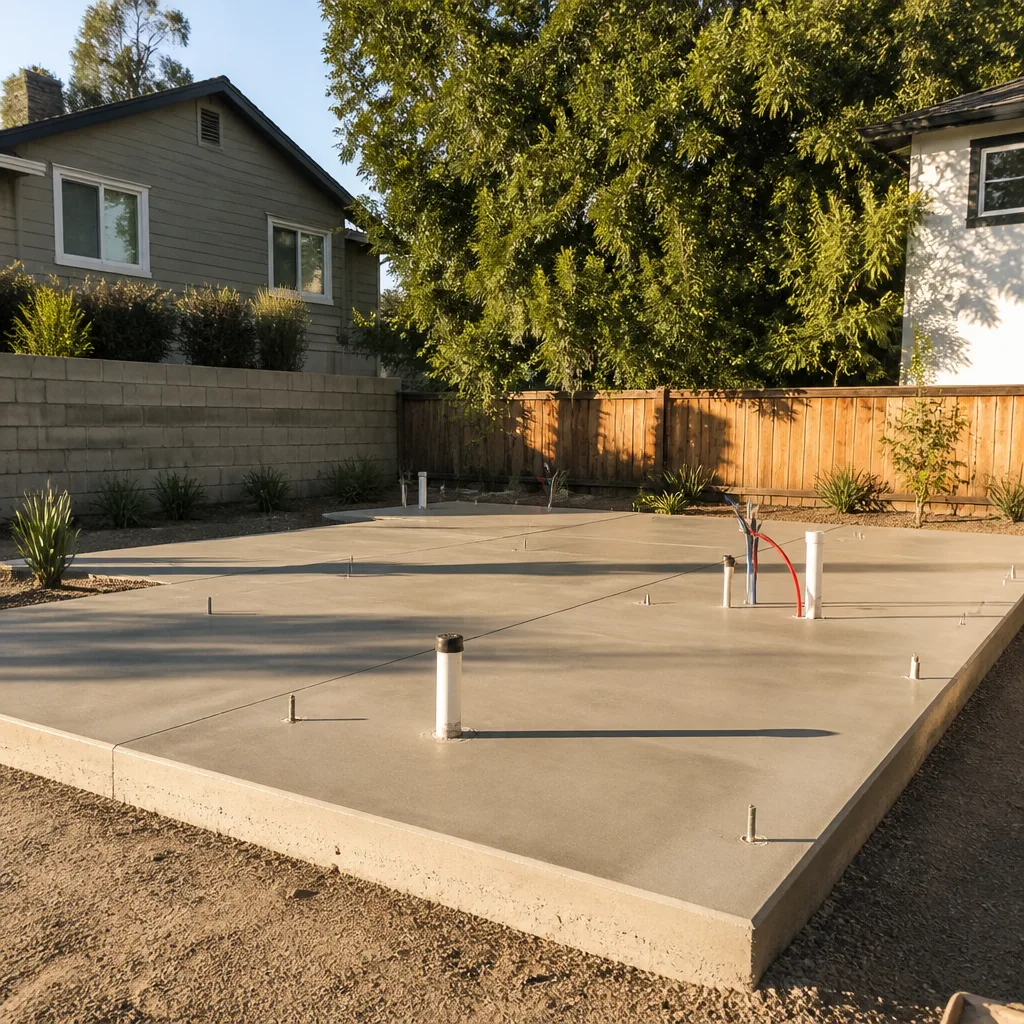
In San Jose, here’s what we tell people to budget for the most common site prep and utility packages on an Abodu build or repair:
- Sewer lateral replacement or new connection: $8,000 – $18,000, depending on trench depth, length, and whether the street or sidewalk needs to be opened and patched to city spec
- Water service line from meter to unit: $4,000 – $9,000, including trenching, backflow prevention, and inspection
- Gas line extension or replacement: $3,500 – $7,500, depending on run length and whether you need a meter upgrade from PG&E
- Electrical subpanel and feeder run: $5,000 – $12,000, more if the main panel needs an upgrade
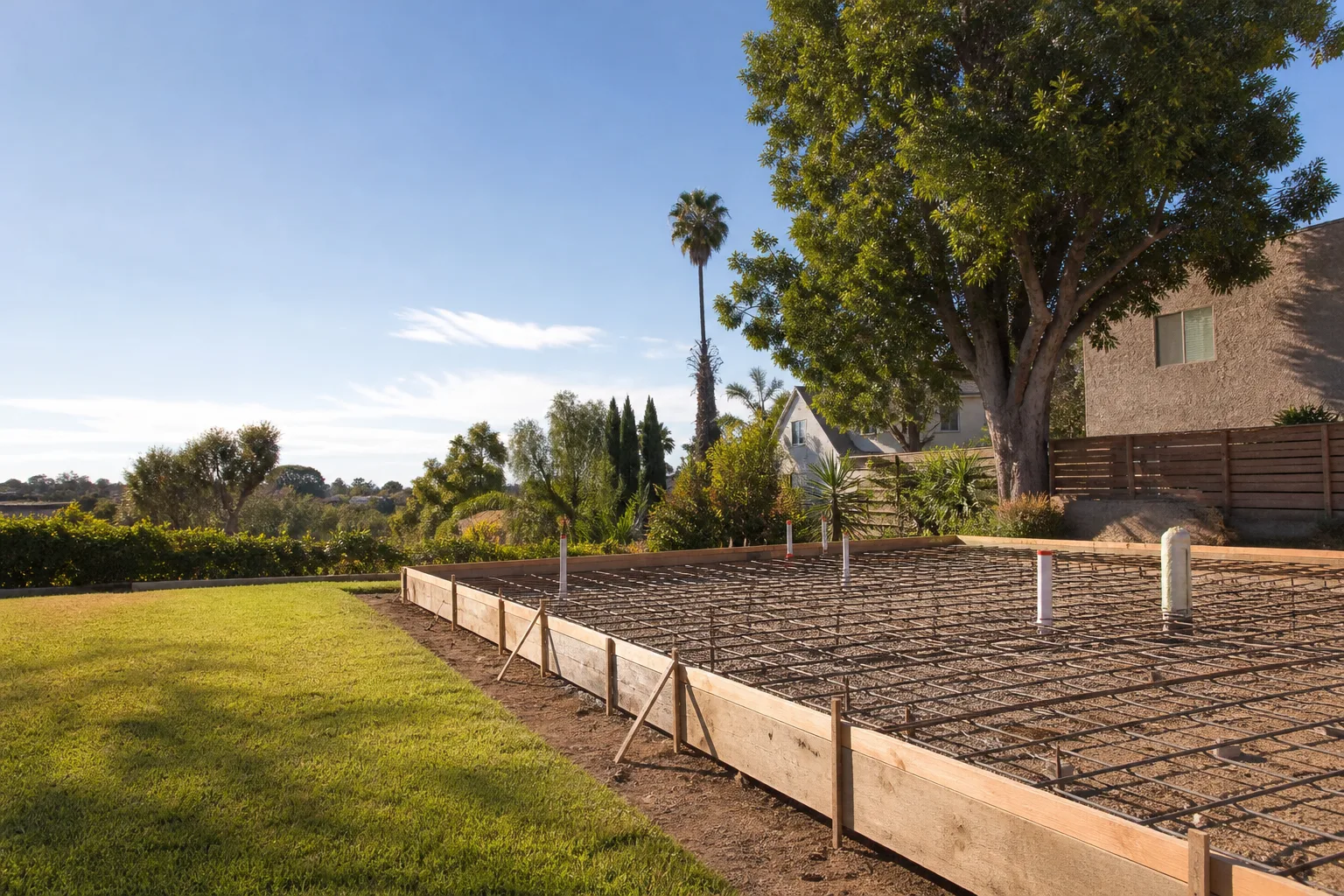
- Foundation pad and site grading: $12,000 – $28,000, driven by soil conditions, pad size, and retaining wall needs on sloped lots
- Full site package for a typical Abodu One in San Jose: $45,000 – $75,000 before any unforeseen underground conditions
Every price we give is written down before work starts, and it’s a fixed number, not an estimate that drifts. The 365-Day Done Right Promise covers our workmanship on site prep and utility work for a full year. If a trench settles, a joint leaks, or a drain backs up because of how we installed it, we come back and make it right. You also get a free second visit if anything fails within that year. No haggling, no re-inspection fee, no “that’s not covered.”
DIY or Call Us?
You can check a few things yourself: turn on every fixture and watch the pressure, look for wet spots or sinkholes in the yard, and note whether breakers trip when the unit runs at full load. Those observations help us diagnose faster when you call.
What you should not do is open a trench, touch a gas line, or work inside an electrical panel. Trenching without knowing where the existing utilities run can hit a live line, and a San Jose gas line hit is a neighborhood evacuation, not a learning experience. Electrical work on an ADU requires a permit and a licensed electrician, and gas work requires a pressure test witnessed by an inspector. If your Abodu’s utilities are failing, call (669) 444-4530 and we’ll send someone who’s background-checked, identity-verified, and badged under the Threshold Standard. You’ll know their name and see their photo before they park the truck.
FAQs
A properly installed sewer lateral and water service in San Jose should last 50 to 75 years, and a clean electrical feed will last the life of the panel it serves. What shortens that lifespan is poor bedding in clay soil, shallow trenches that get crushed by root growth or vehicle traffic, and under-specified pipe for the load. We’ve trenched out “new” installations that failed in under five years because they were built to residential irrigation standards, not ADU utility standards. Call (669) 444-4530 if you want us to check what’s already in the ground.
It depends on what’s failing. A bellied sewer lateral or a cracked section can sometimes be spot-repaired, but if the pipe was sized wrong from day one, you’re replacing the run. The honest answer is that digging once and replacing correctly is usually cheaper than digging twice. We’ll tell you which one you’re looking at before you spend a dollar with us.
For a full package on a standard San Jose lot, plan on three to six weeks from first excavation to final inspection sign-off. That includes trenching, utility rough-in, inspections at each stage, backfill and compaction, and the final hookup. City of San Jose inspection scheduling is what it is, and we’ve learned to build the schedule around it rather than promise dates the permit office won’t honor.
We stock the utility materials we install: pipe, fittings, conduit, panels, and the hardware that meets both Abodu’s connection spec and San Jose code. Abodu does not supply site utilities, so there’s nothing for you to order on that front. If you’re also working with brands like Cover or Dvele, we carry compatible site packages for those units as well.
Tell me what you actually need the space to do, then we’ll figure out what makes sense to build. Call Sutton ADU San Jose at (669) 444-4530 for a written, line-item quote on your Abodu site prep and utilities. Free estimates, no pressure, and a real number before any work begins.
Written by Miles Hartwell, Owner, Sutton ADU San Jose at Sutton ADU San Jose, serving San Jose and nearby areas.