Site Assessment in San Jose, CA
A site assessment for an ADU in San Jose is a property-level evaluation that determines whether your lot can legally and physically support a second dwelling, what it will take to get there, and what it will likely cost. At Sutton ADU San Jose, a site assessment means Miles Hartwell or a Threshold Verified project lead walks your property with a checklist built around San Jose’s specific zoning, setback, and soil conditions, then hands you a written report with real numbers, not vague possibilities. Most San Jose homeowners schedule one before they commit to drawings or financing, because finding out a sewer lateral runs under your only viable build site after you’ve paid for plans is an expensive way to learn.
We’ve been doing this since 2006, and the site assessment is where we earn or lose your trust. Every assessment ends the same way: you know exactly what your lot can do, what it can’t, and what it will cost to bridge the gap. Call (669) 444-4530 to schedule yours, and we’ll send you the name and photo of who’s coming before they arrive. This page is part of our broader ADU Design & Permitting in San Jose service, and you can always return to the home page for an overview of everything we do.

When You Need Site Assessment
Not every project starts with a formal site assessment, but these situations almost always call for one. If any of these sound like your property, you’ll save time and money by having us look at the land before anything else happens:
- You have a small or irregularly shaped lot. San Jose is full of 5,000-square-foot lots where a detached ADU has to squeeze between setback requirements, existing structures, and easements. We measure precisely, because guessing is how you end up redesigning after the city rejects your permit.
- Your sewer line or water main runs through the likely build area. This is the most common surprise in Willow Glen and the Rose Garden, where older homes have laterals that run diagonally across the backyard. Relocating a sewer lateral can cost $8,000 to $20,000 depending on depth and length, and you want that number before you buy plans.
- You have mature trees anywhere near the proposed footprint. San Jose has a protected tree ordinance that applies to certain species and sizes. A 40-year-old oak near your property line isn’t just a landscaping question, it’s a permitting constraint.
- Your lot has meaningful slope or drainage challenges. Hillside areas like Alum Rock and the East Foothills often need retaining walls, additional grading, or engineered drainage. Those costs need to be quantified early.
- You’re deciding between an attached conversion, a detached unit, or a prefab. A garage conversion has different requirements than a backyard unit. We assess what your existing structures can support and whether a stick-built or factory-built approach fits your lot better.
- You’ve been told by the city or a contractor that your property “might have issues,” but nobody has shown you exactly what they are. A formal assessment replaces speculation with a written list of constraints, each one priced.
Our Site Assessment Process
You should know what happens during the assessment before you book it. Here’s our process, step by step:
- Records review. Before we set foot on your property, we pull the city’s zoning designation, the county assessor’s parcel map, any recorded easements, and available utility drawings for your address. This gives us a working map of known constraints.
- Scheduled walkthrough with a named, photo-badged professional. The day before your appointment, you receive the name and photo of the person who will arrive. They show up in a marked uniform and present a photo ID at the door. This is the Threshold Standard, and it applies to every visit, every time.
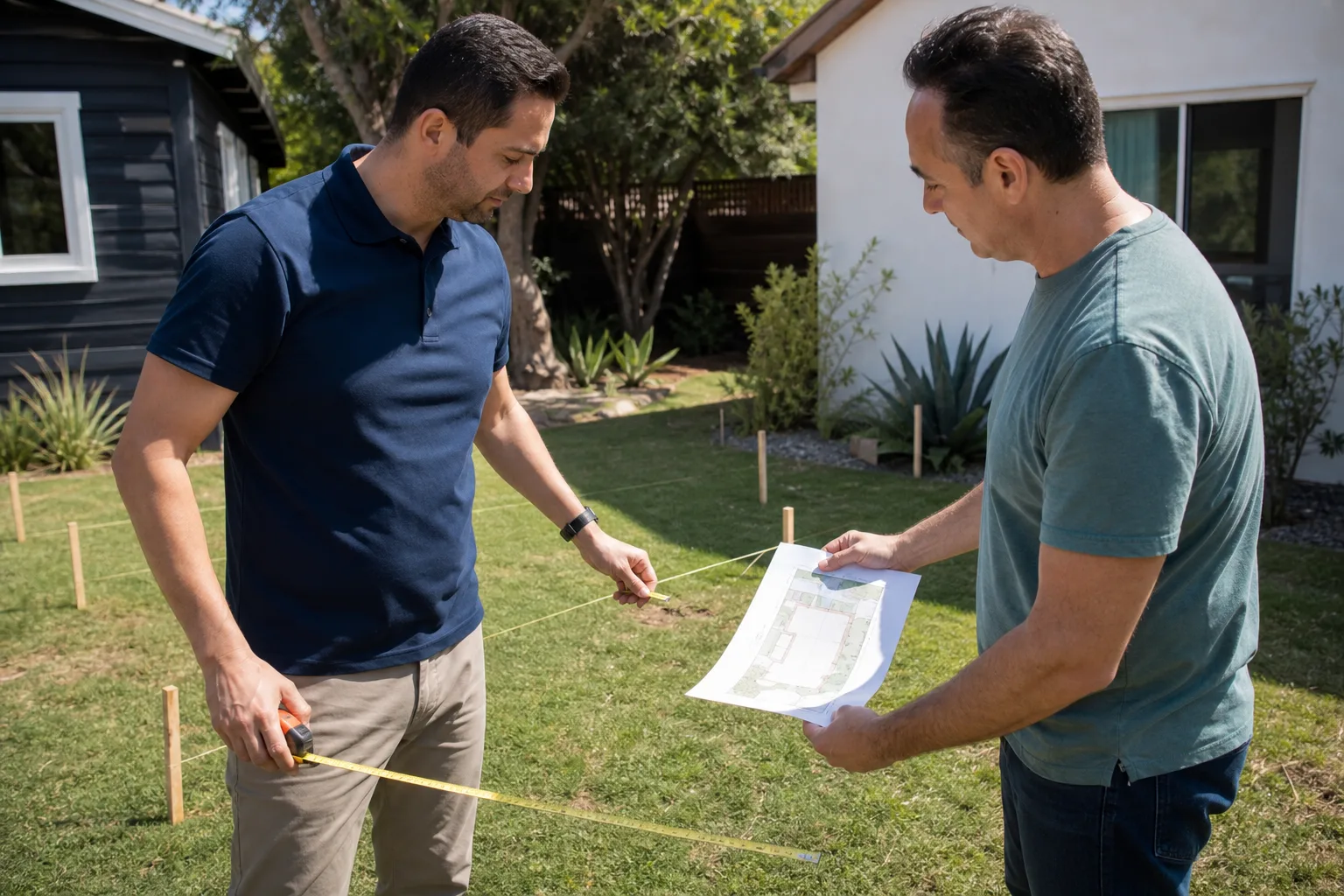
- On-site measurements and observations. We measure the usable portions of your lot against San Jose’s setback requirements, which we’ll explain in plain language. We check grades, drainage patterns, existing structure conditions, utility access points, and tree locations. We photograph everything relevant so the report isn’t abstract.
- Constraint identification and preliminary feasibility. Before we leave, we’ll tell you honestly whether your site looks straightforward, moderate, or complex, and what the main cost drivers will be. This isn’t the final word, but it’s an honest read from someone who’s seen hundreds of San Jose lots.
- Written report with cost ranges. Within a few days, you receive a written report that spells out every constraint we found, what each one means for your project, and realistic cost ranges. Where a specific solution is required, like a sewer lateral relocation or a retaining wall, we tell you what that typically adds to the total budget in San Jose.
- Recommendations on ADU type and product fit. If your site works, we’ll tell you whether a site-built unit, a garage conversion, or a factory-built option like Abodu or Plant Prefab makes the most sense for your lot. If your site has constraints that make certain products a poor fit, we’ll say so plainly.
Site Assessment Pricing in San Jose
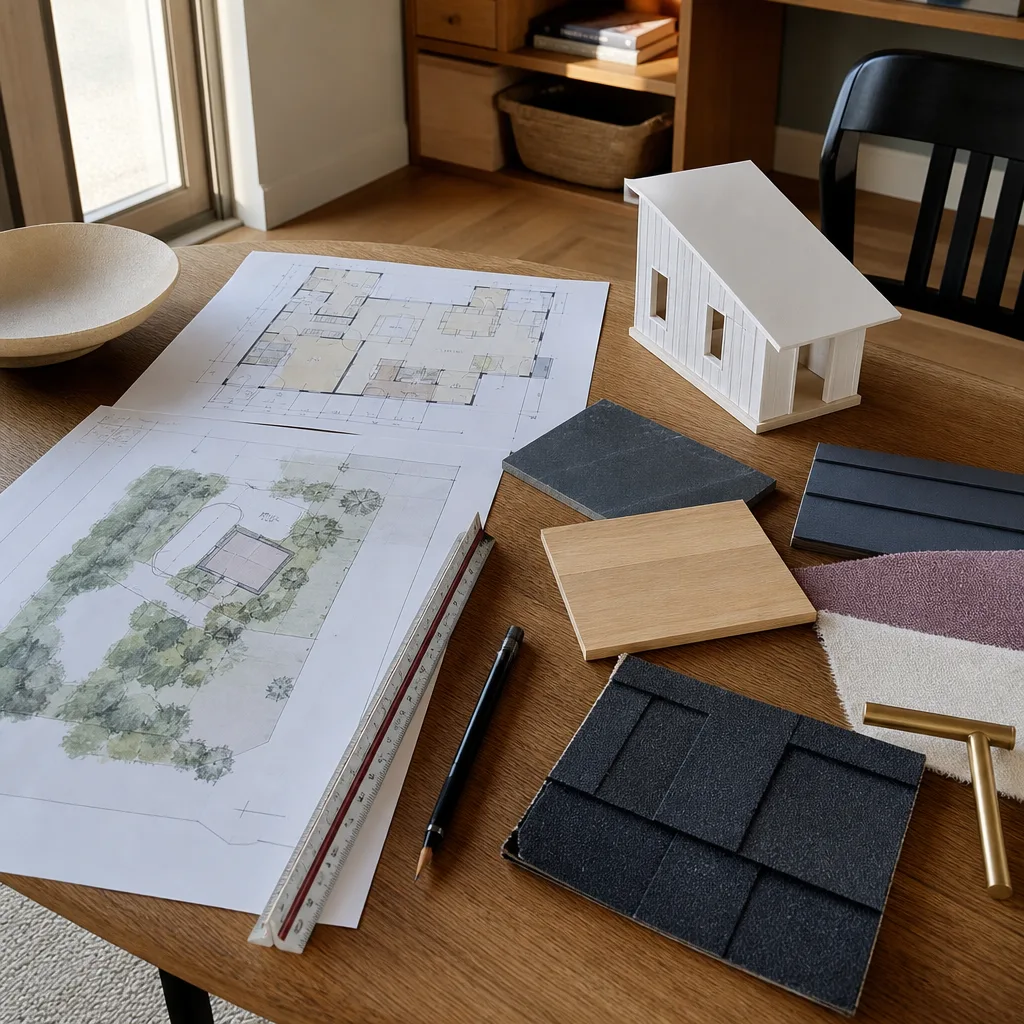
A standalone site assessment in San Jose typically costs between $350 and $950, depending on lot size, complexity, and whether we need to coordinate with a surveyor or geotechnical engineer. Smaller, flat lots in neighborhoods like Cambrian or Blossom Valley tend to fall on the lower end. Larger lots with slope, trees, or utility questions in areas like Almaden Valley run higher. If you proceed with Sutton ADU San Jose for design and permitting, we apply the full assessment fee toward your project. This isn’t a separate revenue line for us, it’s the first step of the build.
Here’s what affects the assessment price:
- Lot size and topography. A flat 6,000-square-foot lot is faster to evaluate than a sloped third of an acre.
- Number of existing structures. Detached garages, sheds, and older additions add measurement and evaluation time.
- Utility complexity. If we need to trace sewer laterals or verify electrical service capacity at the street, that adds time.
- Tree and landscape density. Dense mature landscaping means more measurement points and more tree ordinance checks.
- Document availability. If the city’s records are incomplete or your parcel has an unusual history, we spend more time on research.
Every assessment ends with a written price for the assessment itself, delivered before we start, and a written estimate for the work the assessment reveals. There are no surprise invoices, scope changes passed silently, or vague “we’ll figure it out later” line items. That’s the point of the Threshold Standard. Call (669) 444-4530 and we’ll give you a firm assessment price before we schedule anything.
What the Assessment Covers and What It Reveals
It helps to understand exactly what we’re looking at, because some constraints in San Jose are invisible until someone checks specifically for them. Here are the categories that matter most:
Setbacks and buildable area
San Jose requires specific distances between your new ADU and the property lines, the primary home, and any other structures. A setback, which is the required gap between your structure and the property line, varies by zone. In some R-1 zones, a detached ADU can sit as close as four feet to the rear property line, while side setbacks may be different. We measure your actual lot against your zone’s rules, then translate that into a buildable rectangle you can visualize.
Utilities and services
The location, depth, and condition of your sewer lateral, water service, gas line, and electrical panel all affect where an ADU can go and what utility work will cost. Many San Jose homes built before 1970 have sewer laterals made of clay pipe that’s now cracked or rooted. If your ADU needs a separate sewer connection or a new lateral, that’s a five-figure line item you need to know about during planning, not during excavation.
Soil and drainage
San Jose’s soil varies dramatically by neighborhood. Areas near the Guadalupe River have expansive clay soils that shift with moisture. Hillside lots in the East Foothills may have shallow bedrock. Drainage matters too: if your lot currently sends water toward your house or your neighbor’s house, adding an impermeable roof surface changes that equation. We assess what we can see, and where soil conditions look risky, we recommend a geotechnical evaluation before design begins.
Existing structures and their condition
If you’re planning a garage conversion, the structural condition of that garage matters. A 1950s stick-frame garage with a cracked slab may need foundation work before it can become a legal dwelling. We evaluate what’s there and give you an honest read on whether conversion or replacement makes more financial sense. We’ve worked with Tuff Shed structures in some conversion scenarios, and with James Hardie cladding systems when we need durable exterior materials that perform well in San Jose’s dry summers and wet winters.
Access and logistics
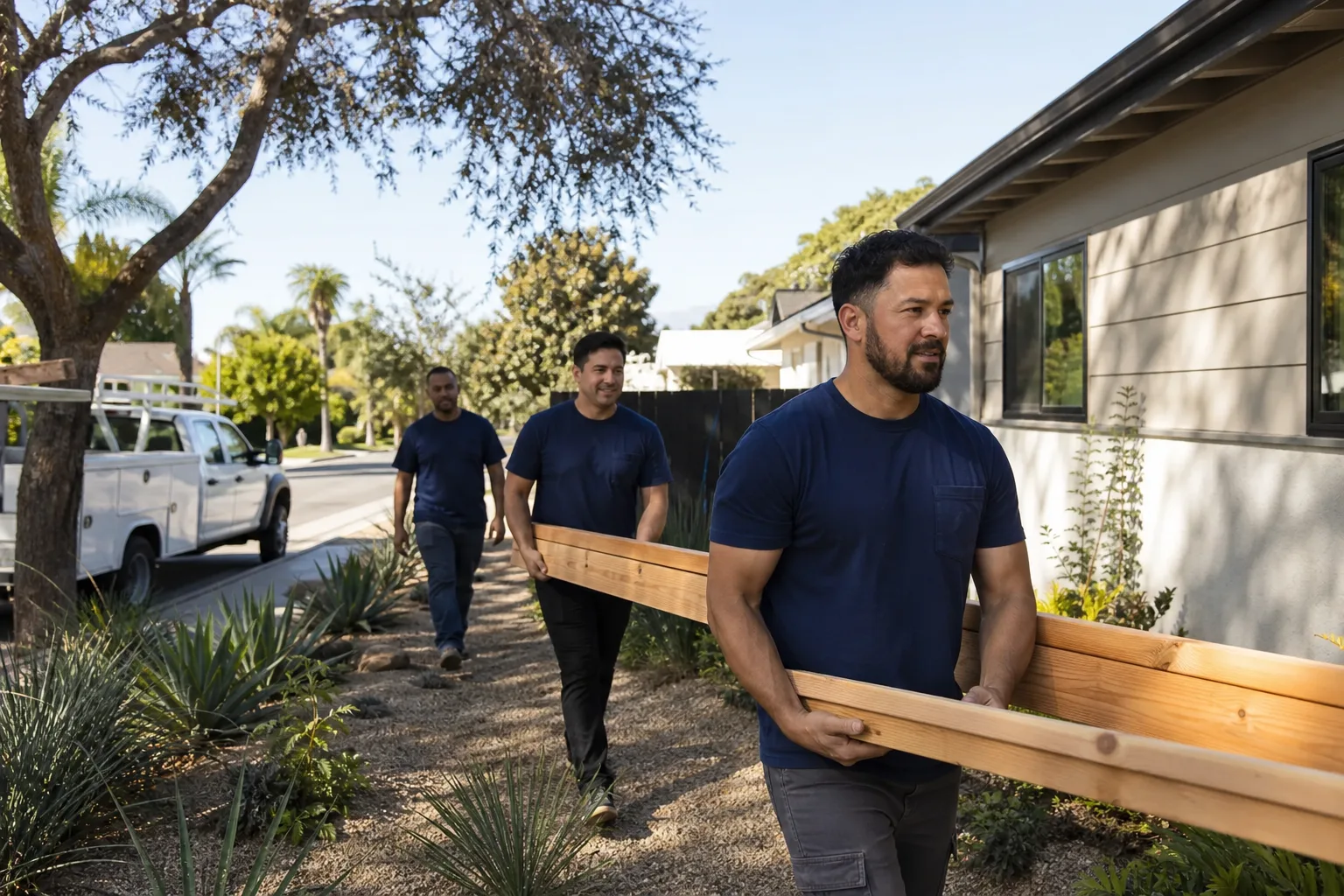
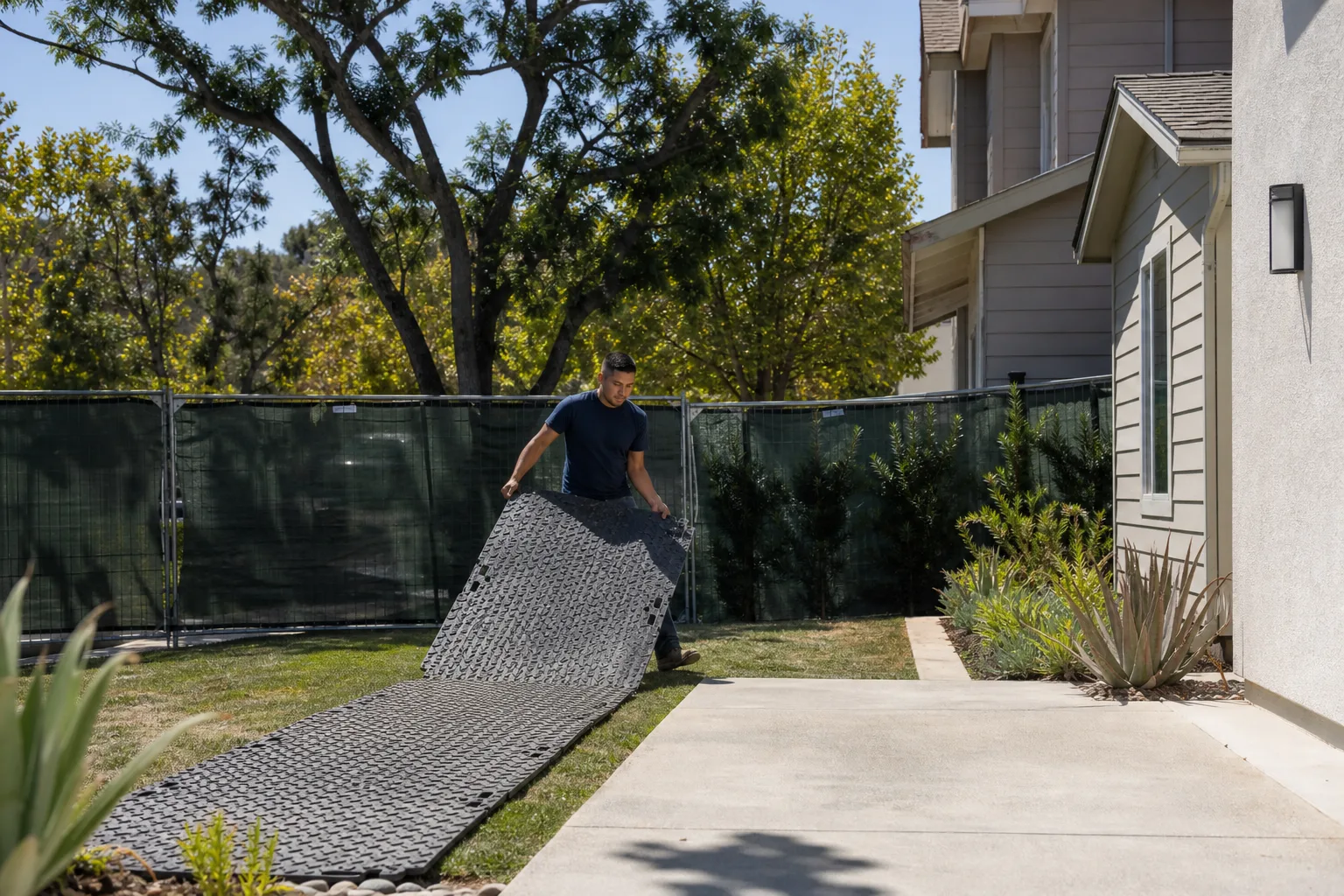
How do materials and crews get to the build site? A backyard ADU behind a 1920s bungalow with a narrow side yard is a different logistics problem than a wide-open corner lot. We assess access width, staging areas, and whether a crane or other specialty equipment would be needed for roof sections or prefab modules. This is where product choice matters. A factory-built unit like Abodu is designed to be delivered and placed efficiently, but only if your lot has the access to receive it. We’ll tell you if it does.
San Jose Specifics That Change Everything
Some things about building an ADU in San Jose are simply different from other Bay Area cities, and our assessments account for all of them:
- School district fees. San Jose falls under several different school districts depending on your address. Some districts assess developer fees on ADUs at higher rates than others. We’ll identify your district and note the expected fee exposure. This is a fixed, predictable cost, not a surprise.
- San Jose’s ADU ordinance details. The city has specific rules about height limits, second-story ADUs over garages, and detached unit sizes that differ from neighboring jurisdictions. We keep current on these because they change periodically and they directly affect what your site can support.
- Flood zone boundaries. Certain parts of north San Jose and areas near Coyote Creek sit in FEMA flood zones. If your lot is inside one, the assessment flags it immediately and we discuss what additional engineering or insurance considerations apply.
- Historic districts. Portions of Naglee Park, Hensley, and other pockets carry historic overlay requirements. If your property is within one, certain exterior changes require additional review, and the assessment identifies this before you fall in love with a design that won’t pass.
- Soil liquefaction zones. Parts of San Jose sit in mapped liquefaction zones where earthquake shaking could destabilize certain soil types. If your lot is in one of these zones, we’ll recommend the appropriate geotechnical work and explain what it means for foundation design. This isn’t optional in these areas; it’s a safety question and a permitting requirement.
Why Lot Conditions Dictate Product Choice
The site assessment is where product decisions actually get made, because the land doesn’t care what you saw in a brochure. Here’s how that plays out in practice:
If your lot is wide, flat, and easily accessed from the street, a factory-built ADU from Plant Prefab or a unit from Abodu can be placed with minimal site disruption, often in a fraction of the time of a site-built unit. But if your lot is tight, sloped, or hemmed in by easements, those same products may not be deliverable, and a site-built approach or a garage conversion may be the only realistic option. We don’t get attached to one method. We get attached to what works on your specific parcel, and the assessment is what tells us the difference.
We also assess exterior finish requirements honestly. James Hardie fiber cement siding performs exceptionally well in San Jose’s climate, where summer heat and winter moisture cycles can warp cheaper materials. We’ll tell you when it’s worth the premium and when it isn’t, based on your site’s exposure and your long-term plans for the property.
What You’ll Have in Hand After the Assessment
When we finish a site assessment, you leave with three specific things:
- A written feasibility determination. One page that says clearly whether an ADU is feasible on your lot, what type is most viable, and what the primary constraints are. This is the document you can take to a lender, a family member, or a planning discussion.
- A cost range, not a guess. Based on what we measured and observed, we give you a realistic total project range for your specific site. Most detached ADUs in San Jose run $180,000 to $320,000 before site work, and site work on a difficult lot can add another $30,000 to $80,000 depending on utilities, drainage, and access. You’ll know where your lot falls.
- A clear next step. If the site works, we tell you what design and permitting will involve, what the timeline looks like, and what we need from you. If the site doesn’t work, we tell you that too, honestly, and explain what it would take to make it work, if anything could.
The 365-Day Done Right Promise covers defects in workmanship for one full calendar year from project completion. That’s a written guarantee stamped on your project, not a verbal assurance. And if any element of the build fails within that year, the second visit is free. No haggling, no fee. That’s how we’ve operated since Miles Hartwell founded this location under the Threshold Group family of companies in 2006.
FAQs – Site Assessment
How much does a site assessment cost in San Jose?
A site assessment in San Jose typically costs between $350 and $950 for most residential lots. Factors like lot size, slope, tree coverage, and utility complexity affect the exact price, but we give you a firm written price before the assessment happens, and the full amount is credited toward your project if you proceed with our design and permitting work.
Do I need a site assessment before designing an ADU in San Jose?
Yes, in almost every case. A site assessment identifies buildable areas, utility conflicts, soil conditions, and access constraints before you spend money on architectural drawings. Designing first and assessing second is how homeowners end up paying for plans that get rejected at the permit stage. Call (669) 444-4530 and we’ll tell you if your situation is an exception.
What’s the difference between a site assessment and a survey?
A site assessment is a practical evaluation of building feasibility: setbacks, utilities, drainage, access, and cost drivers. A survey is a precise legal boundary measurement done by a licensed surveyor. In some cases we recommend both, especially when property lines are uncertain or you’re building close to a setback limit. We’ll tell you if a survey is needed for your lot after the assessment.
How long does a site assessment take?
The on-site portion of a site assessment usually takes 60 to 90 minutes for a typical San Jose residential lot. The full process, including records research and the written report, is typically completed within three to five business days. You’ll get the report with cost ranges and a clear feasibility determination in writing.
Can I do my own site assessment?
You can gather some information yourself, like locating your property lines and noting obvious drainage issues, but a professional assessment checks things most homeowners don’t know to look for: sewer lateral condition and location, soil liquefaction zones, school district fee exposure, and specific ADU ordinance requirements for your zone. Getting these wrong costs far more than the assessment fee. We’d rather you call (669) 444-4530 and get answers you can build on.
Start With the Land
The land is the first thing that gets built on, and it’s the first thing that tells you whether your ADU is a smart financial move or a money pit in waiting. A site assessment from Sutton ADU San Jose gives you measured answers, written cost ranges, and a named professional who shows up with a photo ID and a checklist built for this city’s actual rules. Call (669) 444-4530 today for a free estimate on your site assessment, and we’ll have Miles Hartwell or a Threshold Verified project lead walk your property and tell you the truth about what it can do. The written price comes before anything starts. That’s how it works, every time.
Written by Miles Hartwell, Owner at Sutton ADU San Jose, serving San Jose.