Tuff Shed Site Prep & Utilities: The San Jose Owner’s Guide
Site prep and utility work for a Tuff Shed in San Jose typically runs $2,800 to $9,500 depending on your soil, slope, and how far we need to run electrical or water lines. That’s the installed range we quote most often, and it includes the grading, base material, conduit or piping, and the connection itself. Most owners don’t think about site prep until they notice pooling water under the shed, a door that no longer opens square because the pad has settled, or a dead outlet that was working fine six months ago.
We’re Sutton ADU San Jose, an independent service provider. We’re not affiliated with Tuff Shed, but we work on their structures regularly because a lot of San Jose homeowners use them as the base for a studio, workshop, or backyard office. Miles Hartwell, our owner, has been on enough of these sites to tell you the same thing every time: the shed itself is rarely the problem. It’s what the shed sits on and what feeds it that fails first.
Which Tuff Shed Models This Applies To
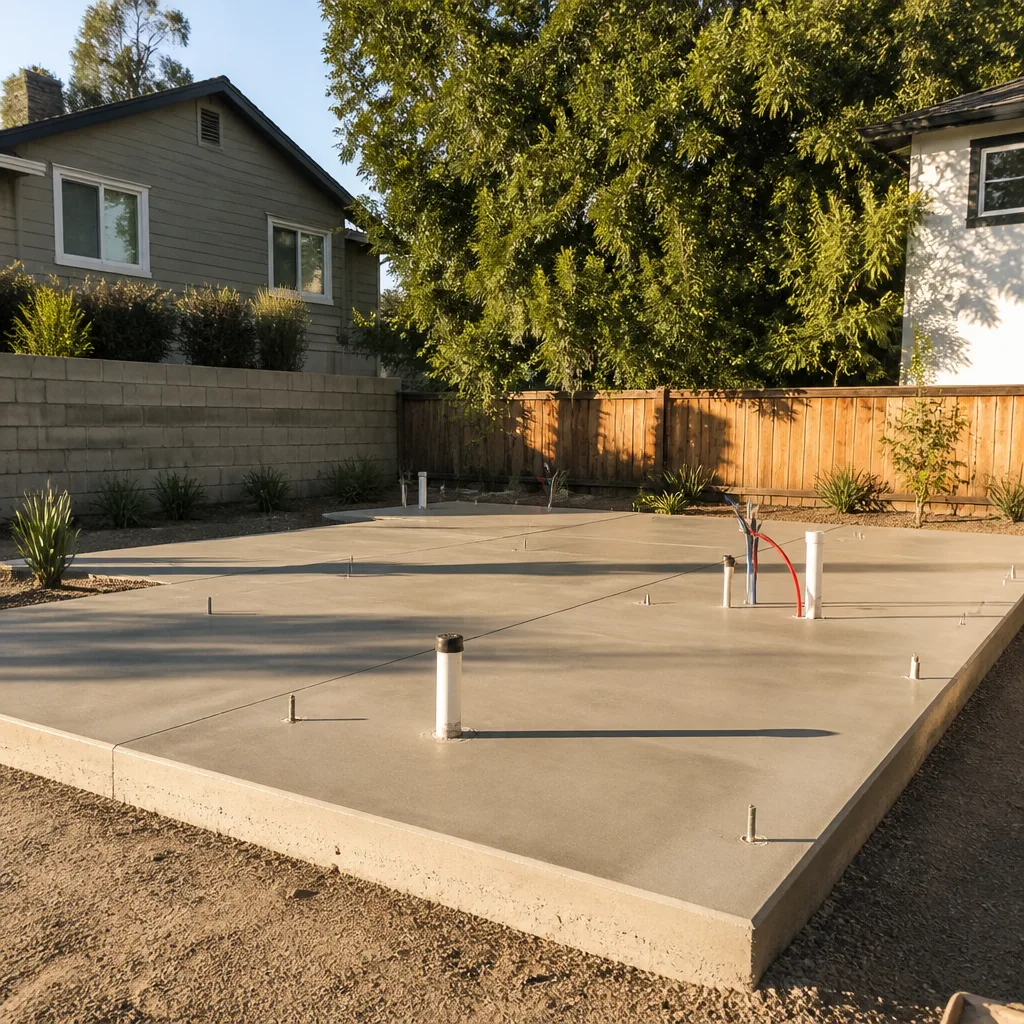
The short answer: every Tuff Shed model. That includes the Premier PRO Series, the Premier Ranch, the Sundance Series, the garden shed lines, and the two-story barn-style models. What changes isn’t whether you need site prep, it’s how much. A 6×8 garden shed on a flat backyard in Willow Glen needs far less than a 12×24 Premier PRO Studio you’re converting to an office with its own subpanel in Rose Garden.
The one compatibility gotcha we run into all over the valley: Tuff Shed doors and frames are designed to operate on a level pad within a quarter inch over eight feet. If your site prep doesn’t hit that, the doors bind, the siding seams open, and the warranty on the shed itself becomes a fight. For utilities, Tuff Shed buildings ship with standard framing cavities sized for common electrical boxes and conduit, but we always confirm measurements on site rather than trusting the spec sheet. Aftermarket parts like conduit sweeps, junction boxes, and gravel base material are fine, but the floor system is engineered for a specific load. Don’t swap in a cheaper base material without checking the weight rating. A cubic yard of poorly compacted DG or a hand-tamped pad that wasn’t machine packed will telegraph problems within the first rainy season. In San Jose’s clay-heavy soil, that means one wet winter is enough to expose a shortcut.
Signs Your Tuff Shed Site Prep & Utilities Is Failing
- Water pooling around the base after rain. This is the earliest sign. San Jose’s clay doesn’t drain well, and if the pad wasn’t sloped or the perimeter backfill wasn’t done right, water sits against the floor frame and wicks up into the wall bottom plates. You’ll see rust on the fasteners first.
- The door sticks or scrapes the jamb. Settled fill under one corner torques the frame. The door isn’t the problem; the pad has moved. We see this most often where a shed was placed on existing soil without a compacted base or where a downspout discharges nearby.
- Outlets are dead but the breaker isn’t tripped. Rodents chew through buried or exposed wiring in San Jose more than most people expect. If the run wasn’t in conduit or the conduit wasn’t sealed at the entry point, you’ll lose a circuit. That’s also a code issue on resale.
- Cracks in the pad wider than a quarter inch. Some hairline cracking is normal. A quarter-inch gap means differential settlement, usually because the base wasn’t compacted in lifts. You can’t fix that from above; the pad has to come out and the base has to be redone.
- Water pressure drops when you run the hose bib at the shed. This usually points to a kinked or undersized supply line, or a connection that’s slowly leaking underground. You’ll see a wet spot in the yard eventually, but by then you’ve already paid for the wasted water.
Replacement Cost & What’s Included
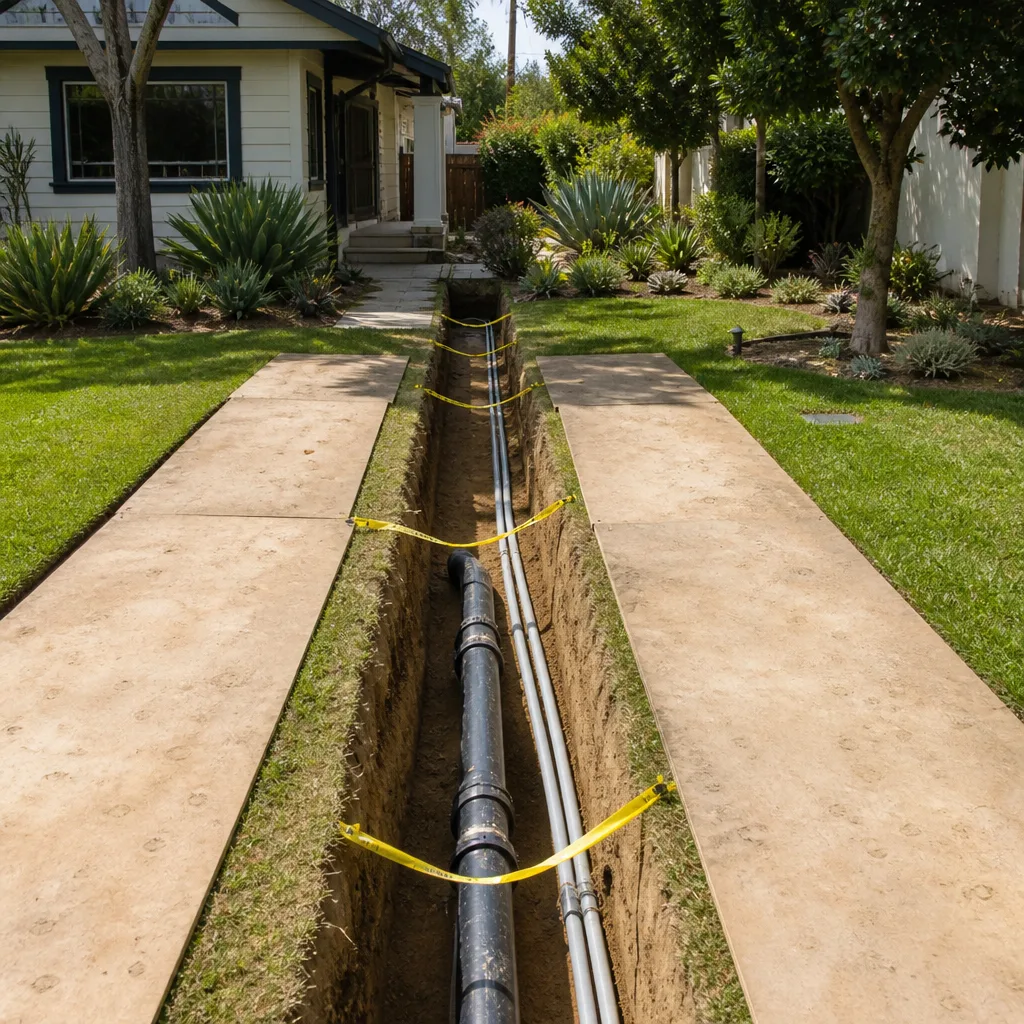
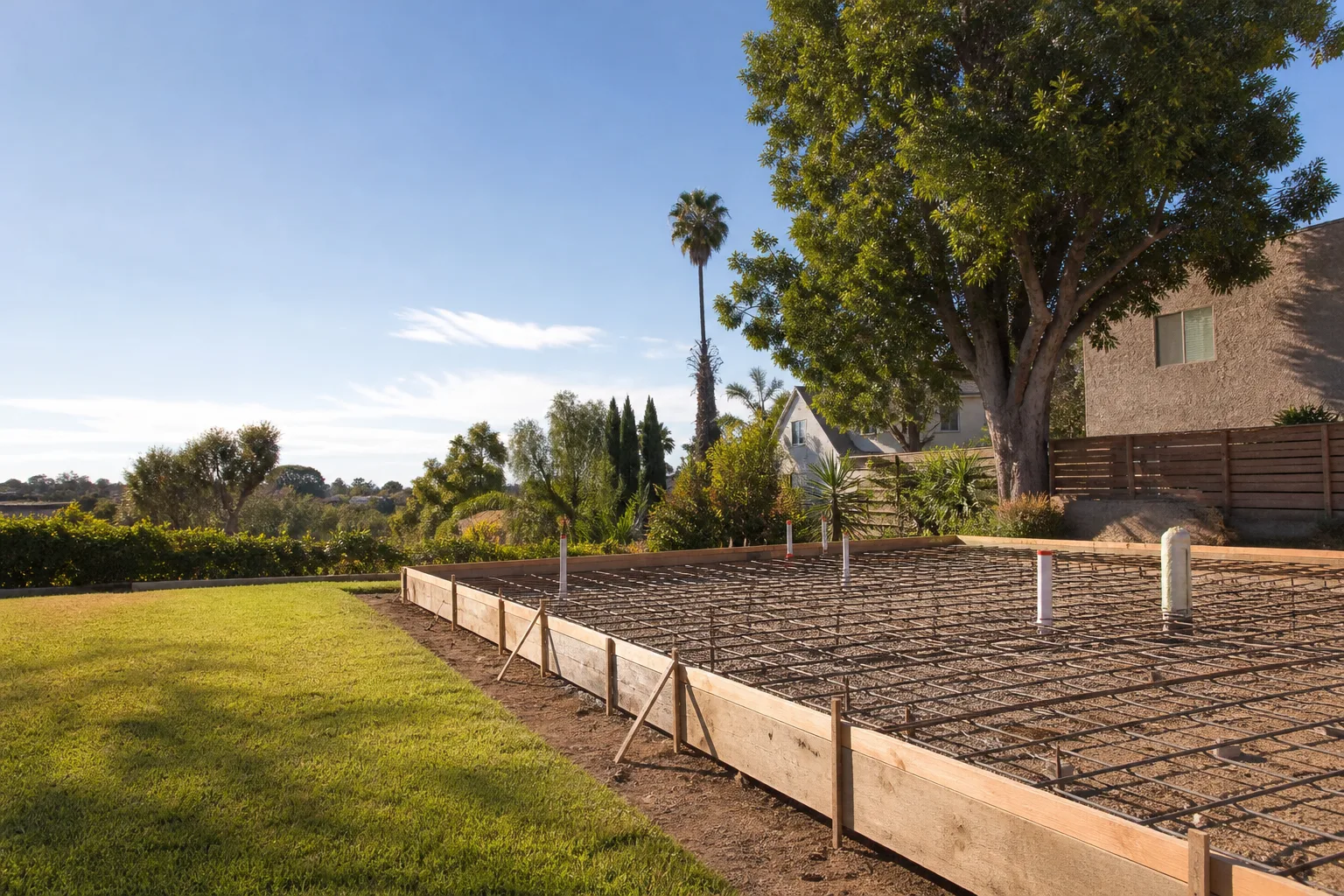
For a basic re-grade and compacted gravel base on a smaller shed, expect $2,800 to $4,200 in San Jose. Adding a concrete pad puts you at $4,500 to $7,000 for a 10×12 or smaller. A full electrical run with a subpanel, conduit, and new circuits lands between $2,500 and $5,500 depending on distance from your main panel and how much trenching is involved. If you need water or gas, plan on $1,500 to $3,500 per utility line. These are installed prices, parts and labor, written down before we touch the site.
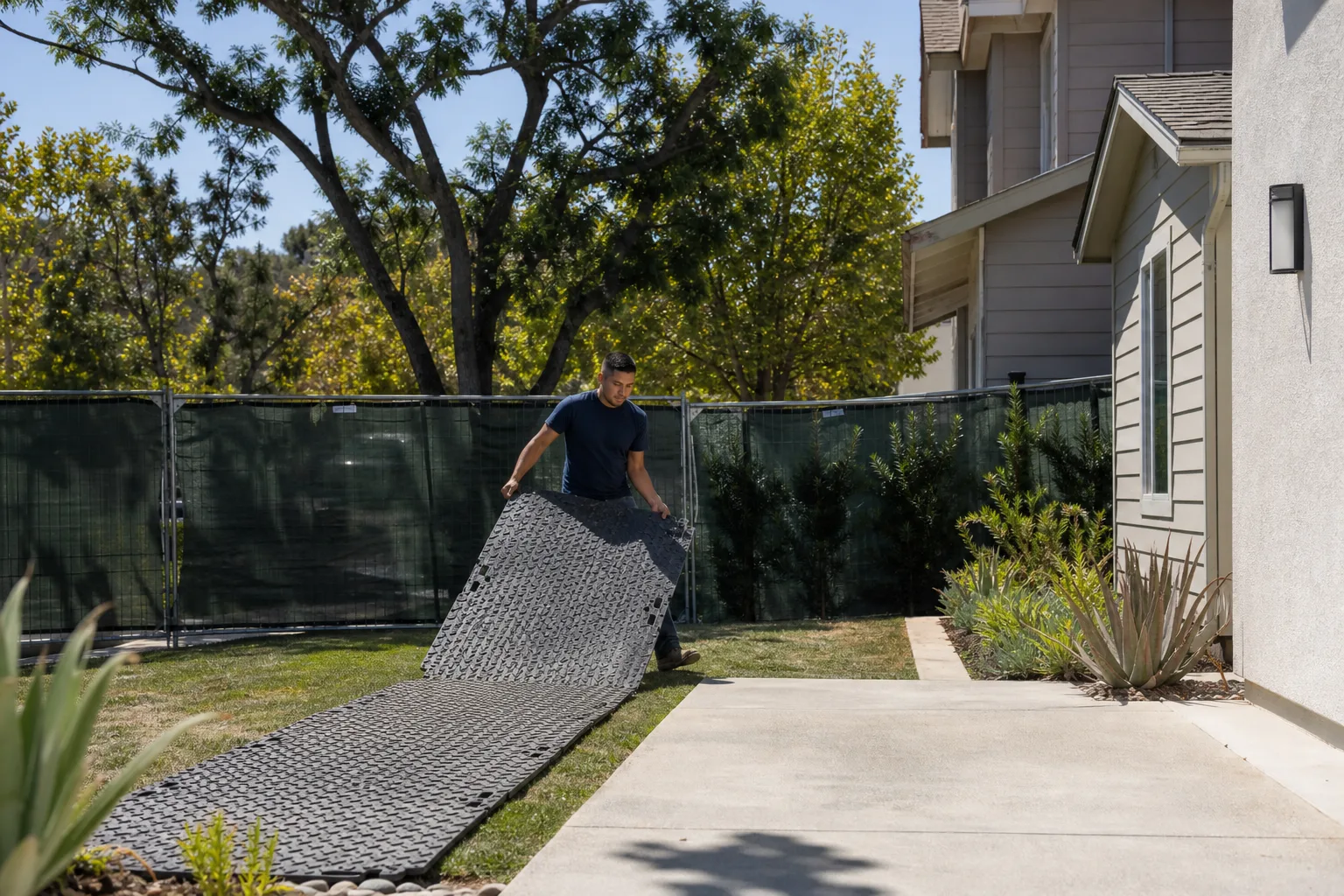
Here’s what drives the range: access to the backyard (if we can’t get a compactor or mini skid steer through your gate, labor goes up), soil condition in your specific part of San Jose (the clay on the east side behaves differently than the loam near Los Gatos Creek), and whether your existing utility panel has capacity or you need an upgrade. Every quote we give is a fixed price, not an estimate that grows. The 365-Day Done Right Promise covers defects in workmanship for one full calendar year from project completion. If the pad shifts or a connection fails because of our work, we come back and fix it, free.
DIY or Call Us?
You can safely check a few things yourself: look for pooling water, test your outlets with a plug-in tester, and put a level across the floor in both directions. That tells you whether you have a problem. What you shouldn’t do is start digging. Underground utility lines in San Jose require a locate request, and hitting a gas line or main electrical service while trenching is a genuinely dangerous outcome. We’ve seen a homeowner put a shovel through a main feed and stand there lucky it didn’t arc.
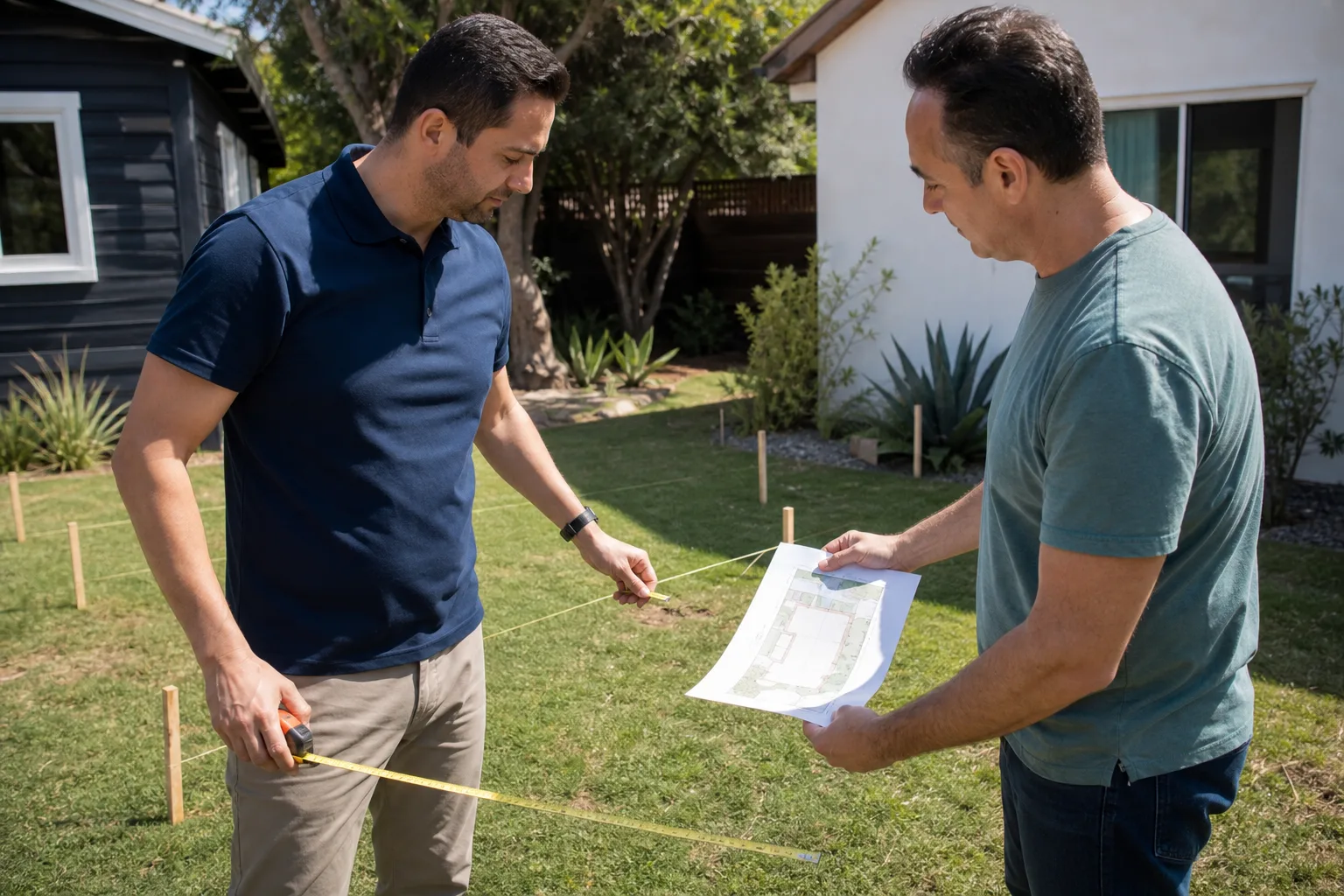
Any electrical work pulling new circuits or installing a subpanel requires a permit in San Jose and a licensed electrician signing off. That’s not a DIY project. For site prep, the machine compaction is the part homeowners skip, and it’s the part that matters most. If you want to handle your own Tuff Shed assembly, we can do the site prep and utility runs only, and you can build the shed yourself. If you want it all handled, call (669) 444-4530 and we’ll walk the site with you.
FAQs
A properly compacted gravel or concrete base in San Jose should last 15 to 20 years with no structural movement. What kills pads early is poor drainage and clay soil that expands and contracts with seasonal moisture. If you see standing water after rain, address it before it becomes a settlement problem. Call (669) 444-4530 and we’ll tell you if what you’re seeing is cosmetic or structural.
Sometimes. If one corner has settled and the pad is otherwise sound, we can often inject polyurethane foam to lift and stabilize it. That runs $800 to $2,200 in San Jose depending on the size. If the base was never compacted properly, the pad will keep moving and the only real fix is removal and redo. We’ll tell you which situation you have before quoting.
Most site prep and utility replacements take two to four days total. Day one is demo and grading. Day two is base compaction and forming or conduit placement. If concrete, day three is the pour. Electrical connections and inspections add a day or two depending on the city’s schedule. We handle the permits and inspections for you.
We stock the common components on our trucks: conduit, junction boxes, sealed entry fittings, gravel, vapor barriers, and pressure-treated base rails cut to Tuff Shed dimensions. For uncommon parts, we source from local San Jose supply houses same day. If you’re not sure what you’re looking at, call (669) 444-4530 and describe it. We’ll tell you honestly whether we need to see it in person.
If your Tuff Shed is sitting on a pad that’s moving or your utilities are acting up, don’t wait for the problem to get worse. Call (669) 444-4530 and schedule a site walkthrough. Miles or one of our crew will come out, look at what you’ve got, and give you a written price before any work starts.
Written by Miles Hartwell, Owner, Sutton ADU San Jose at Sutton ADU San Jose, serving San Jose and nearby areas.