Boxabl Site Prep & Utilities: The San Jose Owner’s Guide
Site prep and utility connections for a Boxabl unit in San Jose typically run $28,000 to $65,000 installed, depending on your lot’s slope, soil conditions, and distance to existing utility lines. We stock the common connectors, pedestal hardware, and trenching materials on our trucks, and we can usually begin site work within two to three weeks of a signed scope. Most Boxabl owners discover a site-prep problem when their delivery date gets pushed because the pad, trenching, or utility stub-outs weren’t ready, or when a trenched line fails inspection the first time through.
Here’s what we see regularly in San Jose: a homeowner orders the Boxabl, gets a delivery window, then realizes the site work needs permits, PG&E coordination, and a pad that meets the factory’s foundation spec. That’s where we come in. We handle the full site-prep package so the unit drops cleanly onto a pad that won’t settle, with power, water, and sewer stubbed exactly where Boxabl’s connection points demand.
Which Boxabl Models This Applies To
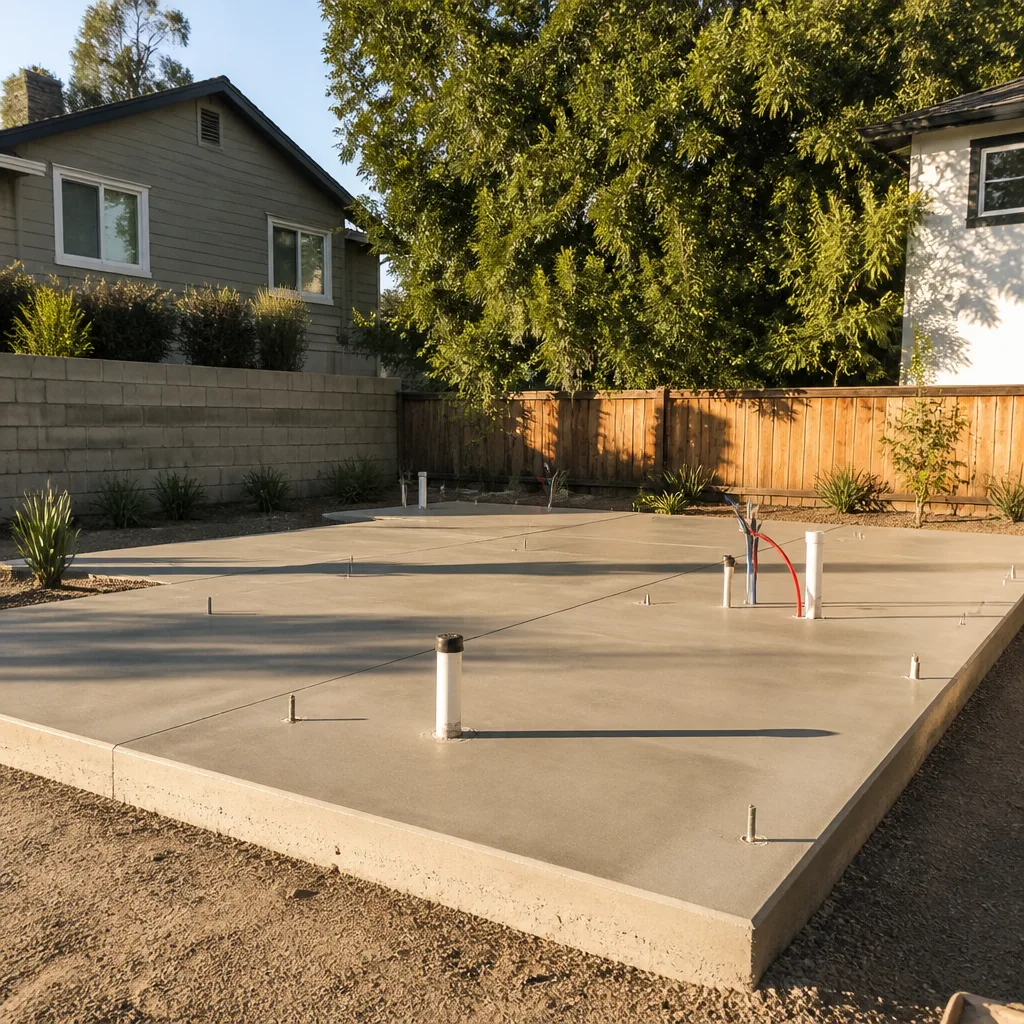
This guide covers the Casita, the standard 20×20 unit that makes up the vast majority of Boxabl installations in the Bay Area. The Casita’s utility connection points sit at fixed locations on the chassis, and if your trenching or stubs are off by more than a couple inches, you’re looking at rework before the unit can be set. The larger Boxabl models share the same core utility logic but with different load demands, so the amperage and sewer-line sizing changes.
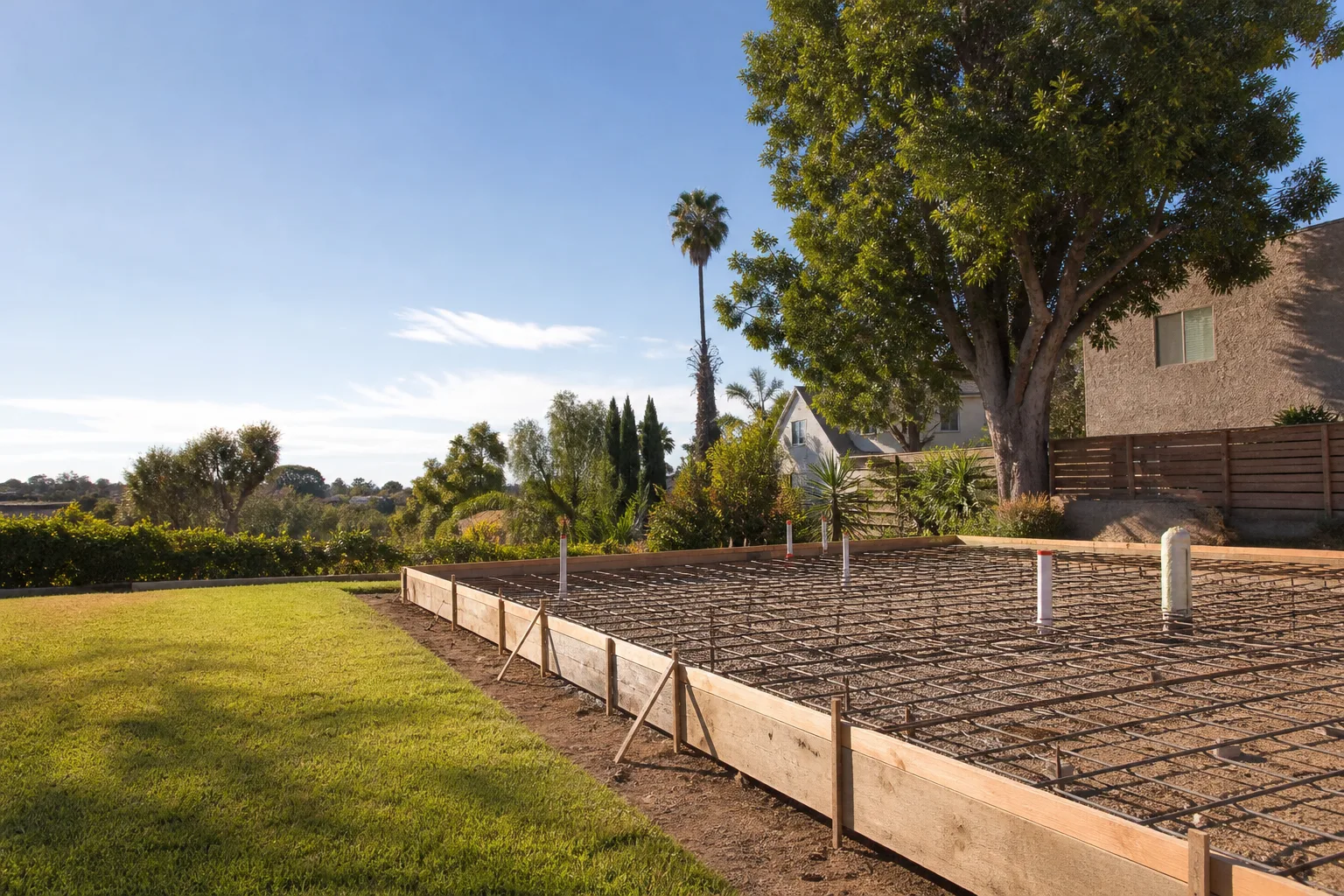
Identifying what your site needs starts with the Boxabl foundation drawing, which specifies the exact pad dimensions, anchor points, and utility locations. Don’t guess at this: we’ve corrected San Jose sites where a general contractor poured a pad to the wrong spec because they assumed it was like a standard mobile home. It’s not. The Boxabl chassis has specific anchor requirements, and the pad must be dead flat within a tight tolerance. For utilities, we recommend OEM-spec connectors and pedestals where they touch the Boxabl chassis itself, but quality aftermarket trenching materials, conduit, and backfill are perfectly fine for the underground runs. The savings on aftermarket underground materials can be meaningful, and they don’t affect the unit’s performance.
Signs Your Boxabl Site Prep & Utilities Is Failing
- Pad settling or cracking within the first year. This usually means the sub-base wasn’t compacted properly or the soil wasn’t tested before the pour. In San Jose’s clay-heavy areas like Almaden Valley, expansive soil heave can crack a pad that wasn’t engineered for it. We see this most often when someone used a standard patio-pour crew instead of a foundation contractor.
- Water pooling around the unit after rain. This points to drainage or grade problems, and in a wet winter it means water working its way toward your chassis and connection points. San Jose doesn’t get much rain, but when it comes, a bad grade shows itself fast.
- Circuit breaker tripping when the mini-split or stove runs. This typically traces back to undersized conductors between the main panel and the Boxabl’s electrical panel, or a bad connection at the pedestal. The Boxabl Casita needs a proper 50-amp feed, and shortcuts here create heat and nuisance trips.
- Sewer smells or slow drains. This often means the sewer lateral wasn’t graded correctly, or a trenched line got crushed by backfill. Fixing it means re-trenching, which is exactly the kind of rework that should have been caught the first time.
- Utility pedestal leaning or pulling away. This can happen when the pedestal wasn’t set in enough concrete or the trenching eroded around it. A leaning pedestal stresses the flexible connections to the Boxabl, and that’s a leak or arc waiting to happen.
Replacement Cost & What’s Included
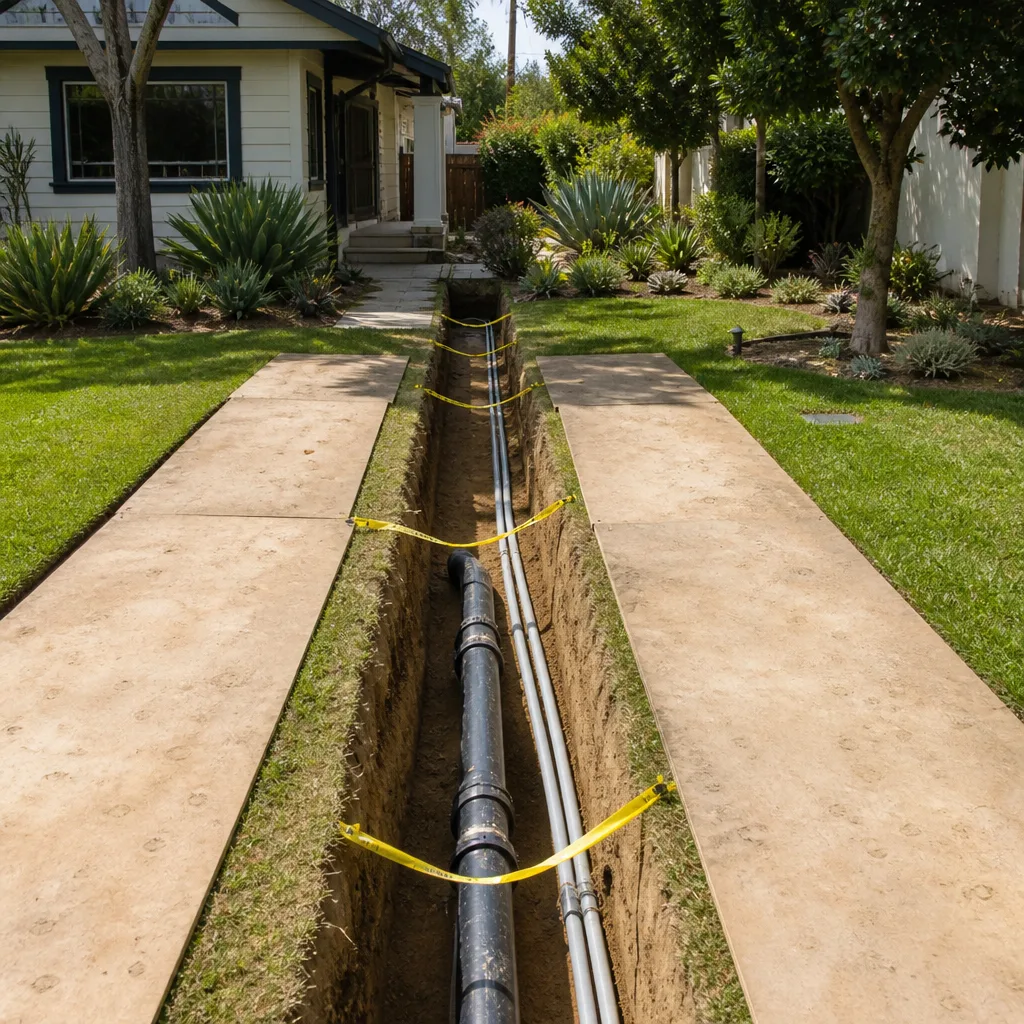
For a full site-prep package on a standard Casita in San Jose, plan on $28,000 to $45,000 for a relatively flat lot with good soil and utilities within 30 feet of the pad. If your lot slopes, has expansive clay, or sits far from the utility connections, expect $45,000 to $65,000. The range covers permitting, pad excavation and engineered fill, forming and pouring, anchor installation, trenching, conduit and pipe runs, utility stubs, the electrical pedestal, and final inspection support.
What drives the top of the range in San Jose is almost always soil and permit time. Santa Clara County plan-check times vary block to block, and a site with less than ideal soil means deeper excavation and more engineered fill. We give you a written line-item price before any work starts, and that price doesn’t change unless the site conditions genuinely differ from what we walked. Every Site Prep & Utilities job we do carries the 365-Day Done Right Promise: if the pad, trenching, or stubs fail within a full calendar year due to our workmanship, we fix it at our cost.
DIY or Call Us?
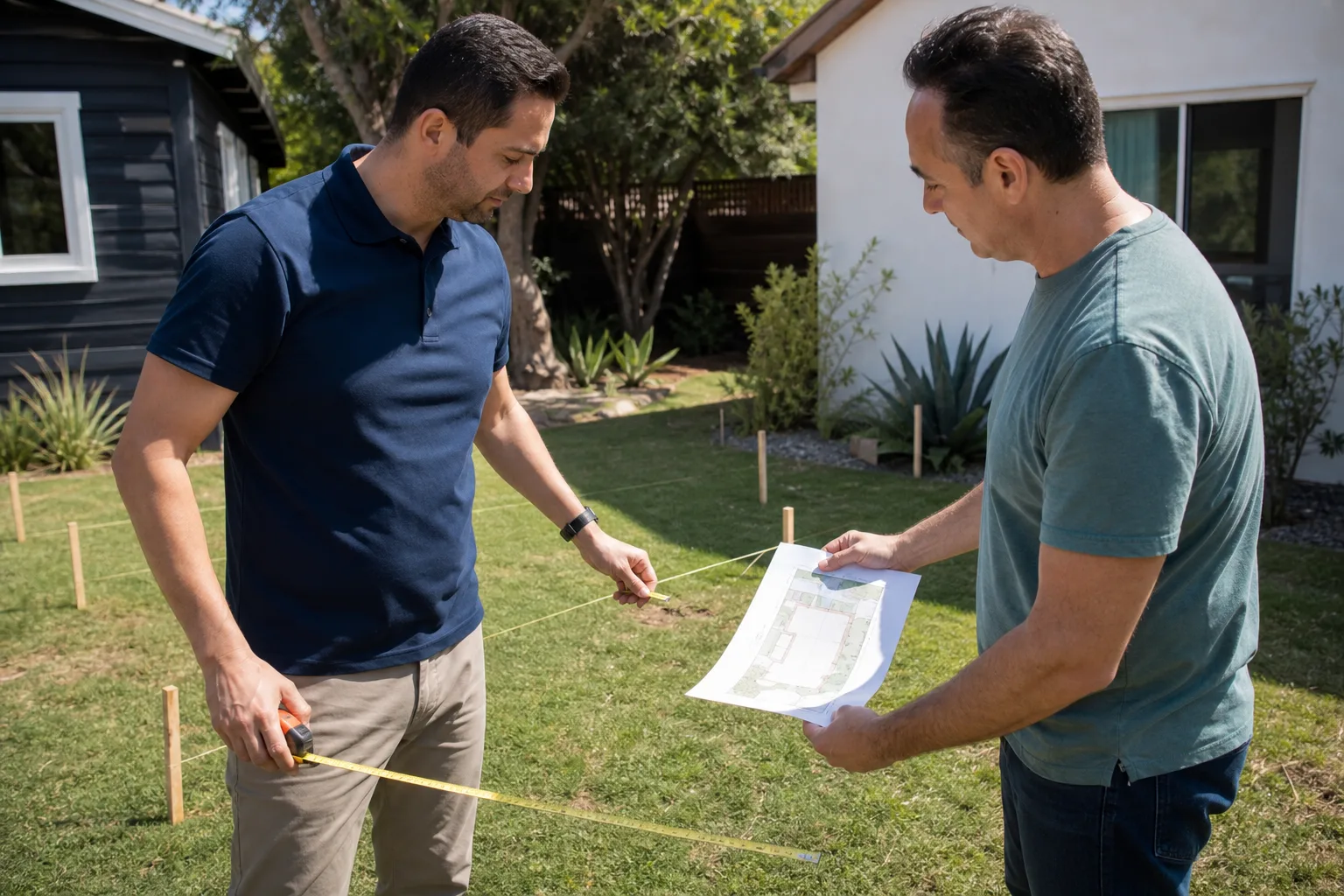
You can safely handle one thing yourself: documenting your lot with photos and measurements before calling anyone. Walk the proposed site, note the slope, mark where you think the utility lines run, and write down any questions. That prep work saves you money and makes our first walkthrough faster. You can also handle the Boxabl-specific paperwork like HOA documents and model specs, since you have access to those from your purchase.
What you shouldn’t DIY is the pad, trenching, electrical pedestal, or sewer connections. These require permits and inspections in San Jose, and trenching without a utility locate is genuinely dangerous. Hitting a gas line or a live underground conductor is not a scrape-your-knuckle mistake. We pull the permits, call for locates, and handle the inspections so the site is ready when your Boxabl arrives. If you’re mid-project and your current site work is failing, call (669) 444-4530 and we’ll walk it with you.
FAQs
Most Boxabl site prep packages in San Jose take four to eight weeks from permit submission to final inspection, with the pad itself usually poured inside two weeks once excavation starts. The wildcard is Santa Clara County plan-check time, which varies by season and workload. We submit quickly, respond to corrections the same week, and keep the project moving. Call (669) 444-4530 for a real timeline based on your specific lot.
It depends on the cause and the severity. Hairline shrinkage cracks in the surface are cosmetic and can be sealed. Settling from poor compaction or expansive soil usually means partial or full replacement, because the Boxabl chassis needs a flat, stable bearing surface. We’ll evaluate the pad, tell you honestly whether it’s repairable, and give you a written price before any work starts. Call (669) 444-4530 to schedule a site evaluation.
Once permits are in hand and we’re on site, a standard flat-lot San Jose site prep with utilities runs five to ten working days, including excavation, pad pour, curing time, trenching, and utility stubs. Cure time for the pad is usually three to five days before the Boxabl can be set. If your lot has complications, we’ll tell you before we dig. Call (669) 444-4530 for a schedule estimate on your specific site.
We stock the common Boxabl-compatible utility parts on our trucks: the electrical pedestal hardware, the proper gauge conductors, the sewer and water connectors, and the anchor hardware. For anything unit-specific that Boxabl specifies directly, we order it and have it staged before site work begins. We also work with Abodu, Cover, and Dvele units, but the Boxabl connection points are what we’re matching most often these days. Call (669) 444-4530 and we’ll check our inventory for your exact model.
Written by Miles Hartwell, Owner, Sutton ADU San Jose at Sutton ADU San Jose, serving San Jose and nearby areas.