Dvele Site Prep & Utilities: The San Jose Owner’s Guide
We stock and install Dvele-compatible site prep and utility connection components for San Jose homeowners, with typical installed work running $4,500 to $18,000 depending on scope, lot conditions, and utility distance. Most utility trenching, pad prep, and connection work is scheduled within one to two weeks of your written estimate, not the multi-month waits we hear about from prefab owners who go through national dispatch lines. You’ll usually discover something’s wrong the day your Dvele unit arrives or during your pre-delivery site inspection, when a trench wasn’t cut to depth, a sewer stub is off-location, or the pad elevation doesn’t match Dvele’s required tolerance.
If you’re reading this, you’ve likely already learned the hard way that a Dvele home is only as good as the ground it sits on and the utilities feeding it. San Jose’s clay-heavy soil, our wet winters, and the city’s famously picky encroachment permits all collide at the site prep stage. This page covers what actually fails, what it costs to fix, and who should touch it.
Which Dvele Models This Applies To
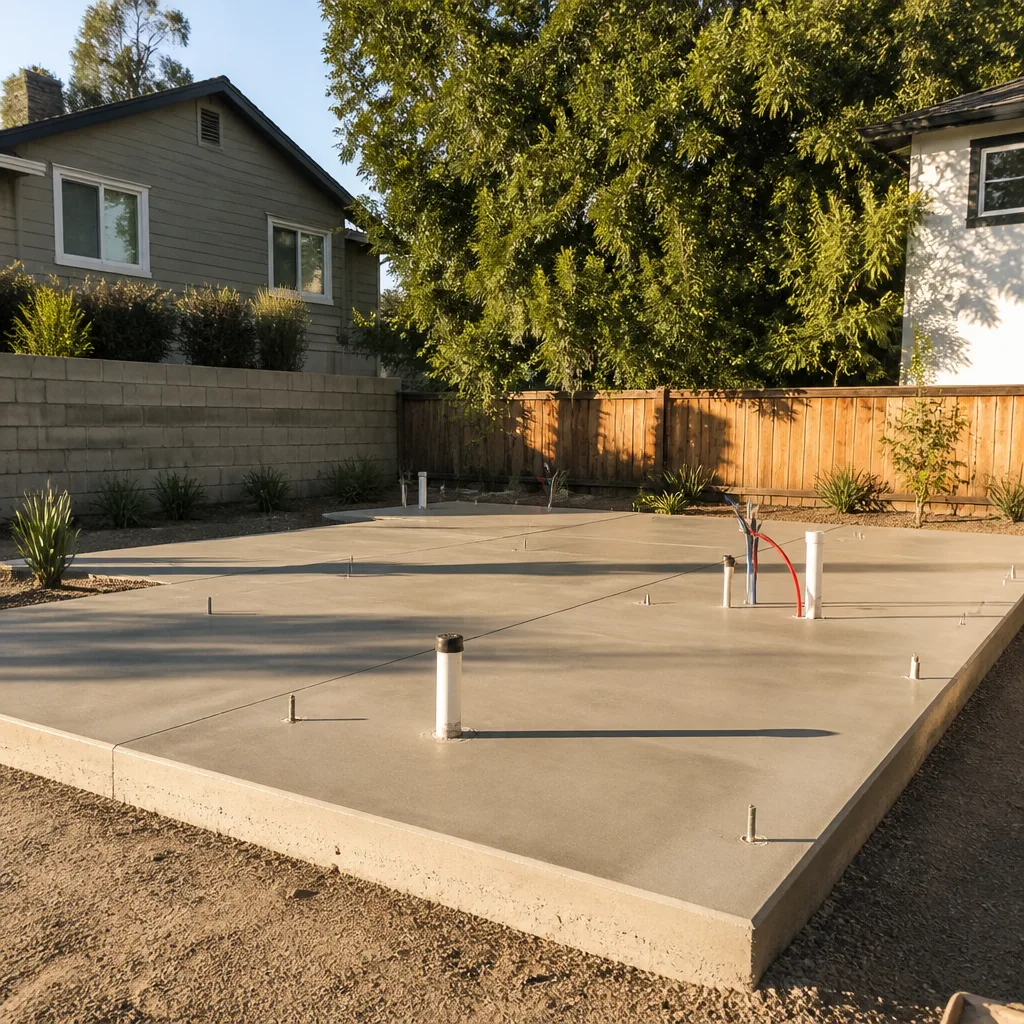
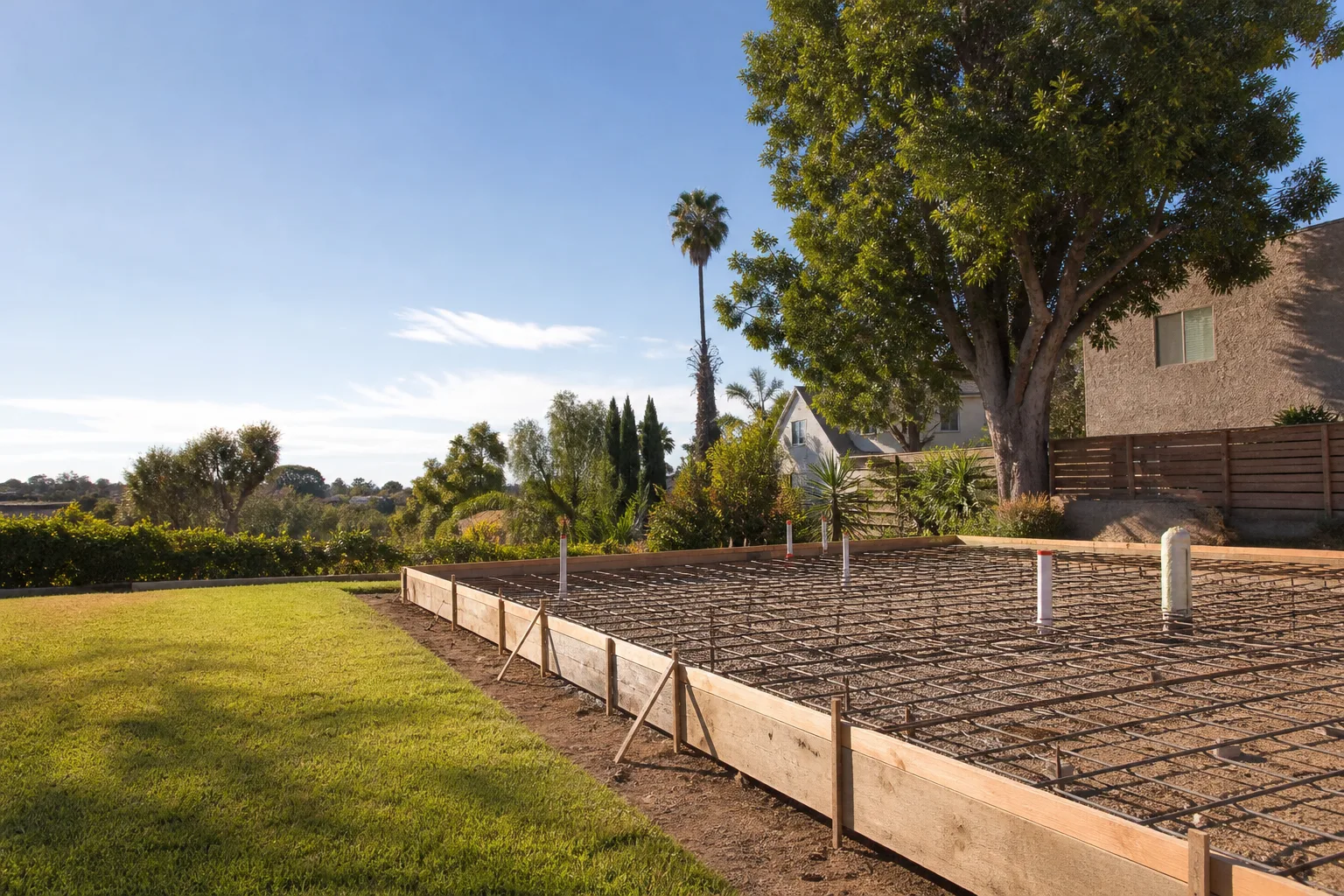
This applies to every model in the Dvele lineup we’ve worked on in San Jose: the Dvele IQ, the Dvele Adapt, and the newer Dvele Origin series, along with their detached ADU configurations. Site prep and utility work happens before the modules arrive, so the specifics are driven more by your lot and your chosen foundation system than by the model’s interior layout. That said, Dvele’s specifications are tighter than most prefab builders: their foundation tolerance is typically ±1/8 inch over ten feet, which is dramatically flatter than a standard slab. If your pad is out even a quarter inch across a longer span, the module marriage bolts won’t align and the factory crew will refuse to set it.
Here’s the compatibility gotcha that catches San Jose owners off guard: Dvele modules are heavier than many prefab units, which means your trenching, compaction, and utility stub placements have to be spec’d for the load. A sewer lateral that works fine for a stick-built ADU may be undersized or misgraded for a Dvele. We pull Dvele’s current site handbook specs for every job rather than working from generic ADU assumptions. That’s the difference between a one-day set and a three-week delay while a contractor re-cuts a trench.
We’re an independent San Jose contractor, not affiliated with Dvele directly. But we’ve built enough Dvele sites in Santa Clara County to know their tolerances cold.
Signs Your Dvele Site Prep & Utilities Is Failing
- Water pooling around your pad or foundation after rain. This usually means the grade wasn’t sloped correctly or the drain rock was skipped. In San Jose’s wet season, a bad grade sends water under your Dvele instead of away from it, and you’ll see efflorescence or dampness at the base within the first year.
- Your sewer line backs up within months of move-in. We see this when a stub was placed at the wrong elevation or the trench wasn’t bedded, causing a sag that holds waste. Dvele’s low-flow fixtures make a sagged line even more likely to clog because there’s less water volume pushing solids through.
- Low water pressure or air sputtering from faucets. Often a sign the water main tie-in wasn’t sized for a Dvele’s demand, or debris from the trench work got into the supply line. San Jose Water’s pressure varies block to block, so a line that’s marginal on paper may be genuinely inadequate in practice.
- Cracks in the pad or stem wall within the first two years. Our clay soil expands and contracts a lot. If the sub-base wasn’t compacted to Dvele’s spec, the slab moves. A hairline crack is cosmetic; a crack you can fit a quarter into means the pad needs engineering review.
- Electrical panel trips or voltage drops when the heat pump kicks on. Dvele’s all-electric systems pull real amperage. An undersized trench conduit or a poorly torqued service connection shows up as intermittent trips, especially in winter when San Jose nights drop near freezing.
Replacement Cost & What’s Included
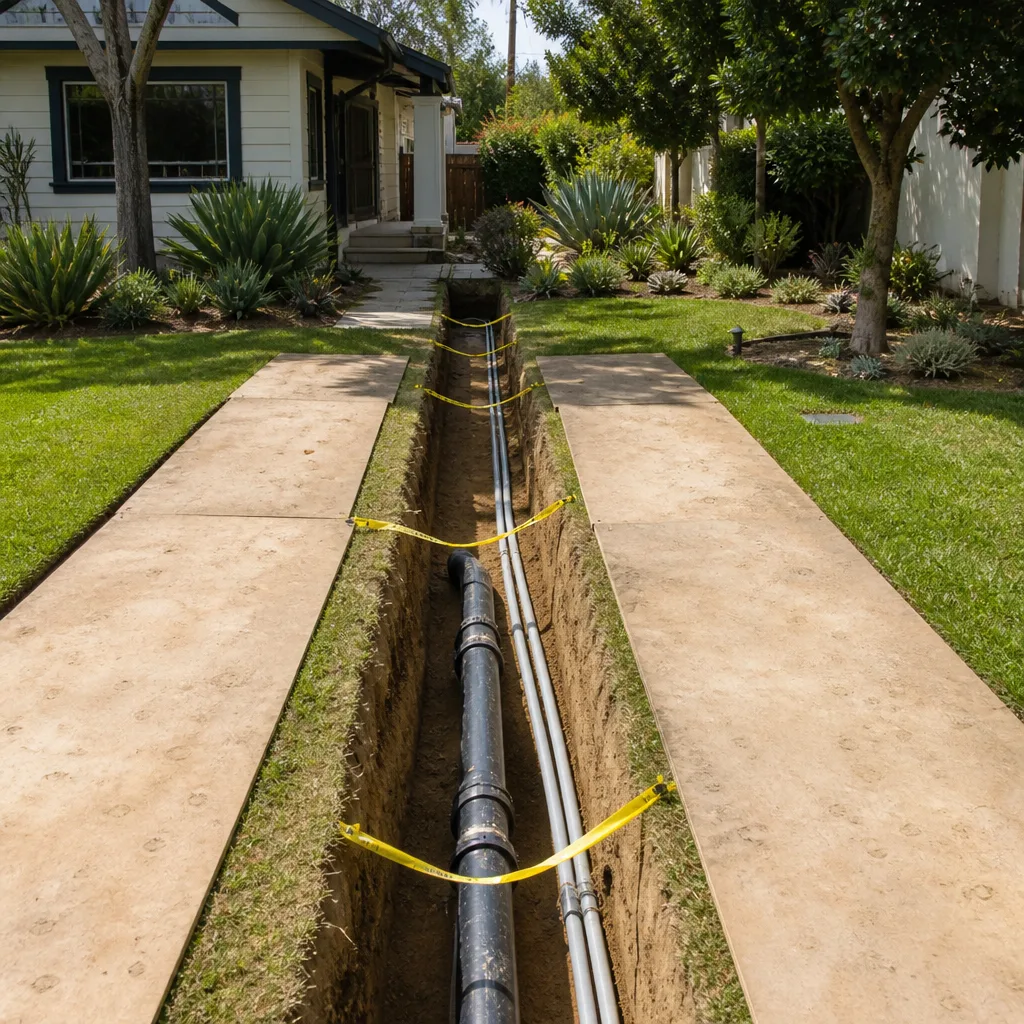
Here’s the honest money picture for San Jose. A straightforward sewer lateral replacement or water line re-trench runs $4,500 to $9,000 on a typical flat lot. Full pad remediation with re-compaction and a new pour runs $12,000 to $18,000 when the original work failed. Utility stub relocation, which happens more often than we’d like, lands in the $6,000 to $11,000 range depending on how far the stub missed and whether it’s under an existing patio or walkway.
Every quote we write is a fixed price. You’ll see the line items: excavation, haul-off, materials, compaction, inspection fees, and labor, broken out so you know exactly what you’re paying for. The 365-Day Done Right Promise covers our site prep and utility work for one full calendar year from completion. If anything we touched fails in that window, we come back and fix it. No haggling, no “that’s normal settling” deflection. That’s the Threshold Standard.
DIY or Call Us?
Site prep and utility work is not a DIY category, and anyone who tells you otherwise is selling you a shovel and a false sense of savings. Trenching in San Jose means dealing with underground utility locates, city encroachment permits, and compaction standards that a rental compactor won’t meet. Get a trench wrong and you’re looking at a collapsed line, a flooded pad, or worse: hitting a gas line or buried electrical service. That’s a genuine safety hazard, not a weekend inconvenience.
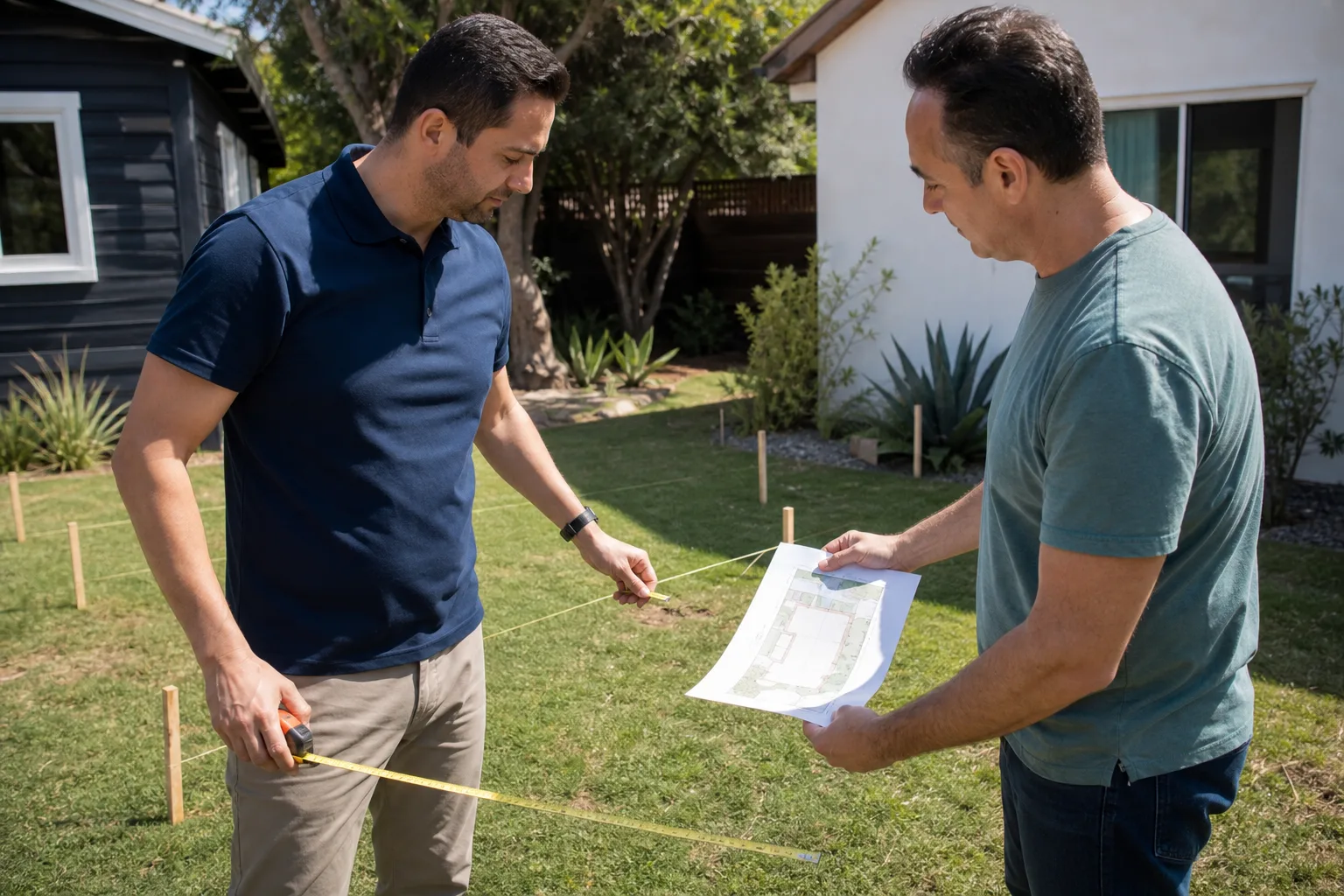
What you can do is document what you’re seeing. Take photos, mark where water pools, note when the pressure drops. Then call us at (669) 444-4530. I’ll walk the site myself, tell you what’s actually wrong, and hand you a written number before any dirt moves.
FAQs
Done to spec, your pad, trenches, and utility stubs should last the life of the structure, which Dvele pegs at 100-plus years. The weak points in San Jose are the sewer lateral and the water line, both of which we see fail in 15 to 30 years on older lots due to clay movement and root intrusion, and the pad sub-base, which fails early only when the compaction was shorted. Call (669) 444-4530 if you’re seeing settlement before the five-year mark; that’s almost always a prep failure, not normal wear.
Sometimes. A sewer lateral with a single bellied section can be spot-repaired and re-bedded for $3,500 to $6,000. A pad with localized settling can sometimes be slab-jacked or mud-jacked if the sub-base is otherwise sound. But when compaction was skipped entirely or a trench was cut to the wrong depth over a long run, partial fixes just push the failure down the road. We’ll tell you which situation you’re in and quote the repair that actually holds.
Most sewer, water, and electrical trench repairs take two to five working days from first dig to final inspection. Full pad remediation with re-pour runs one to two weeks including cure time before a Dvele can be set. The biggest variable is the City of San Jose’s inspection calendar, which varies by district. Willow Glen and Almaden tend to move faster than some of the busier North San Jose zones, but we factor that into the schedule when we quote.
We stock common utility connection components that match Dvele’s specs: schedule 40 electrical conduit, correct-gauge service wire, sewer lateral materials, water line fittings, and the compaction and drain rock materials we need for pad work. Anything Dvele-proprietary arrives through their supply chain, but site prep and utilities are industry-standard materials, which means we can move without waiting on a factory order. We also work with Abodu and Cover sites, so we keep components that overlap across major prefab brands on the truck.
Tell me what you actually need the space to do, then we’ll figure out what makes sense to build. And if your site prep’s already gone sideways, call (669) 444-4530 for a free estimate. I’ll come look at it myself.
Written by Miles Hartwell, Owner, Sutton ADU San Jose at Sutton ADU San Jose, serving San Jose and nearby areas.