Last updated October 15, 2026
ADU Warning Signs: A San Jose Homeowner’s Reference Guide
Here’s a fact most San Jose homeowners learn too late: the most expensive ADU problems are not the ones you can see. A cracked stucco corner or a sagging gutter will announce itself. But a unit permitted as “storage” that cannot legally be rented, a subpanel that is not actually tied to the main service, or a foundation slab poured without a moisture barrier beneath it will sit silently for years, then present a bill. We have walked through San Jose backyards in Willow Glen, Evergreen, and Almaden Valley where the visible structure looked fine, and the paper trail told a completely different story. This guide teaches you to read that paper trail first, then read the walls, and you can find more guides & resources on our blog.
Quick Answer
The most reliable ADU warning signs in San Jose fall into three categories: permit history problems (units recorded as storage, unpermitted conversions, or finaled permits that do not match the built square footage), physical tells in the structure (stucco delamination, moisture wicking through slab-on-grade foundations, subpanels with outdated breakers), and contractor behavior red flags (vague scope language, cash-only deposits, crews that cannot produce photo ID). Pull the permit record from San Jose’s public portal before you put a dollar down. The paper trail is free, public, and often predicts the repair bill.
Table of Contents
- Reading the Permit History: What San Jose’s Public Portal Tells You
- Physical Warning Signs Specific to San Jose’s Building Stock
- Contractor Red Flags Before the Contract Is Signed
- Mid-Construction Warning Signs Homeowners Miss
- Post-Completion Warning Signs in the First 12 Months
- What Ignoring a Warning Sign Actually Costs in San Jose
- Common Mistakes to Avoid
- When to Call a Professional
- Frequently Asked Questions
- The Bottom Line
Reading the Permit History: What San Jose’s Public Portal Tells You
San Jose’s Building Division maintains a public permit portal where any homeowner can search by address and pull the full permit history for a property. This takes under ten minutes and costs nothing. Here is why it matters: a permit record reveals not just whether work was done legally, but what the city believes the structure is. A unit permitted as “storage” or “office” or “recreation room” is not an ADU, no matter what the listing agent called it. Converting that designation to a legal dwelling unit means a re-permit process, plan review, inspections, and potentially corrective work, as detailed in The Complete Guide to ADU in San Jose.
A San Jose homeowner we worked with bought a Willow Glen property with a detached unit that had a bathroom, a kitchenette, and a tenant paying rent. The seller’s disclosure described it as an “ADU.” The permit record said “storage with bathroom.” That two-word difference meant the unit could not legally be rented, the homeowner could not count it as living space for resale value, and the eventual re-permit required structural upgrades, a new electrical subpanel, and a title-24 energy compliance review. The total came to $28,000 before they could legally rent the space again. The warning sign was in the permit record, available free online, and nobody looked.
Here are the three permit statuses that should stop any purchase or at minimum trigger a renegotiation:
- “Permit finaled” with square footage that does not match the actual structure. If the permit says 400 square feet and the unit measures 600, an addition happened after the final inspection. That addition is unpermitted, and the entire structure may need to be brought to current code.
- “Permit issued, not finaled.” Work started with a permit but never passed final inspection. This is common with homeowner-pulled permits that ran out of money or patience. The open permit means the city considers the project incomplete, which complicates any sale, refinance, or insurance claim.
- No permit record at all for a structure that clearly exists. San Jose is full of unpermitted conversions from the 1970s through the 1990s, when garage conversions and backyard cottages were built quietly. An unpermitted unit can be legalized through San Jose’s ADU amnesty process in some cases, but older electrical and foundation work often fails current code and must be replaced.
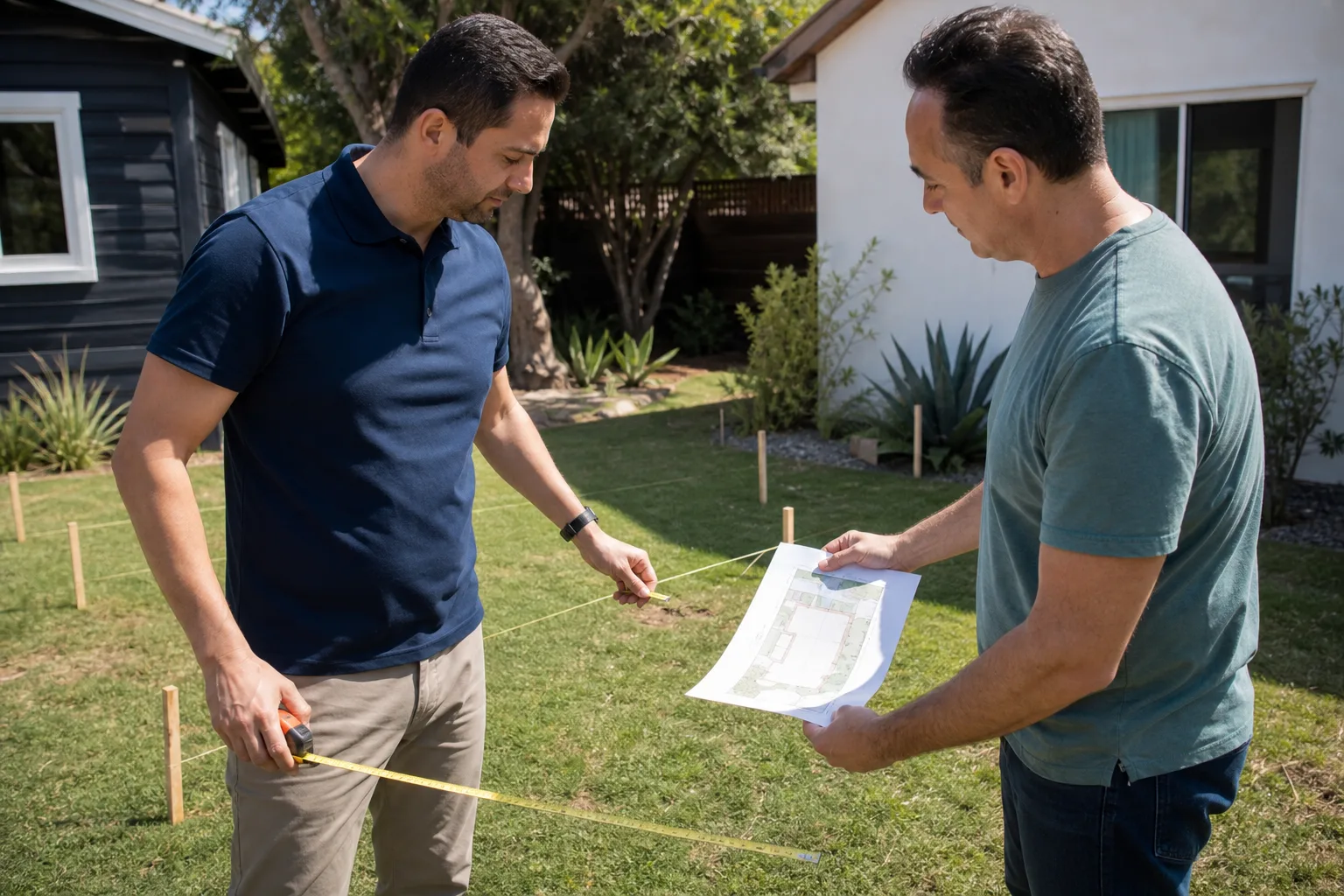
Pull the record before you write an offer. If you already own the property, pull it before you spend money on renovations. The record will also show the original contractor’s name if one was listed, the inspection dates, and any corrections or stop-work orders ever issued. None of this requires a title company or an attorney. San Jose’s permit portal is public.
Physical Warning Signs Specific to San Jose’s Building Stock
San Jose has a specific building stock fingerprint. Most single-family homes and their accessory structures were built between 1950 and 2000, with stucco exteriors, slab-on-grade foundations, and wood-framed walls. The Mediterranean climate means wet winters and a dry season, which produces a particular set of failure patterns. Here is what to look for when you walk through an existing ADU or inspect one under construction.
Stucco Delamination Patterns
Stucco fails predictably in San Jose. The winter rains soak the outer layer, the summer heat drives the moisture outward, and trapped water separates the stucco from the underlying frame. The tell is not a big crack. It is a subtle hollow sound when you tap the wall with your knuckles, or a pattern of hairline cracks that run in an irregular web rather than along a straight seam. Tap the wall in at least six places. If it sounds drum-like in any spot, the stucco has detached from the frame and water is sitting behind it.
Subpanel Age Markers
Look at the electrical subpanel inside the ADU. If it is a federal Pacific Electric panel (commonly called FPE) or a Zinsco panel, factor a full panel replacement into your budget. Both brands are known fire hazards and have been out of production for decades, and most insurers will not cover a property with one. Even if the breakers look fine, the internal bus bars corrode and fail to trip when overloaded. In San Jose, where many detached ADUs were originally built as workshops or pool houses with undersized electrical service, the subpanel is often the first thing an inspector flags.
Slab-on-Grade Moisture Tells
Most San Jose ADUs sit on concrete slabs poured directly on grade. When those slabs were poured without a proper vapor barrier beneath them, groundwater wicks upward through the concrete and into the flooring, baseboards, and lower wall cavities. The tell is not standing water. It is a persistent musty smell that returns after cleaning, dark staining along the bottom six inches of interior walls, and vinyl flooring that lifts at the edges. You may also see a white crystalline residue called efflorescence on the slab edge. None of these are normal. All of them indicate a moisture problem that will not resolve with paint or caulk.
In our experience walking San Jose properties, slab moisture issues cluster in older neighborhoods like Rose Garden and Cambrian, where the original accessory structures were built before building codes required vapor barriers. A new build from a recognized builder should have this handled. So should a well-executed conversion, whether it is a Tuff Shed build-out or a panelized system from a brand like Abodu or Cover. If you are unsure what you are looking at, bring a contractor who works in San Jose regularly and knows what a proper slab detail looks like for this climate, or consult our DIY vs Professional ADU: The San Jose Homeowner’s Decision Guide.
Contractor Red Flags Before the Contract Is Signed
The contractor you hire matters as much as the structure itself. Most San Jose homeowners do not read contracts closely enough, and the red flags are often in the words that are not there rather than the ones that are.
Vague scope language is the most common warning sign. A contract that says “construct ADU per plans” without listing specific materials, specific fixtures, and specific allowances for site work leaves every decision up for reinterpretation later. You want a contract that names the exact insulation type, the exact window brand, the exact foundation method, and the exact electrical panel specification. If the contract is two pages of vague prose, the change orders will be many pages of specific charges.
Cash-only deposit requests are another flag. California law limits contractor deposits to 10% of the project cost or $1,000, whichever is less, for home improvement contracts. Any contractor asking for a 30% or 50% cash deposit before work begins is either not licensed, not legitimate, or not planning to finish the job with your money still in the bank. Legitimate San Jose ADU builders work with progress payments tied to completed milestones, and they will put that schedule in writing.
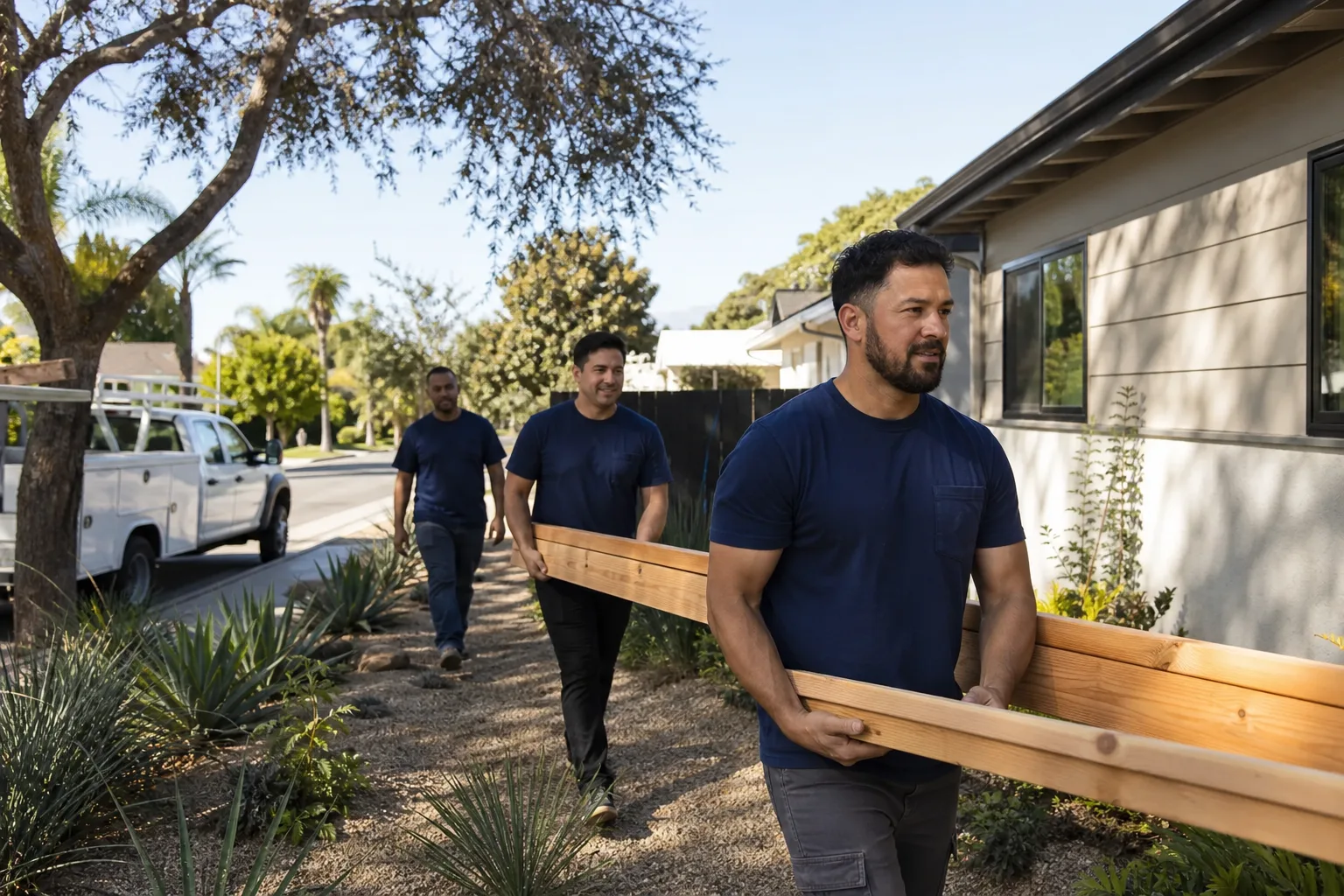
Crews who cannot produce photo ID on request are a security red flag and a legal one. Every person who steps onto your property should be identified. The Threshold Standard, which governs how we operate at Sutton ADU San Jose, requires that every technician be background-checked, identity-verified, and photo-badged, and that the homeowner receive the name and photo of each crew member before they arrive. If a contractor cannot or will not tell you who is coming to your property, walk away. This is not a minor courtesy. It is a basic safety practice that protects you, your family, and your property.
One more thing: if the contractor will not show you a copy of their license and insurance certificate before you sign, that is the end of the conversation. Not “I’ll bring it later.” Not “it’s in the truck.” San Jose is home to many excellent licensed builders and a few unlicensed operators who disappear after the deposit check clears. The easy filter is whether they show you the paperwork up front.
Mid-Construction Warning Signs Homeowners Miss
Most San Jose homeowners do not know what “normal” rough framing looks like, so they cannot tell when something is wrong. Here are the mid-construction warning signs that actually matter.
- Framing lumber that is already warped, twisted, or cracked before it is installed. Good framers reject bad lumber. A stud with a visible twist or a crack running along its length will not straighten itself after drywall goes up. It will telegraph through the wall finish and eventually affect door and window operation.
- Hold-down bolts missing from the sill plate. In earthquake country, the connection between the foundation and the wood frame is the single most important structural joint in the building. If you walk the site during rough framing and see the bottom plate of the wall sitting on the concrete with no bolts or straps visible, stop the job and ask for the engineering detail. San Jose seismic requirements are not optional.
- Shear wall panels installed without the specified nail pattern. Shear walls resist lateral earthquake forces. The nails must be spaced according to the structural plan, often 2 to 4 inches on center at panel edges. If you see nails spaced eight or ten inches apart, the wall will not perform as designed. This is hard to spot, but if you see a wall with plywood panels and seemingly random nail spacing, it is worth a question.
- Electrical rough-in that skips the dedicated circuits. An ADU kitchen needs dedicated circuits for the refrigerator, microwave, and counter outlets. A bathroom needs a dedicated circuit. If the electrician is pulling one circuit to feed everything, the panel will trip constantly once the unit is occupied. Ask to see the electrical plan and compare it to what is in the walls.
- Weatherproofing details skipped at windows and doors. In San Jose’s wet winters, every window and door opening needs flashing tape and a properly installed pan. If you see raw OSB or studs exposed around window openings with no flashing, water will find its way in within the first season.
If any of these conditions appear, document it with photos and ask in writing. A good contractor will explain the detail and show you the plan. A bad one will tell you not to worry about it. Worry about it.
Post-Completion Warning Signs in the First 12 Months
The first year after an ADU is completed is a testing period. The structure is settling, the materials are curing, and the systems are running under real load for the first time. Some movement and minor cracking is normal. But certain signs are not, and they indicate a warranty claim is warranted before the standard workmanship period expires, so follow our Home Addition Contractor Maintenance Checklist for San Jose Homeowners.
Here is what to watch for, month by month, and how to document it before you contact the contractor.
- Months 1-3: Doors and windows that stick or no longer latch. Within the first few months, the framing is drying and the foundation is settling. Minor adjustment is normal. A door that will not close at all indicates a framing or foundation issue worth a warranty claim. Also watch for plumbing leaks under sinks and at hose bibs, and for breakers tripping repeatedly.
- Months 4-6: Cracks wider than a hairline appearing in drywall corners or over door headers. A settlement crack is thin and stable. A crack that grows over a month or opens to the width of a coin is structural movement. Photograph it with a ruler or coin in frame, and photograph it again two weeks later to document change.
- Months 7-9: Signs of moisture: staining on ceilings, musty smells, bubbling paint, or peeling caulk around windows and exterior trim. In San Jose’s first wet season after construction, any detail that was skipped or poorly done will announce itself. The first rain is your inspection.
- Months 10-12: Exterior finish failure: stucco hairline cracking that radiates from corners, paint blistering on siding, or caulk separating at joints. Also check the roof perimeter after winter winds for loose shingles or lifted flashing.
Document everything. Write down the date you first noticed each issue, photograph it in good light, and keep a simple log. Then call the contractor. Under a written workmanship warranty like our 365-Day Done Right Promise, the contractor should return, inspect, and make the repair at no charge. If the warranty is verbal, you have less leverage. If it is written, you have a contract.
What Ignoring a Warning Sign Actually Costs in San Jose
Let’s put real numbers on these warning signs so you can decide what to investigate and what to let go. These are the price ranges we see for corrective work on San Jose ADUs.
- Re-permitting a “storage” unit as a legal ADU: $12,000 to $35,000 depending on structural upgrades, electrical service work, fire separation requirements, and plan review fees.
- Replacing a federal Pacific Electric or Zinsco subpanel: $2,500 to $5,500 including new breakers and inspection.
- Slab moisture remediation in an existing unit: $4,000 to $15,000 depending on floor removal, slab sealing, vapor barrier retrofitting, and mold treatment.
- Stucco delamination repair on one wall: $1,800 to $6,000 including removal, lath repair, re-stucco, and paint match.
- Correcting unpermitted square footage: $8,000 to $40,000 depending on whether the addition must be demolished, brought to code, or legalized through San Jose’s amnesty pathway.
These are not the costs of a new ADU. These are the costs of ignoring a warning sign. A $28,000 permit problem is avoidable with a ten-minute portal search. A $15,000 moisture issue is avoidable with a $200 inspection before purchase. The time to catch these is before you buy, before you rent, and before you sign a contract, not after.
If you are looking at adding to your property rather than fixing an existing unit, the same discipline applies. A well-run ADU build in San Jose starts with a written price, a clear scope, and a named crew. A poorly run one starts with a vague estimate and a schedule that slips. You can choose which one you get, but only if you read the contract language and the permit history first.
Common Mistakes to Avoid
- Trusting the listing description over the permit record. “Charming ADU” in a listing means nothing. “Permitted ADU” in the city’s record means everything. Pull the permit before you write the offer, not after escrow opens.
- Assuming a new-looking unit is a legal unit. New paint and new flooring hide old problems. An unpermitted conversion can be renovated to look brand new and still be illegal. The only proof is the permit record.
- Skipping the inspection because the seller says it is fine. The seller is not a structural engineer, and they are not your advocate. Hire an inspector who knows San Jose ADUs specifically, including slab moisture testing and subpanel evaluation.
- Accepting a verbal scope of work. If it is not written, it does not exist. Every material, every finish, every dimension, every electrical spec belongs in the contract. Verbal promises dissolve at the first change order.
- Paying a deposit that exceeds California’s legal limit. More than 10% or $1,000, whichever is less, is a red flag and a legal violation. You can walk away from a contractor who asks for more.
- Letting a year go by without documenting warranty items. A written warranty only works if you report the problem and document it. The 365-Day Done Right Promise covers workmanship defects for a full year, but the homeowner has to notify us. The log you keep in month one is the document you send in month eleven.
- Choosing the cheapest bid without reading the exclusions. A low bid that excludes site work, permits, utility connections, and finish materials is not a low bid. It is a sales technique. Read the exclusions line by line before you compare numbers.
When to Call a Professional
Call a professional the moment you see a permit status you do not understand, a structural crack you cannot explain, a subpanel with outdated breakers, or a contractor who cannot tell you who is coming to your property. Do not wait until a tenant moves in, until escrow closes, or until the first winter rain reveals the leak. The price of a professional inspection is a fraction of the price of the repair that follows the problem it catches.
Sutton ADU San Jose works with homeowners throughout San Jose who are buying, fixing, or building accessory dwelling units. We pull permit histories, walk the structure, and give you a written price for the work that actually needs to be done. If you need an assessment or a home addition or ADU inspection in San Jose, call (669) 444-4530 to schedule a free estimate.
Frequently Asked Questions
Search the property address on San Jose’s public building permit portal, available through the city’s Building Division website. Look for a permit record that matches the structure’s square footage and use type. If the record says “storage,” “office,” or “recreation room,” the unit is not permitted as a dwelling. If there is no record at all, the unit is likely unpermitted, and you should contact a contractor or the city’s planning department to understand your legalization options before renting or selling. Call (669) 444-4530 if you want us to walk the permit history with you and explain what it means for your property.
Most unpermitted ADUs in San Jose cost between $12,000 and $35,000 to legalize, depending on the age of the structure, whether the electrical and plumbing meet current code, and whether fire separation and foundation work are required. Older units built before modern building codes often need substantial upgrades. San Jose has an ADU amnesty program that can reduce some fees, but the structural corrections still apply. For an exact number, call us at (669) 444-4530 and we will walk the property and give you a written line-item price.
No. A unit permitted as storage is not a legal dwelling, and renting it as living space creates liability for the owner, including potential eviction proceedings, code enforcement fines, and insurance claim denials. The unit must be re-permitted as an ADU through San Jose’s planning and building departments before it can legally be rented. We have helped homeowners through this process in neighborhoods across San Jose, and we are honest with you about what it costs and how long it takes.
Most detached ADUs in San Jose in the 400 to 800 square foot range run $180,000 to $320,000 before site work, utility connections, and permit fees, depending on the product line and finishes. Panelized and prefab systems from brands like Abodu, Cover, and Dvele often land in the lower middle of that range with faster timelines, while fully custom site-built units run higher. Site conditions affect the final number more than any other factor. Call (669) 444-4530 and we will give you a written price specific to your lot, not a range from a website.
Document the problem immediately: photograph it with a scale reference, note the date you first saw it, and keep a written log of any changes. Then contact the contractor in writing. Under a written workmanship warranty like the 365-Day Done Right Promise, the builder is obligated to return, inspect, and correct covered defects at no charge for one full year from completion. If your contractor responds slowly or disputes a clear defect, document every communication and consider a third-party inspection. For San Jose homeowners who want a second opinion, call (669) 444-4530 and we will assess the issue and give you a written report.
It depends on the purchase price, the condition of the structure, and whether the seller will discount the price by the cost of legalization. A well-built unpermitted ADU in good condition can be legalized and add real value, but the process takes time and money. A poorly built unit with electrical, plumbing, or foundation problems may need to be demolished. Before you buy, pull the permit record, hire an inspector, and get a written estimate for the legalization work. If you want a straight answer on a specific property in San Jose, call (669) 444-4530 and we will walk it with you.
The Bottom Line
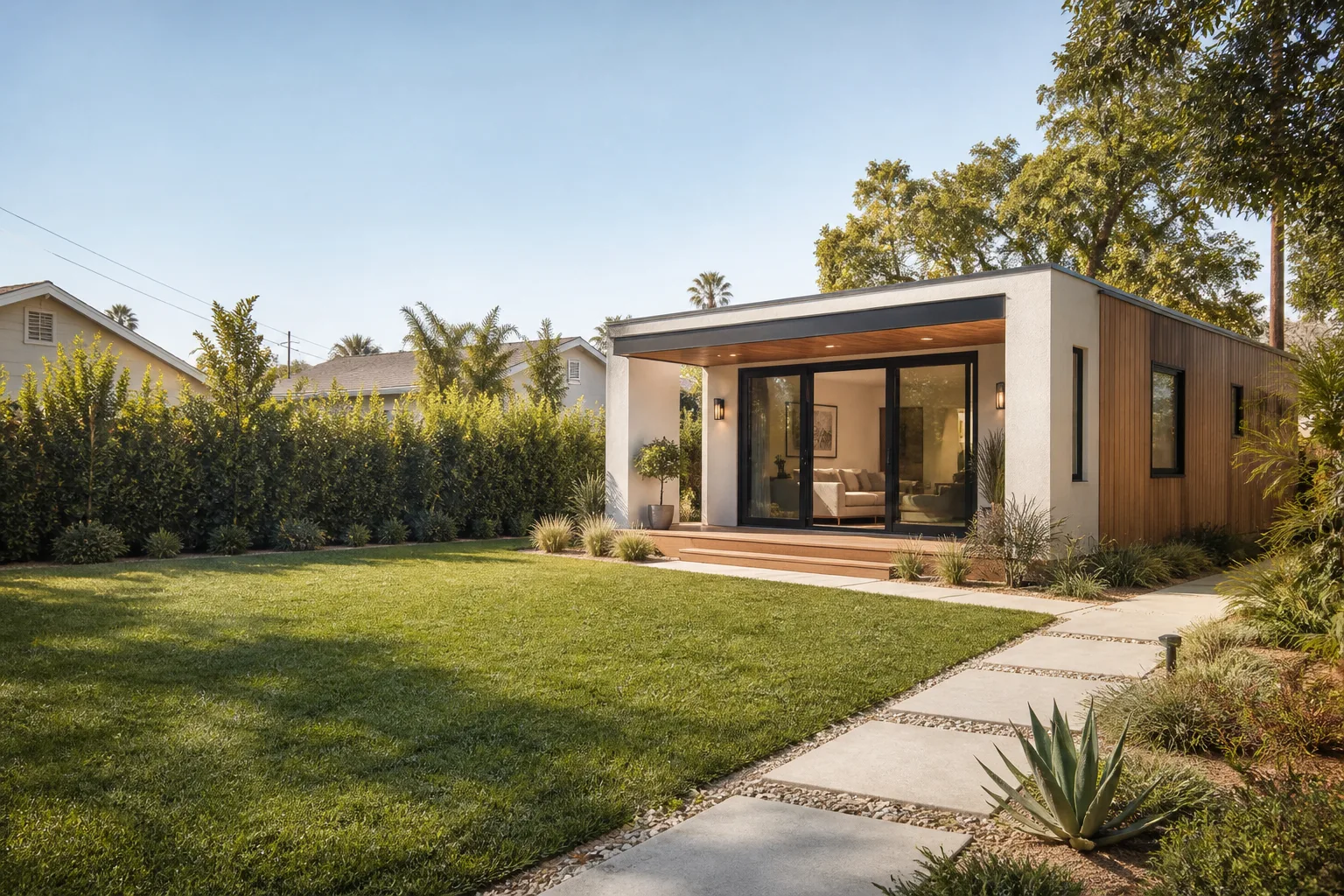
San Jose is one of the best markets in California for ADU value, but only if the unit is legal, structurally sound, and built or renovated by people you can identify. The warning signs that matter most are not the cosmetic ones. They are the permit records that say “storage” when they should say “dwelling,” the moisture that moves upward through slabs, the subpanels with breakers that no longer trip, and the contracts so vague they guarantee nothing. Pull the paper trail first. Document what you see. Ask for names and photos before anyone steps onto your property. And get a written price before any tool is lifted. Those four habits will save you more money than any inspection checklist ever will.
If you are looking at an existing ADU in San Jose and want a straight read on what you are dealing with, Sutton ADU San Jose is here to help. We also build new units and room additions for San Jose homeowners who want to add space without the guesswork. Call (669) 444-4530 to schedule a free estimate.
Written by Miles Hartwell, Owner at Sutton ADU San Jose, serving San Jose since 2006.