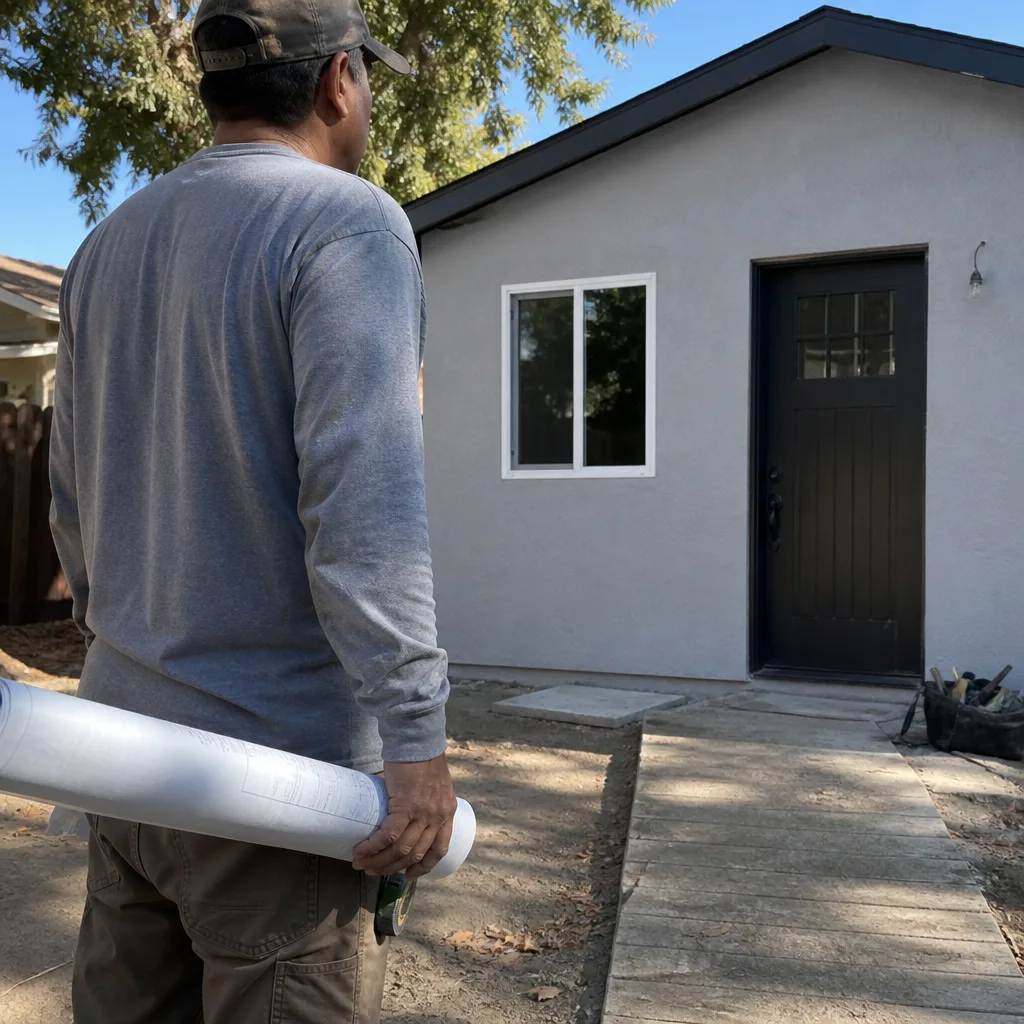
Last updated October 15, 2026
The Complete Guide to ADU in San Jose
San Jose approved over 1,400 ADU permits in a single recent year, yet city data shows roughly 30% of applicants hit a preventable zoning rejection on their first submission. That rejection isn’t a formality. It costs months of delay, redesign fees, and in some cases a lot that can’t support the unit you wanted at all. This guide walks you through the unvarnished sequence: zoning reality first, money math second, contractor vetting third. By the time you finish reading, you’ll know exactly how to avoid the three mistakes that sink most ADU builders in San Jose projects before they start.
Quick Answer
Building an ADU in San Jose costs between $180,000 and $450,000 for most projects, takes 9 to 18 months from design to occupancy, and requires three distinct approvals: zoning clearance, building permits, and final inspection. You can start by checking your parcel on the city’s online zoning map, which takes ten minutes and costs nothing. The single biggest determinant of your final cost is whether you choose a prefab unit, a garage conversion, or a custom stick-built structure.
Table of Contents
- Step One: Zoning Reality Check Before You Spend a Dollar
- The Actual Build Sequence and Why Skipping Steps Costs You Thousands
- Real ADU Costs in San Jose: Line-Item Breakdown
- Honest ROI by Neighborhood: Where Rental Income Actually Works
- What the 2024 State ADU Law Changes Mean for You
- Prefab vs. Site-Built: A San Jose Reality Check
- Contractor Vetting Beyond the License Check
- Common Mistakes to Avoid
Step One: Zoning Reality Check Before You Spend a Dollar
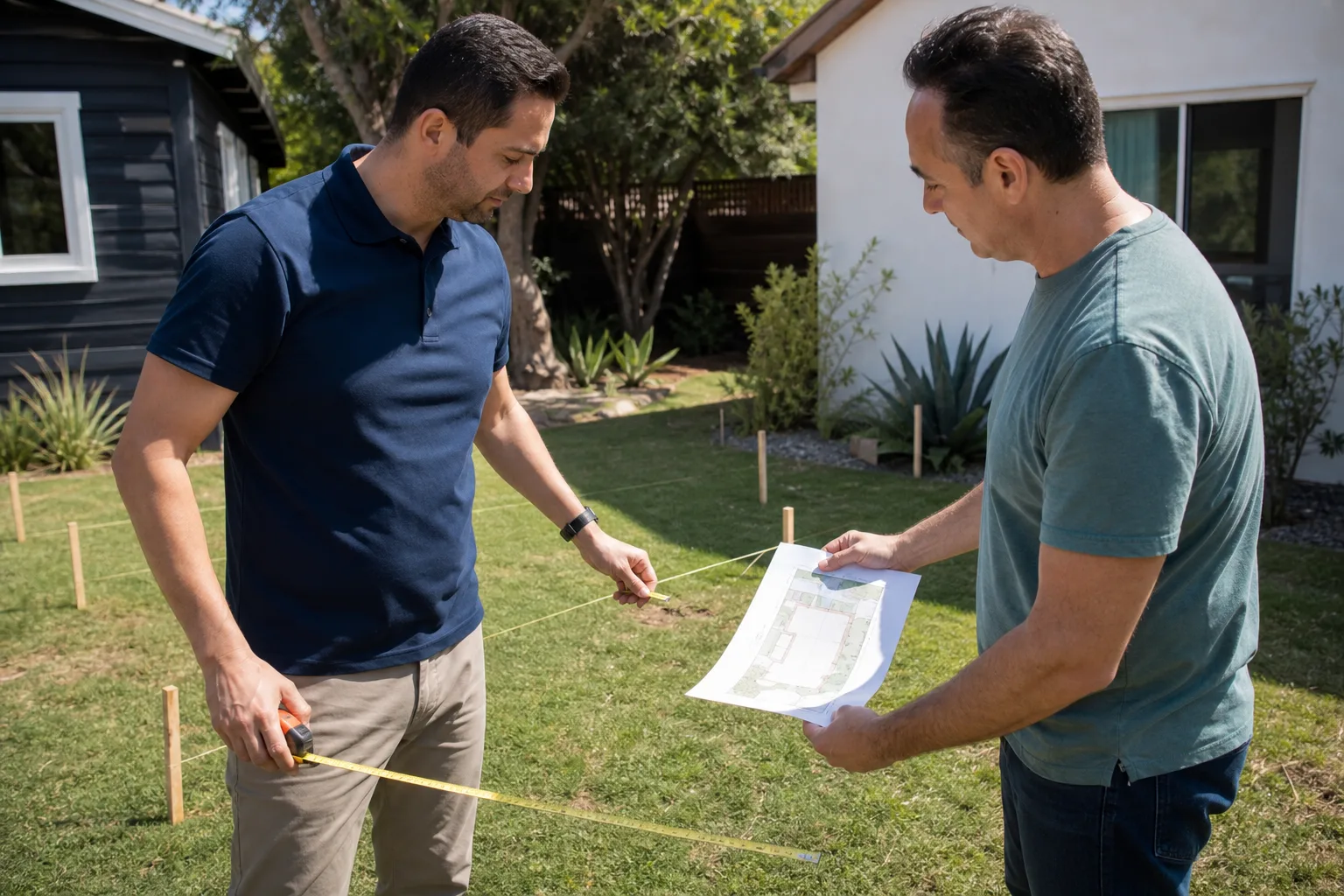
Every ADU in San Jose starts on the same website: the city’s parcel viewer. You can find it by searching “San Jose parcel viewer” and entering your address. It shows your zoning designation, lot dimensions, and any overlay restrictions, all of which determine what you can build before a designer ever opens their software.
The core numbers that matter: San Jose requires a 4-foot side and rear setback for detached ADUs under 16 feet tall. If your lot is narrower than 50 feet, that 4-foot gap on each side eats into buildable width fast. A 40-foot-wide lot leaves roughly 32 feet of usable width. Subtract the main house footprint and you may have less room than you think for a freestanding unit.
We’ve seen this play out in neighborhoods like Willow Glen and Cambrian, where lots run 55 to 60 feet wide and setbacks feel generous, versus older parcels near downtown and East San Jose, where 40-foot lots are common and every foot counts. The parcel viewer also shows you the flood zone designation. Parts of San Jose near Coyote Creek and the Guadalupe River sit in FEMA flood zones, which can trigger elevation requirements that add $15,000 to $30,000 to a project. Finding that out before design is free. Finding it out during permitting is expensive.
A second check: accessory structure coverage limits. San Jose caps the combined footprint of all detached structures, including your ADU, at a percentage of total lot area. If you already have a detached garage, a shed, and a carport, you may need to demolish or downsize something to make room. The parcel viewer won’t calculate this for you, but it gives you the raw lot area so you can do the math yourself or walk into a design consultation knowing what you’re working with.
The Actual Build Sequence and Why Skipping Steps Costs You Thousands
The correct order is zoning check, design, permit, build. Sounds obvious. But we regularly talk to San Jose homeowners who paid for full architectural drawings before checking zoning, only to discover the unit they designed doesn’t fit their lot’s setbacks or coverage limits. Our How to Hire a ADU Contractor in San Jose: A Step-by-Step Guide walks through this sequence in detail.
- Zoning verification (Days 1 – 7): Pull your parcel record, check setbacks, coverage, flood zone, and any HOA restrictions. HOA rules don’t override state law for ADUs, but they can add design review layers. Do this before paying anyone.
- Feasibility consultation (Days 7 – 21): A builder or designer walks the site, confirms what fits, and gives you a real price range. At this stage you should receive enough specificity to decide whether to proceed. If a contractor won’t put numbers in writing, walk.
- Design and engineering (Weeks 3 – 10): Architectural drawings, structural engineering, title 24 energy calculations. In San Jose, detached units over 500 square feet require full engineering. This phase typically costs $8,000 to $25,000 depending on complexity.
- Permit submission and review (Weeks 10 – 26): San Jose’s building department review times fluctuate. Current first-pass plan checks run 6 to 12 weeks. A clean submission that addresses every city checklist item up front avoids a second or third review cycle.
- Site work and foundation (Weeks 26 – 34): Excavation, grading, utilities trenching, foundation pour. This is where site conditions reveal themselves. Sloped lots, expansive clay soil, and hidden tree roots all add cost here.
- Framing through finishes (Weeks 34 – 52): The bulk of construction, including electrical, plumbing, drywall, flooring, and fixtures.
- Final inspection and occupancy (Weeks 52 – 60): City inspection, any corrections, and your certificate of occupancy. You cannot legally rent or occupy the unit before this step.
The most expensive schedule mistake we see in San Jose is submitting permits before the design fully resolves site constraints. A redesign mid-review adds weeks and thousands in revision fees. The second most expensive: starting construction before final permit approval, which triggers stop-work orders and fines that can exceed $5,000.
Real ADU Costs in San Jose: Line-Item Breakdown
Most detached ADUs in San Jose run $180,000 to $320,000 before site work. Garage conversions land lower, typically $120,000 to $200,000, because foundation and framing already exist. Here’s where the money goes on a standard 600-square-foot detached unit:
- Design and engineering: $12,000 – $22,000 (architecture, structural, title 24 energy, permit drawings)
- Site work and foundation: $20,000 – $45,000 (excavation, utilities trenching, concrete, drainage)
- Framing, roofing, and windows: $45,000 – $75,000
- Electrical, plumbing, HVAC: $30,000 – $50,000
- Drywall, insulation, finishes: $30,000 – $55,000
- Kitchen and bath fixtures: $15,000 – $30,000 (entry-level to mid-range)
- Permit, school, and impact fees: $8,000 – $18,000 (San Jose calculates these per-square-foot; detached units pay more than conversions)
- Contractor overhead and margin: 15 – 20% of project cost
San Jose’s climate pushes one specific cost higher than you’ll see in guides written for other California markets: insulation and cooling. Summer temperatures in San Jose regularly hit the 90s, and a detached ADU with a standard title-24-compliant HVAC package will feel it. Strategic window placement, ceiling fans, and in some cases a mini-split system sized slightly above the minimum all pay off in tenant comfort and rental value. Plan for $6,000 to $12,000 for a proper mini-split rather than a wall unit, especially if you’re renting the space.
What you should not do is trust a national per-square-foot average. San Jose permit fees, soil conditions, and labor rates run 15 to 30 percent above the Bay Area median. Any estimate built on a generic California number will underprice this market.
Honest ROI by Neighborhood: Where Rental Income Actually Works
A one-bedroom ADU in San Jose rents for $1,800 to $2,600 a month depending on neighborhood, finish level, and parking availability. A two-bedroom runs $2,400 to $3,400. Against a $250,000 total project cost, a one-bedroom at $2,200 monthly rents generates $26,400 a year gross, or roughly a 10.5 percent gross yield before maintenance, property taxes, insurance, and vacancy. That’s genuinely strong by Bay Area real estate standards.
But neighborhood matters more than you’d think. In Willow Glen, Cambrian, and Rose Garden, demand for one-bedroom units is steady and tenants are often professionals working in the service sector or early-career tech. Expect $2,200 to $2,800 and low vacancy. In Berryessa and North San Jose, proximity to the Milpitas BART extension and light rail pushes rents toward the higher end, but the units skew toward commuters who want parking and in-unit laundry. In East San Jose and Alum Rock, rents land at $1,800 to $2,200, and the demand profile is different: multigenerational families who value a two-bedroom layout over premium finishes.
The honest ROI picture includes what the property tax reassessment does to your numbers. Under California’s parent-child exclusion rules, adding an ADU triggers reassessment only on the new square footage, not the entire parcel. Still, expect your property tax bill to rise by 1 to 1.5 percent of the ADU’s assessed value annually. A $250,000 ADU adds roughly $2,500 to $3,750 a year in property taxes. Subtract that from your rental income before you celebrate the yield.
If your goal is resale value rather than rental income, the math is softer. Appraisers in Santa Clara County now assign meaningful value to ADUs, but the premium is $150,000 to $225,000 on a $250,000 build in most recent sales we’ve followed. The real payoff comes when the ADU helps an adult child or aging parent live on the property, which appraisers can’t measure and homeowners consistently say is the reason they built.
What the 2024 State ADU Law Changes Mean for You
California’s 2024 ADU legislation made several changes that directly benefit San Jose homeowners. The most significant: owner-occupancy requirements are gone. Previous law allowed cities to require that either the main house or the ADU be owner-occupied. As of 2024, state law prohibits that requirement entirely. You can rent both units, live elsewhere, or sell the property with the ADU intact without triggering a compliance issue.
Setback rules also changed. The state now requires cities to permit detached ADUs with a 4-foot side and rear setback, matching what San Jose already allowed. What changed for San Jose specifically: the city previously had stricter front-yard setback interpretations for ADUs on corner lots. State guidance now pushes cities to treat corner-lot ADUs consistently with other detached structures, which opens up parcels that were marginal before.
One piece of honest nuance: state law sets the ceiling on restrictions, but San Jose’s local ordinance adds some of its own requirements around tree preservation, drainage, and design review in historic districts. The Naglee Park and Hanchett Park historic zones have their own review processes that state ADU law doesn’t override. If you own a home in one of these areas, budget an extra 2 to 3 months for design review and expect some cladding and window material constraints.
The 2024 changes also expanded what you can convert. Detached garages, attached garages, and even portions of existing auxiliary structures are all fair game with fewer local veto points than before. If you have a Tuff Shed or similar accessory structure already permitted on your property, converting it to a junior ADU is now more straightforward than it was even two years ago.
Prefab vs. Site-Built: A San Jose Reality Check
Prefab ADUs get a lot of attention because the process sounds cleaner: a factory builds the unit, a crane drops it on your foundation, and you’re done in weeks. The reality in San Jose is more nuanced. Prefab works best on flat lots with wide access. Crane placement, overhead power lines, and narrow side yards all complicate the delivery, and San Jose’s older neighborhoods have all three in abundance.
We work with leading prefab lines including Abodu, Cover, and Plant Prefab, and the honest guidance is this: prefab shines when your lot is flat, your access is clear, and you want the design process shortened. A prefab unit from a reputable manufacturer starts around $160,000 to $220,000 for a one-bedroom, before site work, foundation, utility hookups, and San Jose permit fees. Add $60,000 to $100,000 for all of that and you’re close to site-built pricing for a standard unit.
Where prefab genuinely saves money: time. Factory construction runs concurrently with on-site foundation and utility work. Total timeline for a prefab project in San Jose typically runs 7 to 11 months versus 9 to 18 for site-built. If rental income matters to you, every month saved is $2,000 to $2,600 in rent you’re not collecting.
Site-built offers flexibility prefab can’t match. Odd lot shapes, sloped sites, non-standard dimensions, and specific neighborhood design standards all favor custom construction. So does the ability to match your main house’s roofline and exterior. Many San Jose homeowners choose exterior cladding from James Hardie for both the main house and the ADU, which creates a cohesive look that tenants and appraisers both respond to. That level of material matching is standard in site-built and limited in prefab.
Contractor Vetting Beyond the License Check
Every guide tells you to verify a contractor’s license and insurance. That’s the floor, not the ceiling. In San Jose, where the ADU market is hot and the contractor pool is uneven, the real vetting questions are about who actually shows up and what happens when the work is delivered differently than the contract says.
Ask for the names of the specific crew members who will work on your project. Not the company name, the people. A reputable builder will tell you. They’ll also tell you how those people are vetted. At Sutton ADU San Jose, every field technician is background-checked, identity-verified, uniformed, and photo-badged, and their name and photo are sent to each homeowner before arrival. That’s the Threshold Standard, and it’s a named system, not a verbal assurance.
Ask about the written price. Not an estimate, not a range, a written price with line items. If the answer is vague, that’s your signal. Every home addition contractor in San Jose project should start with a written price delivered before work begins, and any scope change should trigger a written change order you sign before work continues. Contractors who operate this way don’t bury surprise costs in the final invoice.
Ask about the post-completion promise. What happens if a cabinet door warps in month eight, or a leak shows up in month eleven? A written workmanship warranty matters more than a verbal “we stand behind our work.” Our 365-Day Done Right Promise covers defects in workmanship for one full calendar year from project completion, and it’s stamped in writing on every project. If any element fails, we return for a second visit at no charge.
Finally, call the number at 6:00 a.m. or 8:00 p.m. If a live person answers, you’ve found a contractor who takes the relationship seriously. If you hit a voicemail tree, consider what that says about how they’ll handle your questions during a 12-month build.
Common Mistakes to Avoid
- Skipping the zoning check before design. Roughly a third of first-time San Jose ADU applications hit a zoning issue that could have been caught in ten minutes on the parcel viewer. Every month of delay costs carrying costs and, if you’re renting, lost income.
- Underestimating site work. The most consistent cost surprise in San Jose is the gap between the pretty architectural rendering and the dirt work underneath it. Sloped lots, clay soil, and utility trenching through tree roots all add cost that design drawings don’t show.
- Choosing the cheapest bid without reading the scope. A $180,000 bid and a $240,000 bid can describe different projects if one includes site work, permits, and finishes while the other excludes them. Compare line items, not headline numbers.
- Assuming prefab is always cheaper or faster. Prefab saves time on many San Jose lots and saves money on some. But crane access problems and site constraints can erase the savings fast. Evaluate your specific lot, not the brochure.
- Starting construction before the permit is final. Stop-work orders in San Jose come with fines and mandatory inspections that reset your timeline. The city moves at its own pace during plan review; building early doesn’t speed anything.
- Ignoring the property tax reassessment. Your ADU adds $2,500 to $3,750 a year in property taxes on a typical build. That’s a real line item in your ROI math that most guides skip.
- Choosing a contractor without asking who shows up. The crew matters as much as the company. Ask for names, photos, and background-check policies before you let anyone onto your property.
When to Call a Professional
You don’t need a contractor to check your parcel on the city zoning map, and you don’t need one to read the state ADU handbook. But the moment you’re serious about building, a professional site visit answers questions the parcel viewer can’t: whether your soil conditions will drive up foundation costs, whether your electrical panel has capacity for a second dwelling, and whether your access side yard can accommodate a crane if you’re considering prefab. If you’ve received a vague estimate from a contractor who won’t name their crew or put a price in writing, that’s also the moment to get a second opinion. Sutton ADU San Jose offers free estimates in San Jose – call (669) 444-4530.
Frequently Asked Questions
A detached ADU in San Jose typically costs $180,000 to $320,000 for a standard 500 to 800-square-foot unit, while a garage conversion runs $120,000 to $200,000. This range includes design, permits, construction, and basic finishes but excludes site-specific complications like foundation work on sloped lots. Call (669) 444-4530 for a written line-item quote specific to your parcel.
No. California’s 2024 ADU law changes eliminated owner-occupancy requirements statewide, which means San Jose homeowners can rent both the main house and the ADU without living on the property. This applies to new units, existing units, and units built under older permit conditions.
Most ADU projects in San Jose take 9 to 18 months from the initial design consultation to final occupancy, depending on permit review times, site conditions, and whether you choose prefab or site-built construction. Prefab projects on favorable lots can finish in 7 to 11 months because factory work runs concurrent with on-site preparation.
San Jose permits detached ADUs up to 1,000 square feet for standard lots, with a 4-foot side and rear setback requirement for units under 16 feet tall. Larger units are possible but trigger height and setback restrictions that vary by zone. The parcel viewer gives you the specific constraints for your address.
Yes. Detached garage conversions are among the fastest paths to an ADU in San Jose because the foundation, framing, and roof already exist. Expect to spend $120,000 to $200,000 for a full conversion including insulation, electrical, plumbing, and finish work. Structures like Tuff Shed buildings already permitted on your lot are also convertible under current state law.
Yes, but only on the new square footage, not your entire parcel. A $250,000 ADU adds approximately $2,500 to $3,750 annually in property taxes. The exact amount depends on your assessed value at completion and local tax rates. For an accurate project cost that includes this line item, call (669) 444-4530.
The Bottom Line
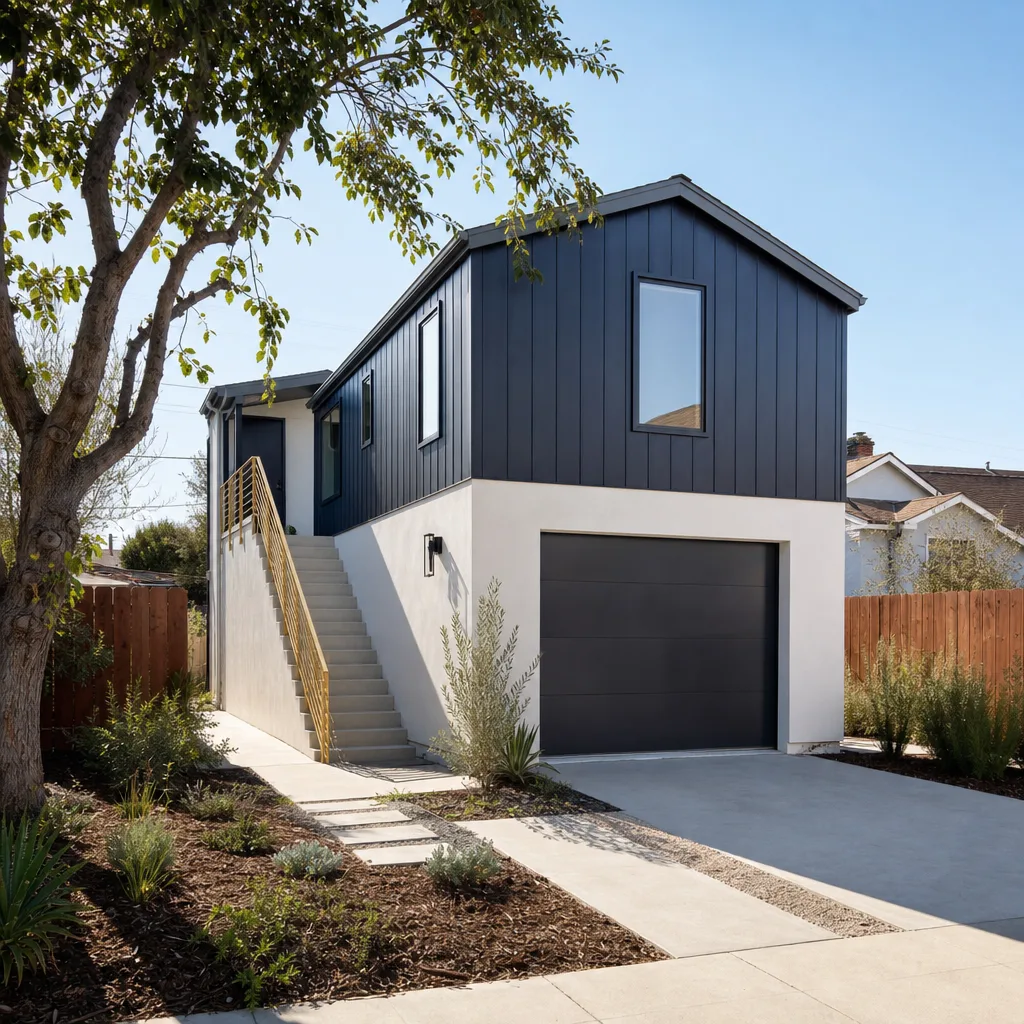
An ADU in San Jose is a six-figure commitment that pays off when the sequence is right: zoning first, design second, permits third, construction fourth. The homeowners who get burned are the ones who skip the free zoning check, trust a vague estimate, and never ask who exactly will walk onto their property. The ones who succeed check their parcel in ten minutes, demand a written price before any work starts, and choose a contractor who proves who’s coming to the door. That discipline turns a complicated project into a predictable one. If you’re weighing a detached unit, a garage conversion, or a room addition in San Jose, start with the parcel viewer, then get a written estimate. The rest follows from there.
Written by Miles Hartwell, Owner at Sutton ADU San Jose, serving San Jose since 2006.